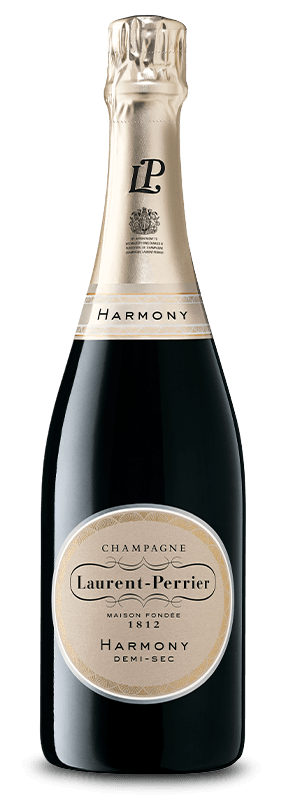
The question « How many grapes are in a bottle of Champagne? » often arises when seeking to better understand wine production and the realities of the French vineyard.
There is no fixed number, as it depends on several factors: the grape varieties used, harvest conditions, the year’s climate, and the specific winemaking choices.
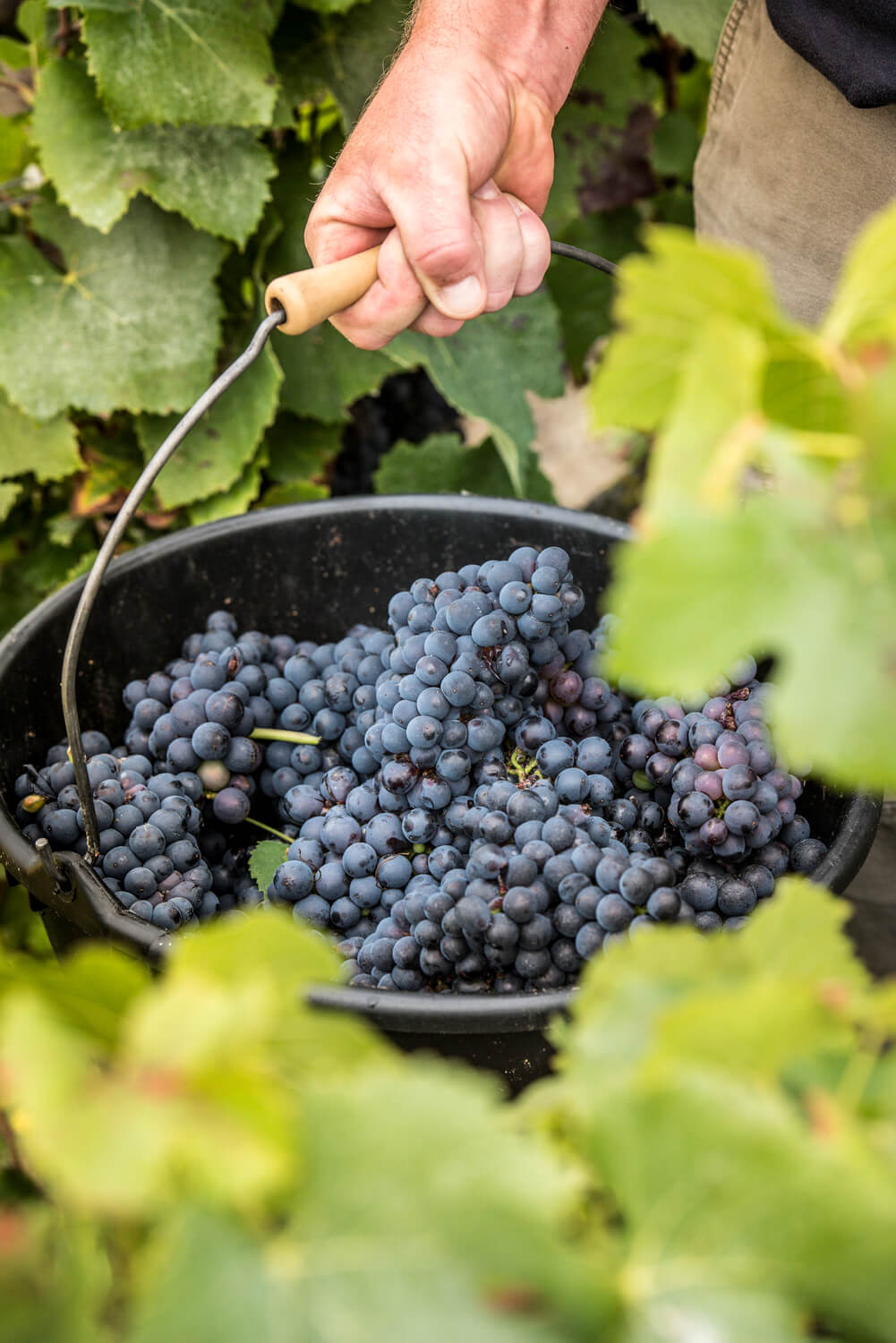
In practice, it is estimated that between 100 and 120 grapes are needed to produce a standard 75 cl bottle of champagne.
An estimate based on juice yield
Average weight of a grape in Champagne
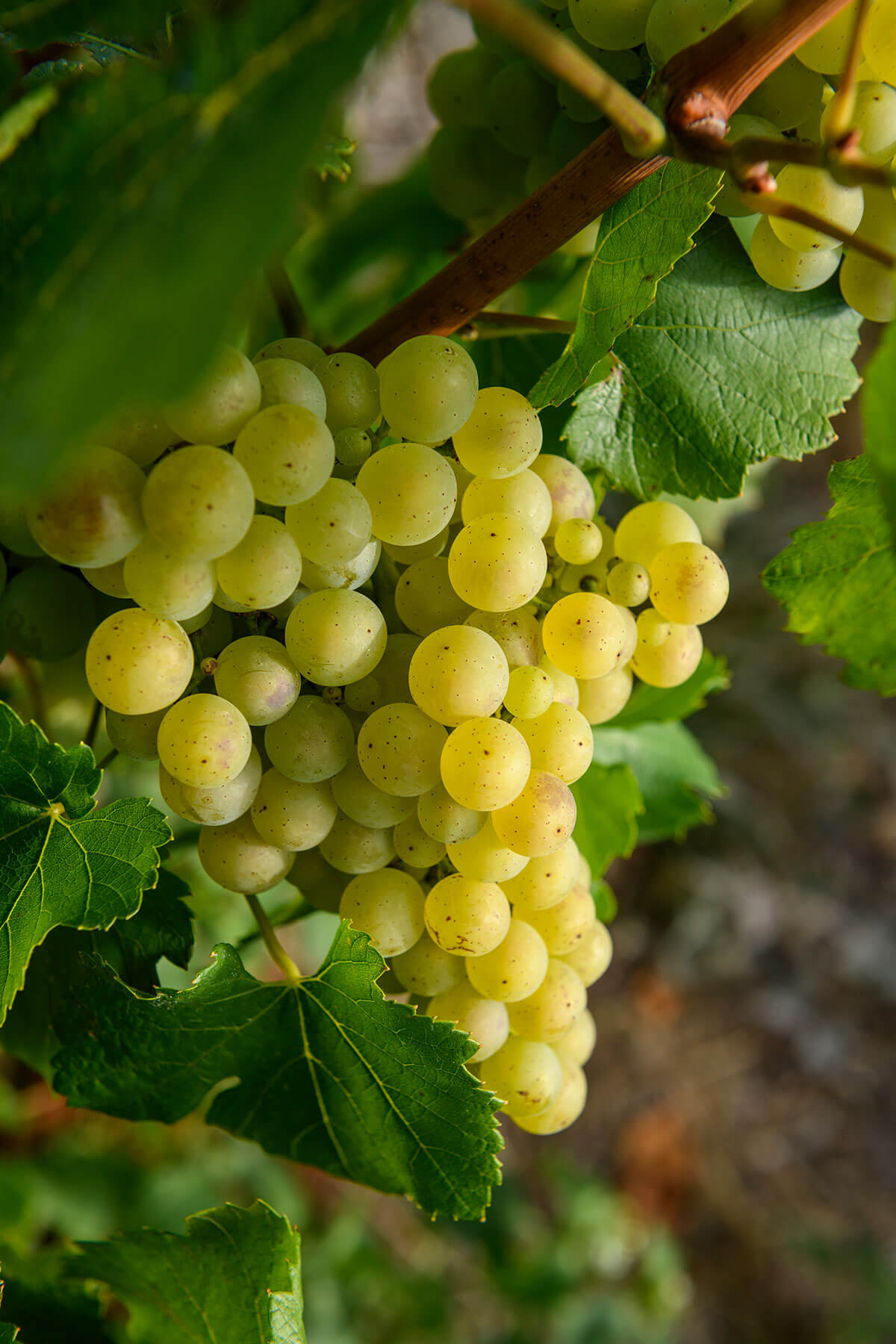
In the vineyard, a grape weighs on average between 1 and 1.2 grams depending on the variety (Pinot Noir, Chardonnay, Meunier) and the vintage.
To make a bottle of 75 cl, approximately 1.2 kg of grapes are required, that is 1.18 to 1.25 kg of grapes depending on the year.
Simplified calculation:
- 1.25 kg of grapes
- ÷ 1.1 g per grape
- = approximately 110 grapes
This number is widely recognized by champagne producers and the Union des Maisons de Champagne (UMC).
The official reference: the marc
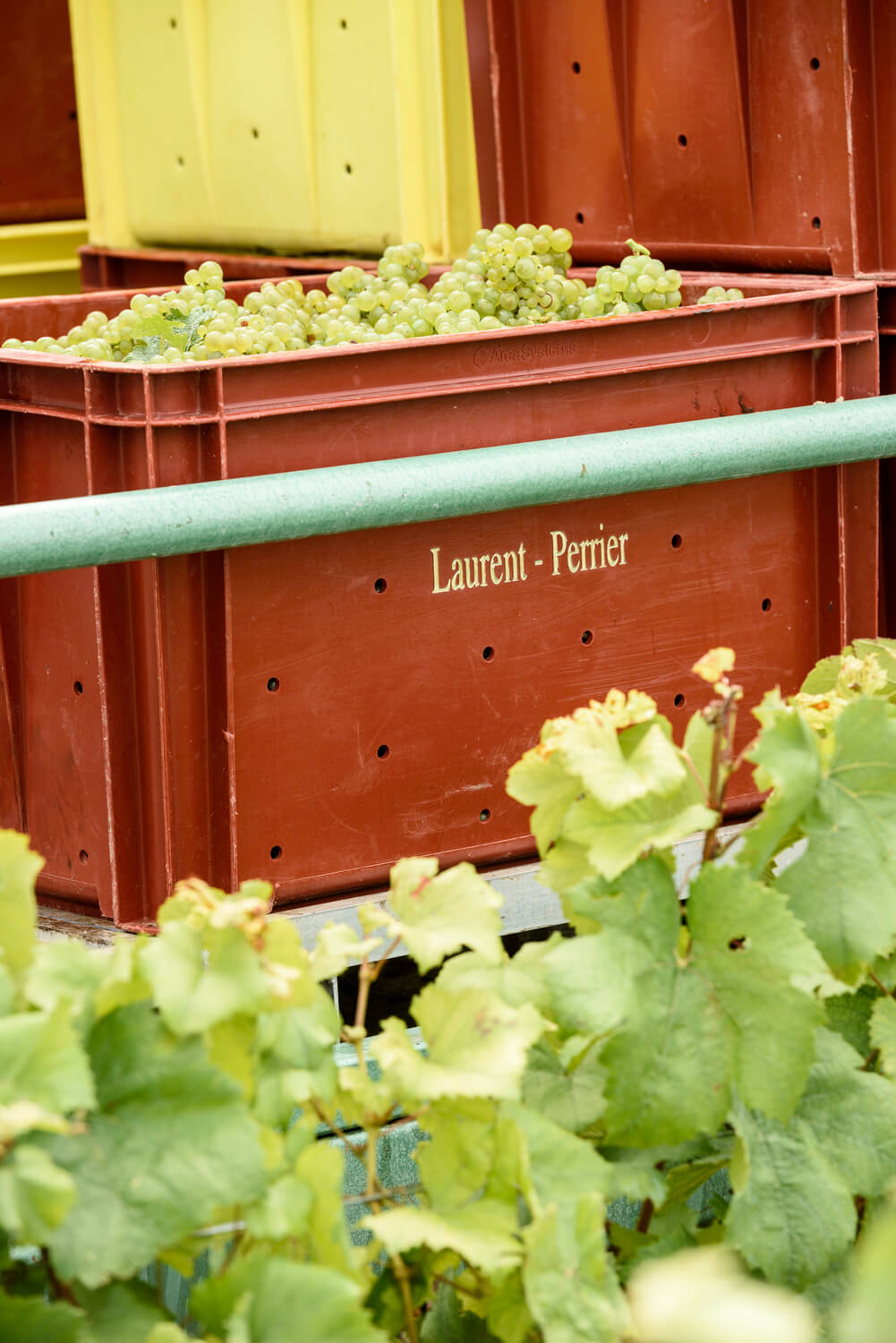
Traditionally, champagne is produced using the “marc” as a regulatory unit for the press, used for years.
- 1 marc = 4,000 kg of fruit
- 1 marc yields 2,550 liters of must
- This requires about 3,400 bottles
Calculation:
4,000 kg ÷ 3,400 ≈ 1.18 kg per bottle
This confirms how many grapes are used to make one standard 750 ml bottle.
Why does this number vary from year to year?
The quantity of grapes needed to produce a bottle of wine varies over different years, depending on:
- – climatic conditions and small variations in berry size,
- – the yield allowed by the appellation and specific grape varieties,
- – pruning practices and the press efficiency.
These variations explain why a champagne house can produce millions of bottles while maintaining consistent quality. Whether you are in France or the United Kingdom, the sparkling excellence remains the same.
The key role of pressing: cuvée and tailles
The cuvée
The cuvée is the first juice extracted during pressing.
It represents about 80% of the total juice and forms the basis of the finest sparkling wines, whether it is a white Brut, a Blanc de Blancs, or a Grand Cru from the Côte des Blancs.
The tailles
The tailles are the last juices, which have less acidity and are richer in minerals. They influence the style of the wine, especially during the second fermentation (or secondary fermentation). Some still wines are used to make these blends, but the best sparkling wine always favors the cuvée.
Laurent-Perrier’s qualitative choice
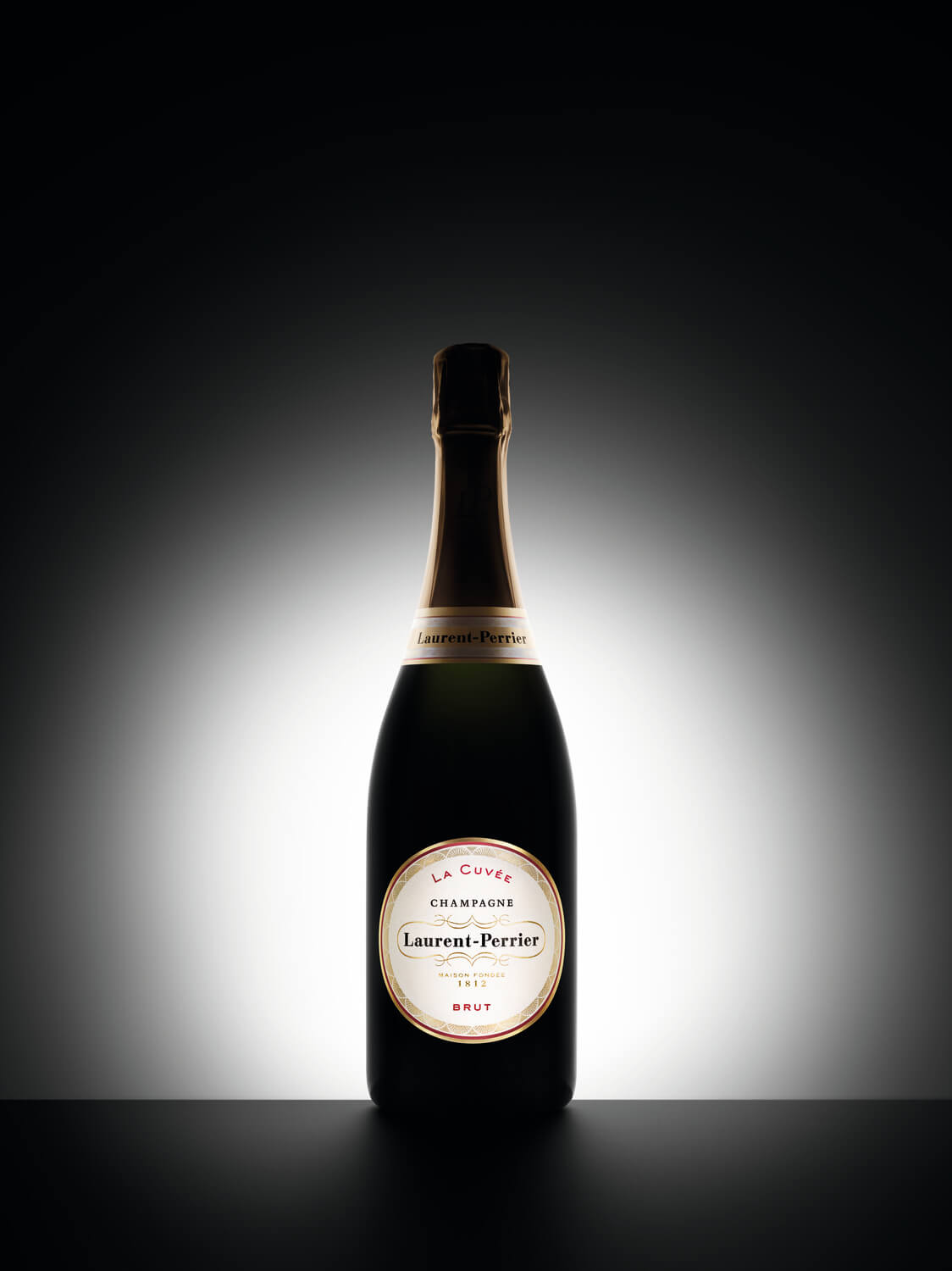
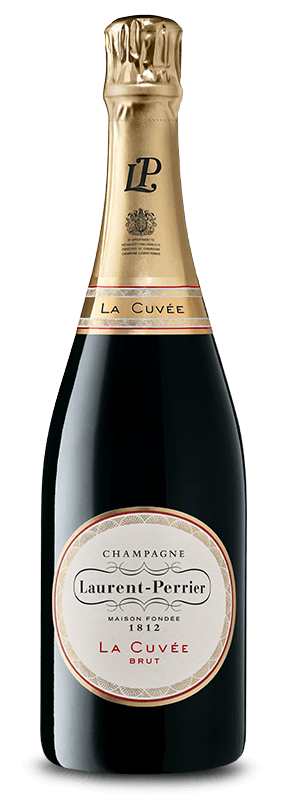
At Laurent-Perrier, to produce La Cuvée, the emblematic Brut Non-Vintage of the Maison, only the juice from the cuvée is used.
The tailles are deliberately excluded to preserve the freshness and purity of the wine.
This choice reflects a demanding vision of champagne, shared by the great Maisons de Champagne, and contributes to the identity of the wines of the Maison.
In summary
- – Between 100 and 120 grapes are needed for one bottle.
- – This corresponds to approximately 1.2 kg of grapes per bottle.
- – Grape variety and technical choices take a major role in the final glass of champagne.
- – Just behind each bottle of champagne lies a precise savoir-faire
Behind a simple question of how much fruit it might take to make a wine lies the entire world of Champagne, blending tradition and winemaking excellence.