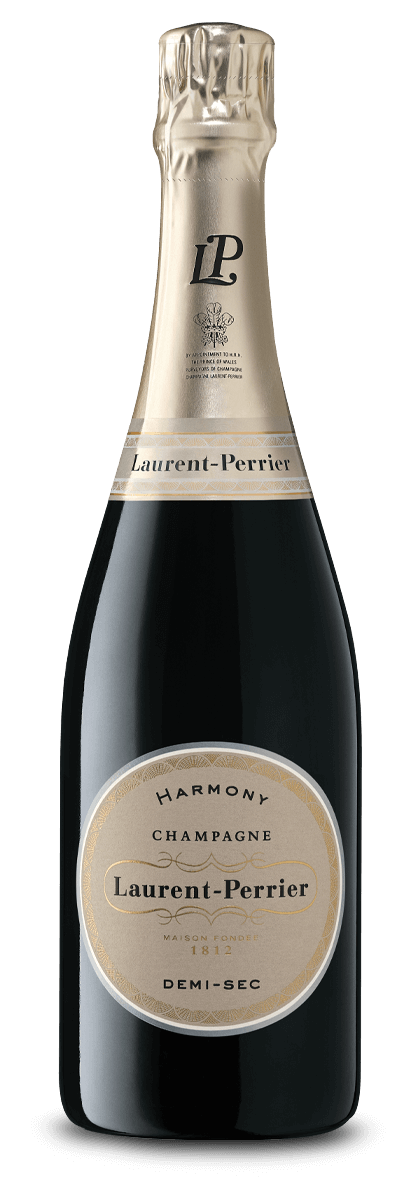
Serving temperature is a fundamental element in fully appreciating any wine — and even more so for Champagne. It directly influences the perception of aromas, freshness, liveliness, and roundness. A Champagne served too cold will reveal none of its aromas, while one served too warm will seem heavy and cloying.
Maison Laurent-Perrier, renowned for its unique savoir-faire and prestigious cuvées, guides you in discovering the ideal temperature for enjoying each of its creations.
Why Temperature Matters
Not all wines and champagnes are enjoyed at the same temperature. Several factors come into play:
- – Grape variety and style: a Blanc de Blancs reveals its minerality when served cooler, while a rosé expresses itself better slightly warmer.
- – Season: a chilled Champagne feels refreshing in summer, while a slightly warmer one reveals more aromatic richness in winter.
- – Food pairing: the temperature may be adjusted according to the dish being served.
- – Age of the wine: an evolved vintage deserves a higher serving temperature than a young Champagne.
Thus, temperature acts as a sensorial key — it unlocks aromas and textures, though it is not the only factor.
The Importance of Context and Detail
Enjoying a great Champagne rests on four pillars:
- 1. Wine quality – the first essential criterion.
- 2. Serving temperature – indispensable for expressing aromas.
- 3. Glassware – a well-chosen glass enhances the experience.
- 4. Context – the setting, the people, the shared moment.
A Champagne served at 6°C will seem neutral, with little expression. At 20°C, it becomes heavy and unbalanced. The right temperature transforms each tasting into a memorable experience.
How Temperature Affects Tasting
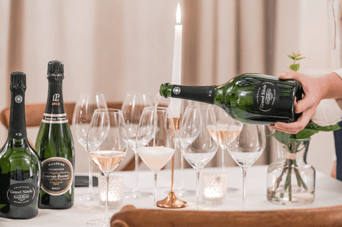
A Champagne can offer very different experiences depending on the temperature:
| Temperature | Effect on Champagne | Example food pairings |
|---|---|---|
| 10°C | Maximum freshness, lively and crisp | Oysters, seafood, fish carpaccio |
| 12°C | Balance between liveliness and aromatic expression | Sashimi, scallop tartare, smoked salmon |
| 14°C | Roundness and aromatic complexity | Foie gras, roast poultry, noble fish |
| 16°C | Opulence and depth | Game, refined and spicy dishes |
Temperature becomes a true gastronomic tool: guiding pairings and optimizing sensory pleasure.
How to Chill a Bottle of Champagne? The Right Methods and the Mistakes to Avoid
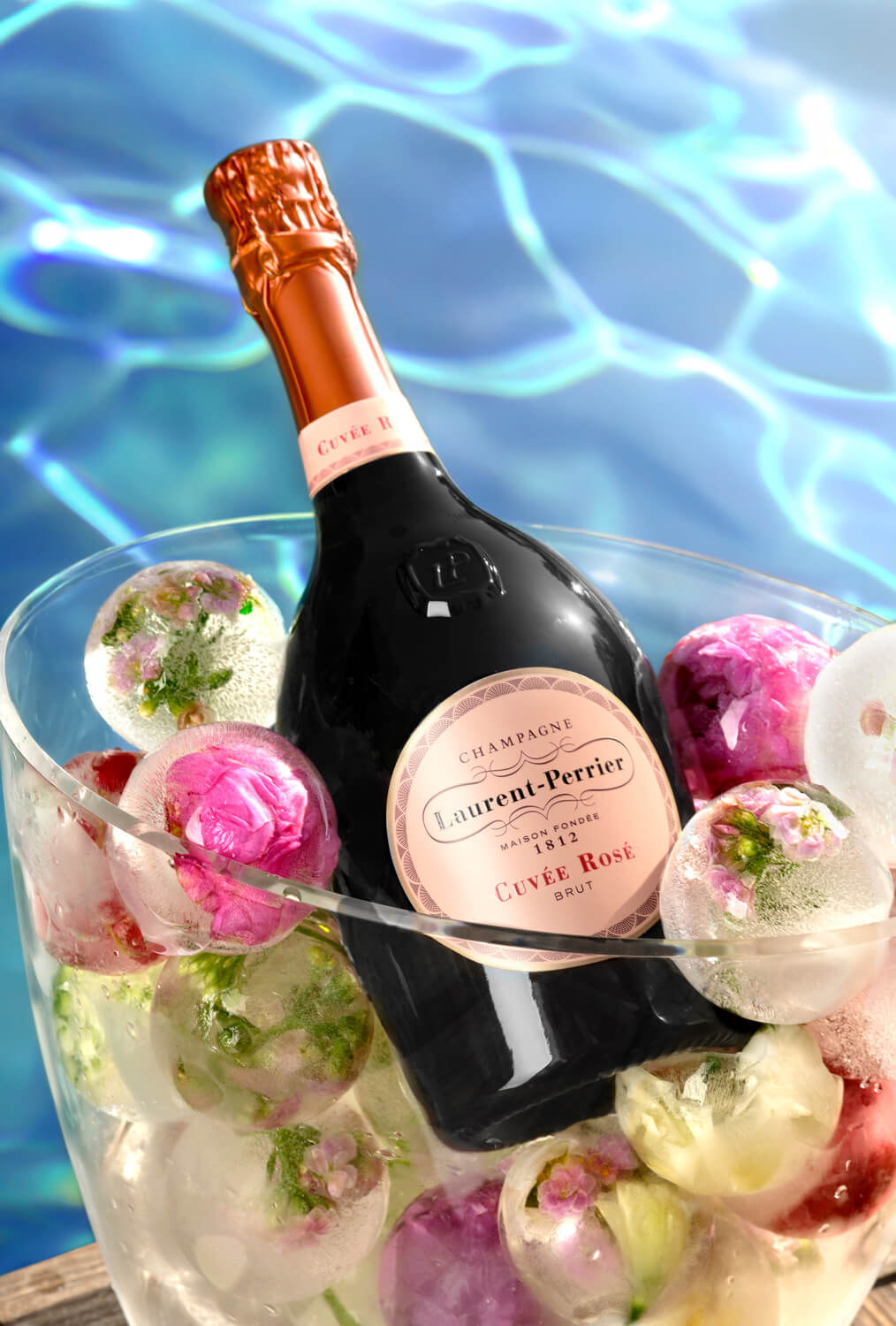
The Best Ways to Chill Champagne
- 1. The Ice Bucket – the traditional method
Place the bottle in a bucket filled half with water and half with ice. This is the quickest and most respectful way to chill Champagne.
- • Duration: around 20–30 minutes to reach the ideal temperature.
- • Tip: water is essential to ensure even contact between the liquid and the glass, accelerating cooling.
- 2. The Refrigerator – convenient if planned ahead
Place the Champagne in the refrigerator 3–4 hours before serving for gradual, uniform chilling.
- • Ideal if you plan to enjoy the bottle within the day.
- • Tip: store it in the bottom of the refrigerator, where the temperature is most stable.
- 3. Keeping the bottle in an ice bucket during service
At a dinner or reception, keep the bottle in an ice bucket throughout service to maintain its temperature.
Methods to Absolutely Avoid
- 1. The Freezer
A common shortcut, but a very bad idea:
- • Risk of thermal shock, damaging the wine.
- • Pressure may cause the cork to pop, or the bottle to break.
- • Champagne can lose its effervescence and aromas.
- 2. Ice cubes in the glass
This instantly dilutes the wine and destroys its aromatic balance.
- • Exception: some special “on the rocks” cuvées exist, but this is not the case for most champagnes.
- 3. Running under cold tap water
This method is ineffective the water isn’t cold enough to chill the bottle quickly or evenly.
In Summary
To fully enjoy a Champagne, serving it at the right temperature is essential.
- • Recommended methods: ice bucket (water + ice), pre-chilling in the fridge, keeping the bottle on ice during service.
- • To avoid: freezer, ice cubes in the glass, cold tap water.
A perfectly chilled Champagne guarantees fine bubbles, faithful aromatic expression, and an optimal tasting experience.
Recommended Temperatures for Laurent-Perrier Champagnes
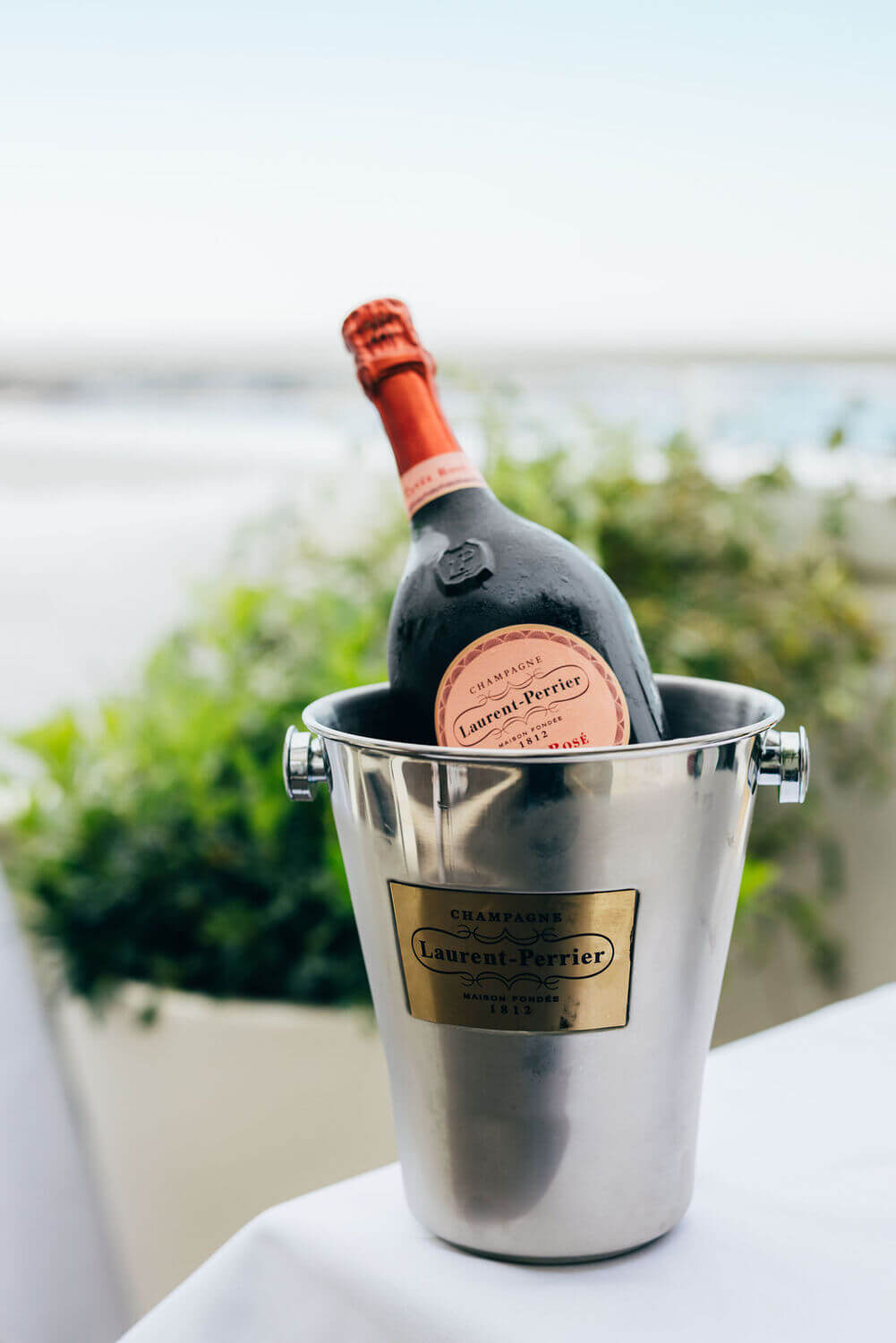
Thanks to its exceptional savoir-faire, Maison Laurent-Perrier recommends specific serving temperatures to reveal the character of each cuvée.
1. The Art of the Non-Dosé Style
| Cuvée | Ideal temperature | Tasting notes | Food pairings |
|---|---|---|---|
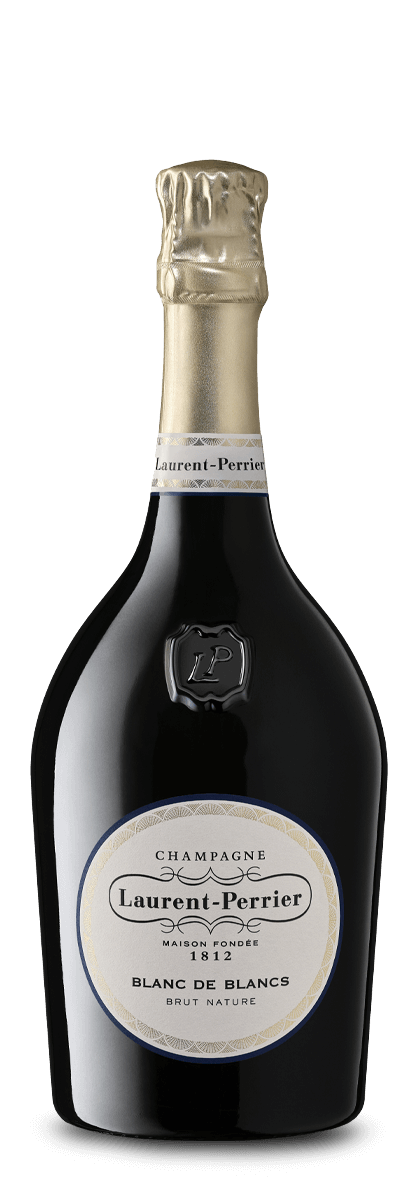
| Blanc de Blancs Brut Nature | 9–10°C | Purity, mineral freshness | Oysters, fish carpaccio |
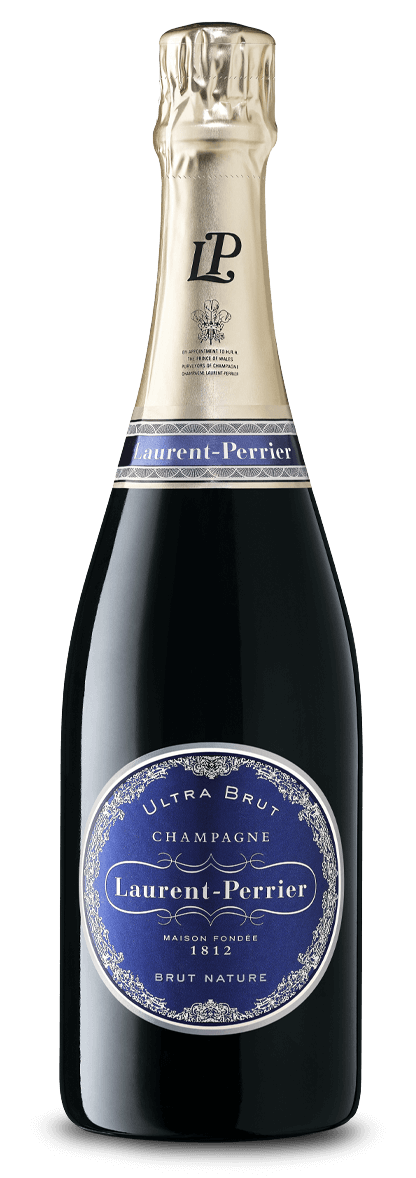
| Ultra Brut | 9–10°C | Crystal-clear liveliness, tension | Sashimi, ceviche, seafood |
2. The Art of Maceration
| Cuvée | Ideal temperature | Tasting notes | Food pairings |
|---|---|---|---|
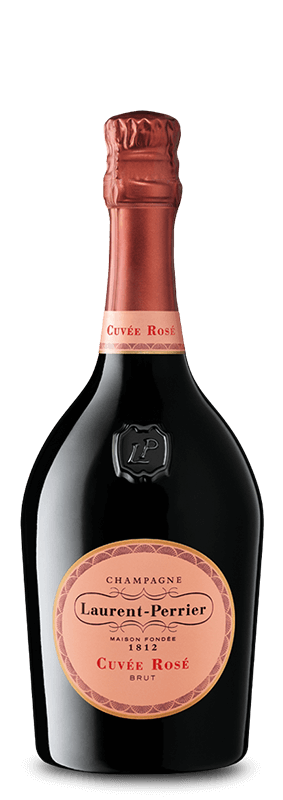
| Cuvée Rosé | 10–12°C | Aromatic intensity, indulgence | Salmon tartare, red-fruit desserts |
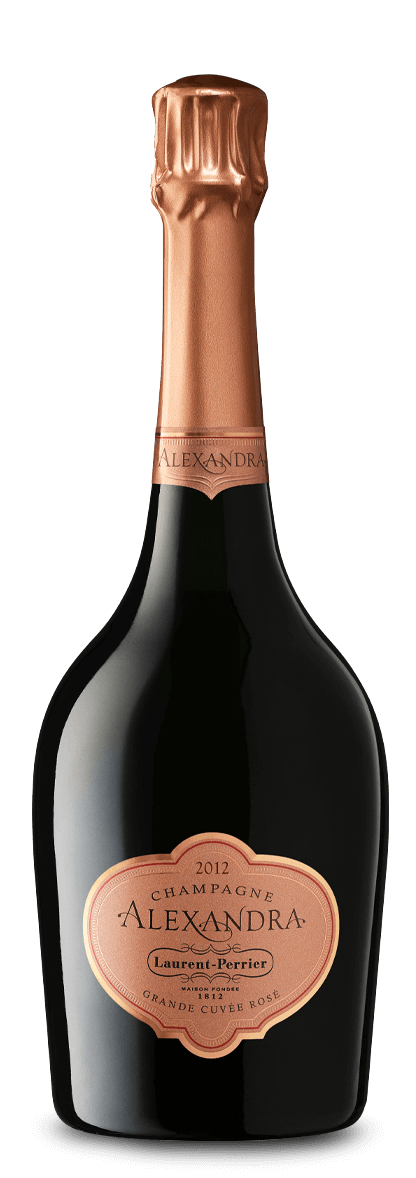
| Alexandra Rosé Millésimé 2012 | 12–14°C | Complexity, depth | Game birds, fine gastronomy |
3. The Art of Reserve-Wine Blending
| Cuvée | Ideal temperature | Tasting notes | Food pairings |
|---|---|---|---|
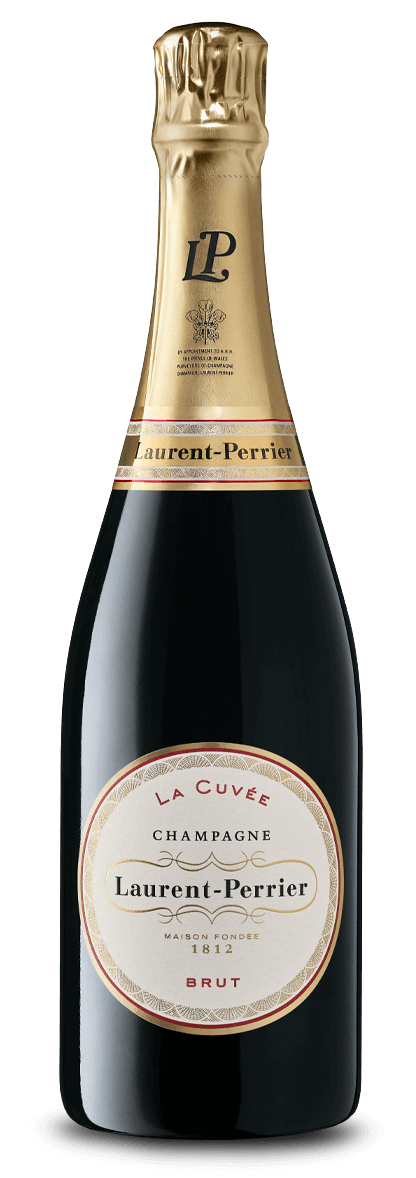
| La Cuvée | 9–11°C | Elegance, freshness | Aperitif, scallop carpaccio |
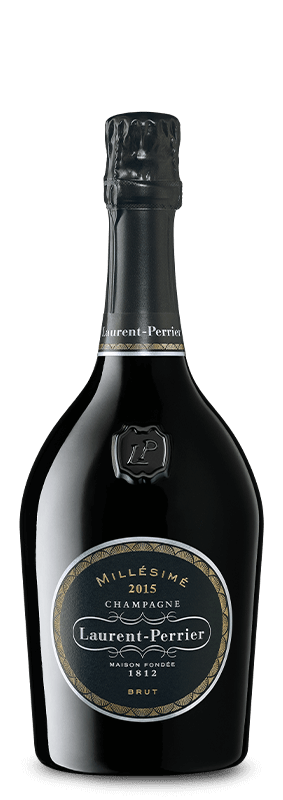
| Brut Millésimé 2015 | 11–12°C | Balance of tension/maturity | Noble fish, white meats |
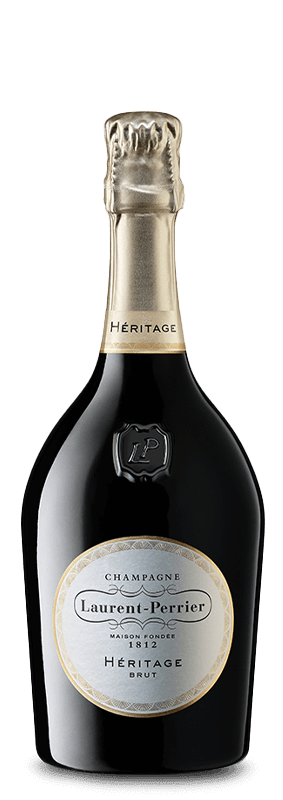
| Héritage | 12–14°C | Structure and depth | Foie gras, game |
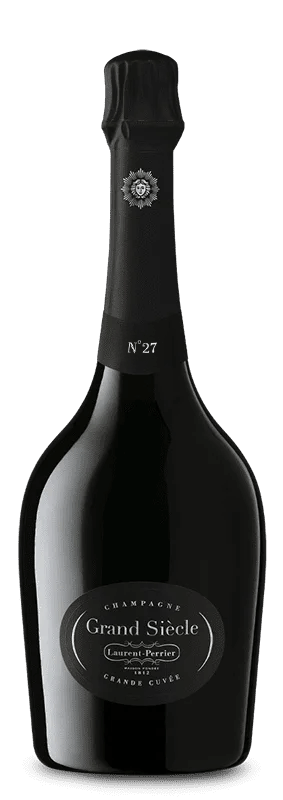
| Grand Siècle Itération N°26 | 12–14°C | Quintessence of blending, amplitude | Festive poultry, fine dining |
Conclusion
What is the ideal temperature to serve Champagne?
To reveal all the richness of a great Champagne, the ideal temperature generally ranges between 9°C and 14°C, depending on the cuvée’s style and the accompanying dish.
Thanks to its unique savoir-faire — non-dosé, maceration, and blending reserve wines — Laurent-Perrier offers an adaptable and always elegant tasting experience. Mastering temperature brings out each cuvée’s finesse, complexity, and depth, creating truly unforgettable moments.