Table of contents
- The Art of Exception in Champagne
- The Crafting of a Vintage Cuvée
- Vintage vs Non-Vintage: The Essential Difference
- The Great Champagne Vintages Since 1950
- How to Taste a Vintage Champagne
- Food Pairings for Vintage Champagne
- Why Is a Vintage Champagne More Expensive?
- Laurent-Perrier Vintage Overview
- Conclusion
The Art of Exception in Champagne
In Champagne, every cuvée is the result of meticulous selection. Yet, in certain years, nature offers such perfect harmony that the Houses decide to craft a Vintage.
A Vintage Champagne is made exclusively from grapes harvested in a single year — one deemed exceptional in quality. Unlike Non-Vintage champagnes (Brut Sans Année – BSA), which blend several harvests to express a consistent house style, the Vintage embodies the unique character of an outstanding year.
The Crafting of a Vintage Cuvée
A Vintage Champagne is never improvised — it is created with precision and rigor.
- – Selection of grape varieties and crus: great vintages are born from the finest terroirs, often classified as Grands Crus or Premiers Crus, where Chardonnay, Pinot Noir, and sometimes Meunier reach their purest expression.
- – Choice of the year: only harvests of exceptional quality — achieving a perfect balance between ripeness and freshness — are deemed worthy of being declared a vintage.
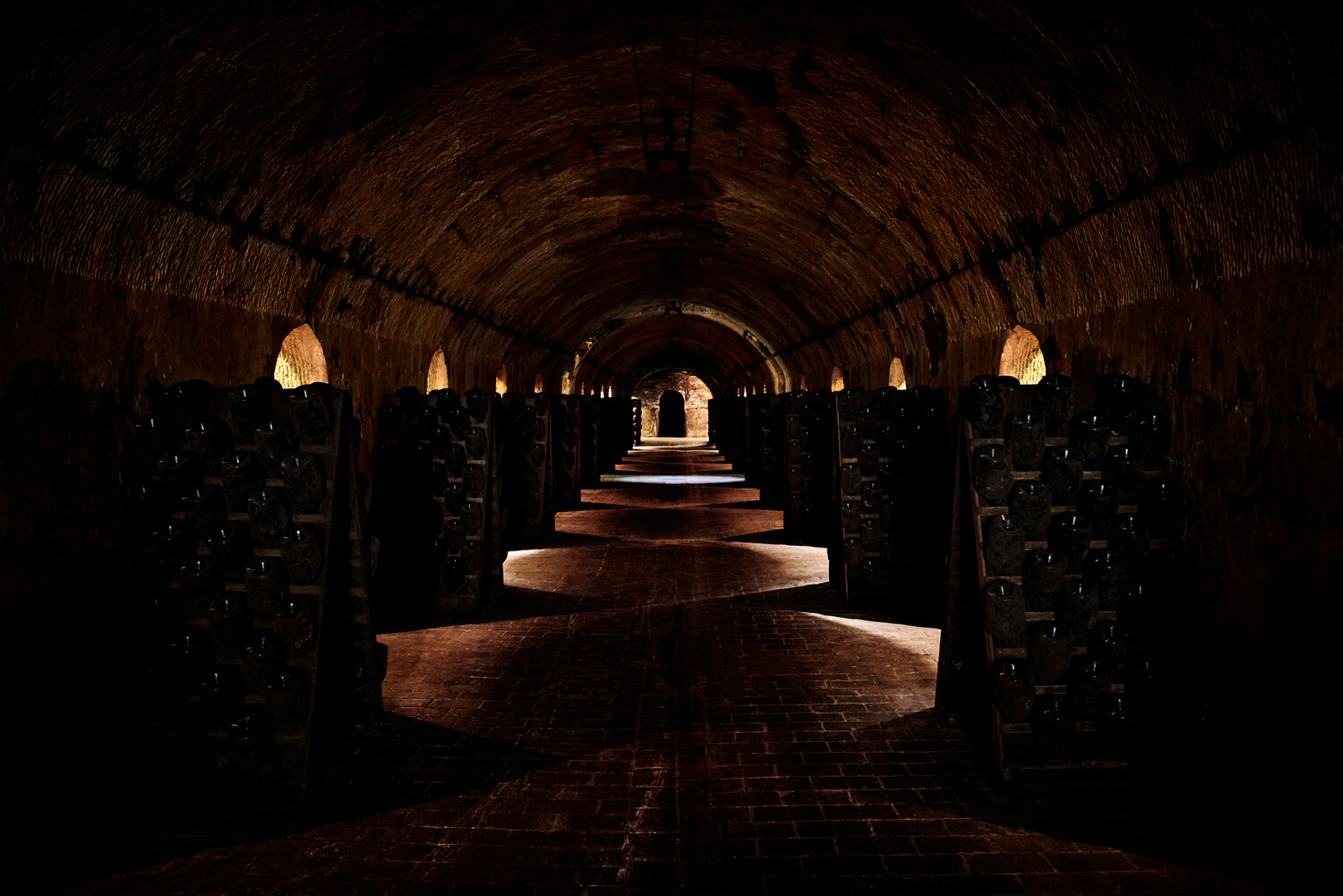
- – Ageing: according to Champagne regulations, a Vintage Champagne must age for a minimum of three years on its lees. However, the greatest Houses, such as Laurent-Perrier, often extend this maturation to seven, eight, or even ten years, allowing the wine to reveal its full aromatic complexity and the finesse of its bubbles.
Thus, a vintage is not only a reflection of terroir and year — it is also the imprint of time and the mark of a House’s savoir‑faire.
Vintage vs Non-Vintage: The Essential Difference
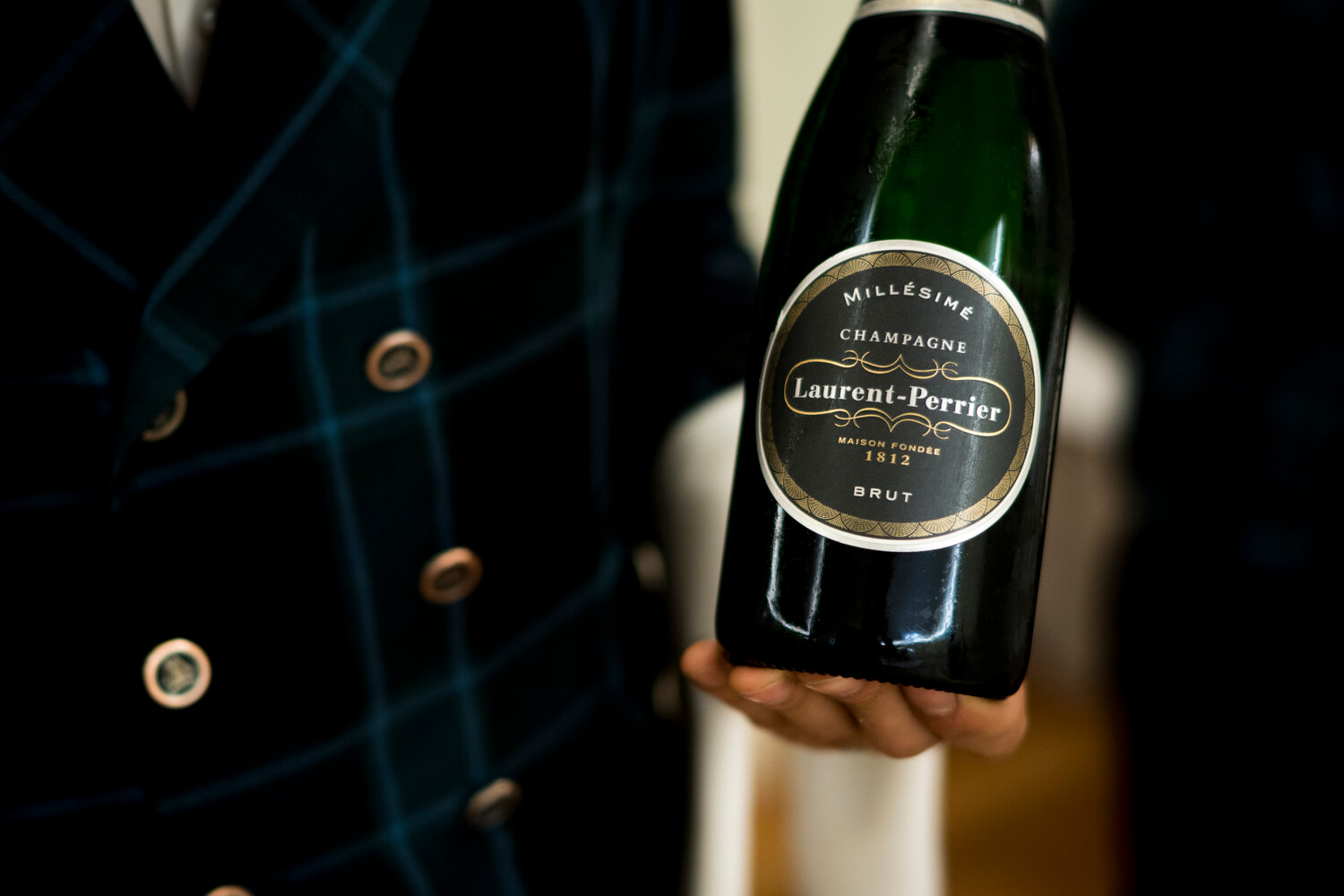
- – Non-Vintage (Brut Sans Année – BSA): a blend of several years, representing the continuous and consistent signature of a Champagne House.
- – Vintage: the unique expression of a remarkable year — not an attempt to replicate a house style, but to elevate the singular personality of that harvest.
If the Non‑Vintage Champagne is the backbone of a House, then the Vintage is its crescendo — its moment of brilliance.
The Great Champagne Vintages Since 1950
Champagne lovers and connoisseurs traditionally classify vintages according to their quality.
Here is a summary table:
| Classification | Vintages |
|---|---|
| Exceptional | 2008, 2002, 1996, 1990, 1988, 1985, 1979, 1976, 1966, 1964, 1959 |
| Outstanding | 2012, 2004, 1998, 1995, 1989, 1982, 1975, 1971, 1961, 1955 |
| Very Good | 2015, 2007, 2006, 1999, 1983, 1973, 1969, 1964 |
| Good | 2013, 2000, 1997, 1993, 1981, 1978, 1970, 1962 |
Each House interprets these years through its own style, revealing distinct expressions of the same harvest.
How to Taste a Vintage Champagne
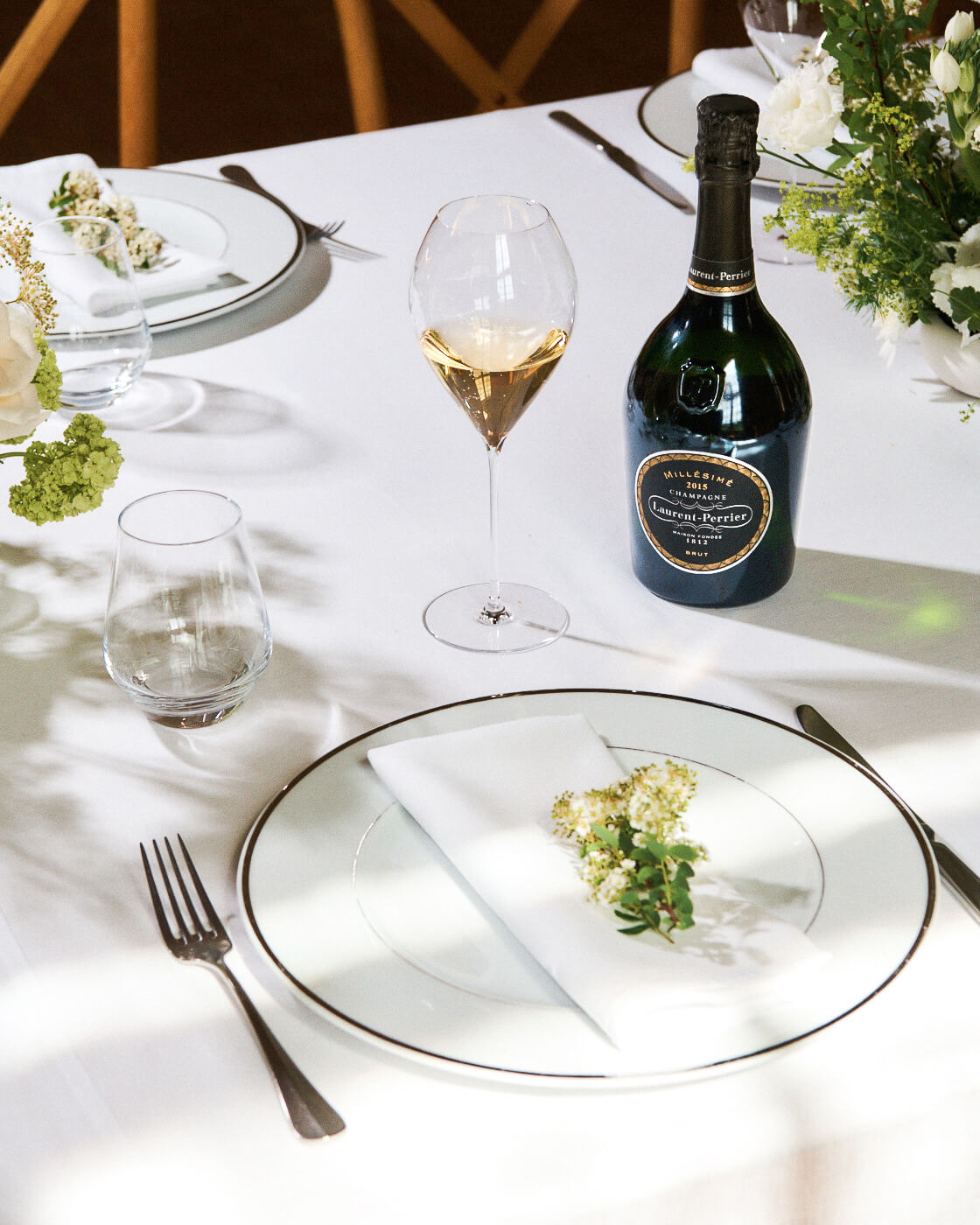
Tasting a Vintage Champagne requires attention and respect — every cuvée tells its own story.
- – Serving: the ideal temperature is between 9°C and 11°C (48–52°F) to preserve finesse and freshness.
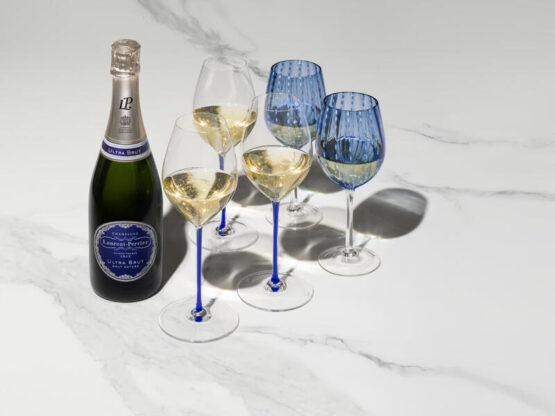
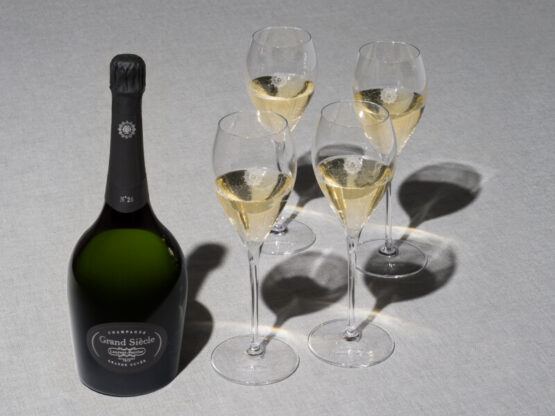
- – Glassware: choose a fine white wine glass or a tulip‑shaped flute, which both concentrate the aromas and allow the bubbles to unfold gracefully.
- – The moment: a vintage deserves time; it reveals itself progressively, layer by layer — from fruit to maturity, from freshness to complexity.
Food Pairings for Vintage Champagne
The ideal pairing depends on the age and profile of the vintage:
| Age of the Vintage | Aromatic Profile | Recommended Pairings |
|---|---|---|
| Young (5–8 years) | Freshness, citrus, white flowers | Sea bream tartare, scallop carpaccio, sushi |
| Mature (8–15 years) | Dried fruit, brioche, toasted notes | Roast lobster, Bresse chicken, truffle risotto |
| Aged (15+ years) | Honeyed nuances, sweet spices, depth | Aged cheeses (36‑month Comté, Parmesan), noble game, seared foie gras |
Why Is a Vintage Champagne More Expensive?
The rarity of a vintage naturally explains its value:
- – Rigorous selection: only the most exceptional years are chosen.
- – Extended ageing: long maturation in the cellar increases production costs.
- – Limited production: far rarer than Non‑Vintage cuvées, vintages are coveted by enthusiasts and collectors alike.
A Vintage Champagne is therefore a cuvée of patience, rarity, and excellence.
Laurent-Perrier Vintage Overview
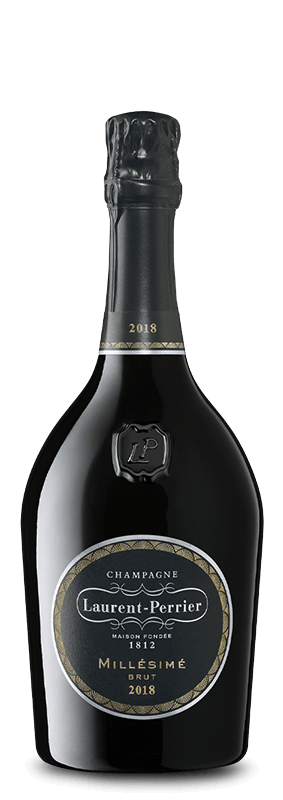
True to its high standards, Laurent‑Perrier chooses to declare a vintage only when nature provides a harvest in perfect harmony with the House’s spirit — freshness, purity, and elegance.
While some Houses release vintages almost every year (such as Pol Roger, Bollinger, or Moët & Chandon), Laurent‑Perrier reserves this honor for only the most exceptional years.
Recent Laurent‑Perrier Vintages
- – 2015: solar balance, intensity, and richness.
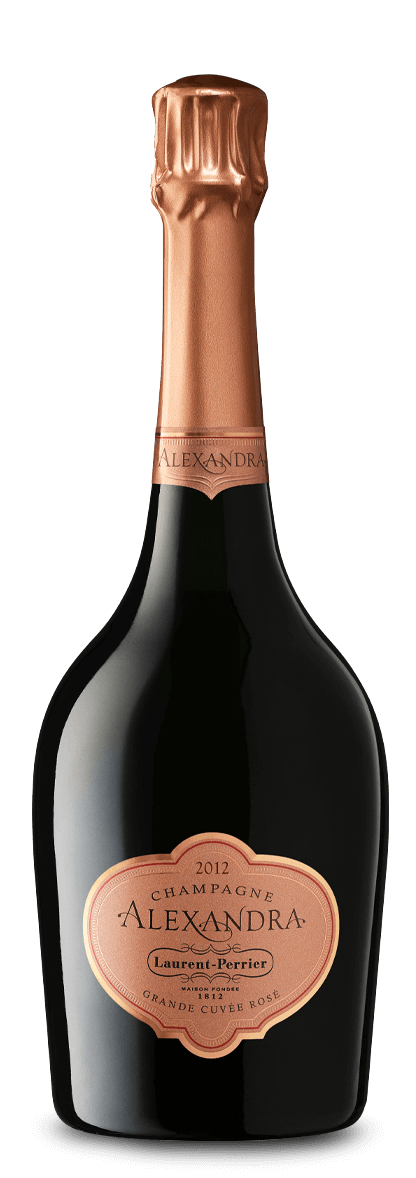
- – 2012: great freshness, mineral tension, and depth.
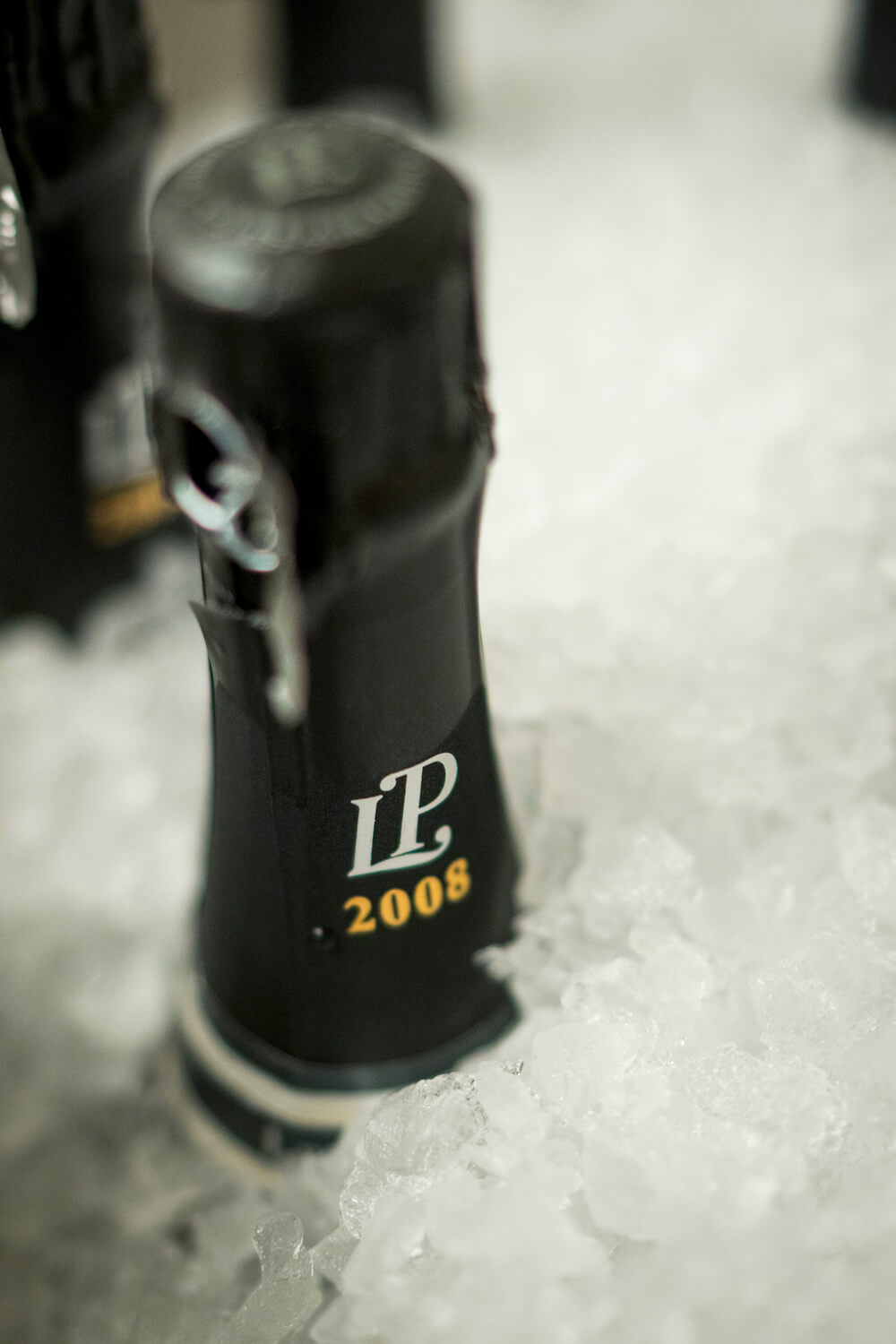
- – 2008: a legendary year — purity and crystalline precision.
- – 2007: delicacy, elegance, and fine acidity.
- – 2006: roundness, ripe fruit, suppleness.
- – 2004: subtlety, harmony, and remarkable length
- – 2002: amplitude and richness, considered one of the greatest modern vintages.
Through these rare cuvées, Laurent‑Perrier celebrates only the exceptional — revealing the truth of a year without ever forcing it.
Conclusion
What Is a Vintage Champagne?
It is, above all, the singular expression of an exceptional year, elevated by the savoir‑faire of the Champagne Houses. For Laurent‑Perrier, a vintage is not routine — it is a rare and precious celebration, reserved only for the years that truly deserve it.
Each bottle becomes a meeting of time, nature, and artistry — the ultimate harmony of Champagne.