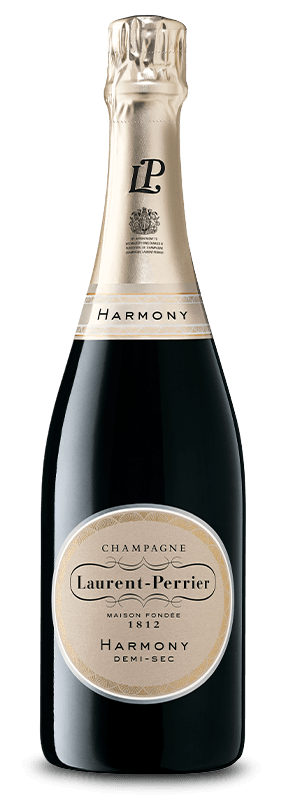
Guinea fowl or chicken: a bird apart
Origins and identity
Guinea fowl is a bird native to Africa, already appreciated in Antiquity by the Egyptians and the Greeks before being introduced to Europe during the Renaissance. Even today, it retains a slightly wild character, perceptible both in its appearance and in its flavour.
Chicken, by contrast, descends from the red junglefowl (Gallus gallus), native to Southeast Asia. Domesticated more than 7,000 years ago, it has become the most widely consumed poultry in the world, in France as well as globally, where it accompanies an extraordinary diversity of culinary traditions.
Morphology & character
- – Guinea fowl: smaller, with distinctive black-and-white speckled plumage, a fine breast, strong legs and a lively temperament.
- – Chicken: rounder in shape, with a broader breast, highly variable plumage depending on the breed, and a more docile nature.
A quintessential free-range bird, guinea fowl thrives on grassy terrain and feeds on insects. This diet is reflected in the aromatic concentration of its flesh, which explains why choosing a wine to accompany guinea fowl requires greater precision than for a simple roast chicken.
Nutritional profile
Guinea fowl offers lean, protein-rich meat, providing approximately 22 to 25 grams of protein per 100 grams, for 140 to 160 kcal, with moderate fat content (5 to 7 grams depending on the cut).
It also supplies valuable nutrients, including:
- – B-group vitamins, particularly B3 and B6.
- – Phosphorus, potassium and zinc, all essential for metabolism and immune function.
Compared to chicken, guinea fowl stands out for its more pronounced flavour while remaining within the family of white meats, with an excellent nutritional profile, including when paired with a carefully selected organic wine.
Flavour profile & culinary uses
Its fine, slightly firm flesh evokes a balance between chicken and small game. It lends itself particularly well to roasting in the oven, slow cooking in a casserole with cider, apples or mushrooms, festive preparations with chestnuts, dried fruits or truffle, as well as Mediterranean or Middle Eastern-inspired recipes featuring olives, citrus and gentle spices.
It is precisely this distinctive personality that makes guinea fowl an ideal canvas for food and wine pairings, ranging from taut white wines to delicate red wines, without overlooking champagne.
Iconic guinea fowl recipes
Roast guinea fowl with herbs and melting potatoes
Ingredients (serves 4)
- One free-range guinea fowl of approximately 1.2 kg
- One kilogram of waxy potatoes
- Three tablespoons olive oil
- Two tablespoons Provençal herbs (thyme, rosemary, savory)
- Two cloves garlic, finely chopped
- Salt and freshly ground pepper
- One lemon, cut into wedges (optional)
Method
1 – Preparing the bird
Season the cavity of the guinea fowl with salt and pepper. If desired, place lemon wedges inside to add freshness and subtle aroma during cooking.
2 – Seasoning
Massage the bird with olive oil, garlic and herbs. Season generously.
3 – Accompaniment
Arrange potato wedges around the guinea fowl in a large roasting dish, drizzle with oil and season.
4 – Cooking
Roast for approximately one hour at 180°C (356°F), basting regularly, until the internal temperature reaches 75°C (167°F).
5 – Resting and serving
Allow to rest for ten minutes under foil before carving. Serve with the golden potatoes and pan juices.
Guinea fowl casserole with cider, apples and bacon
A gently braised dish, moist and comforting, combining apples, smoked bacon and pearl onions, finished with a touch of cream to lightly bind the sauce.
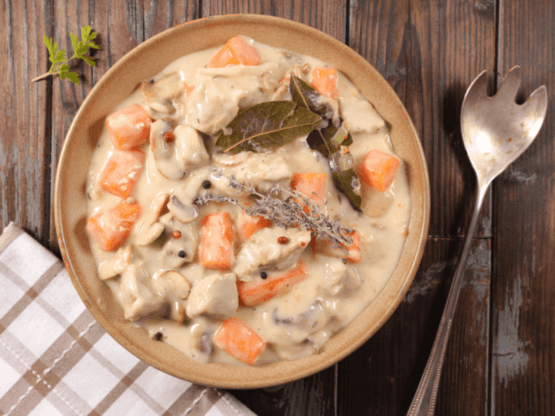
Guinea fowl with mushrooms and light cream sauce
A bistro classic, prepared by roasting or pan-searing the bird, deglazing with white wine, adding poultry stock and mixed mushrooms, then finishing with cream and a touch of lemon.
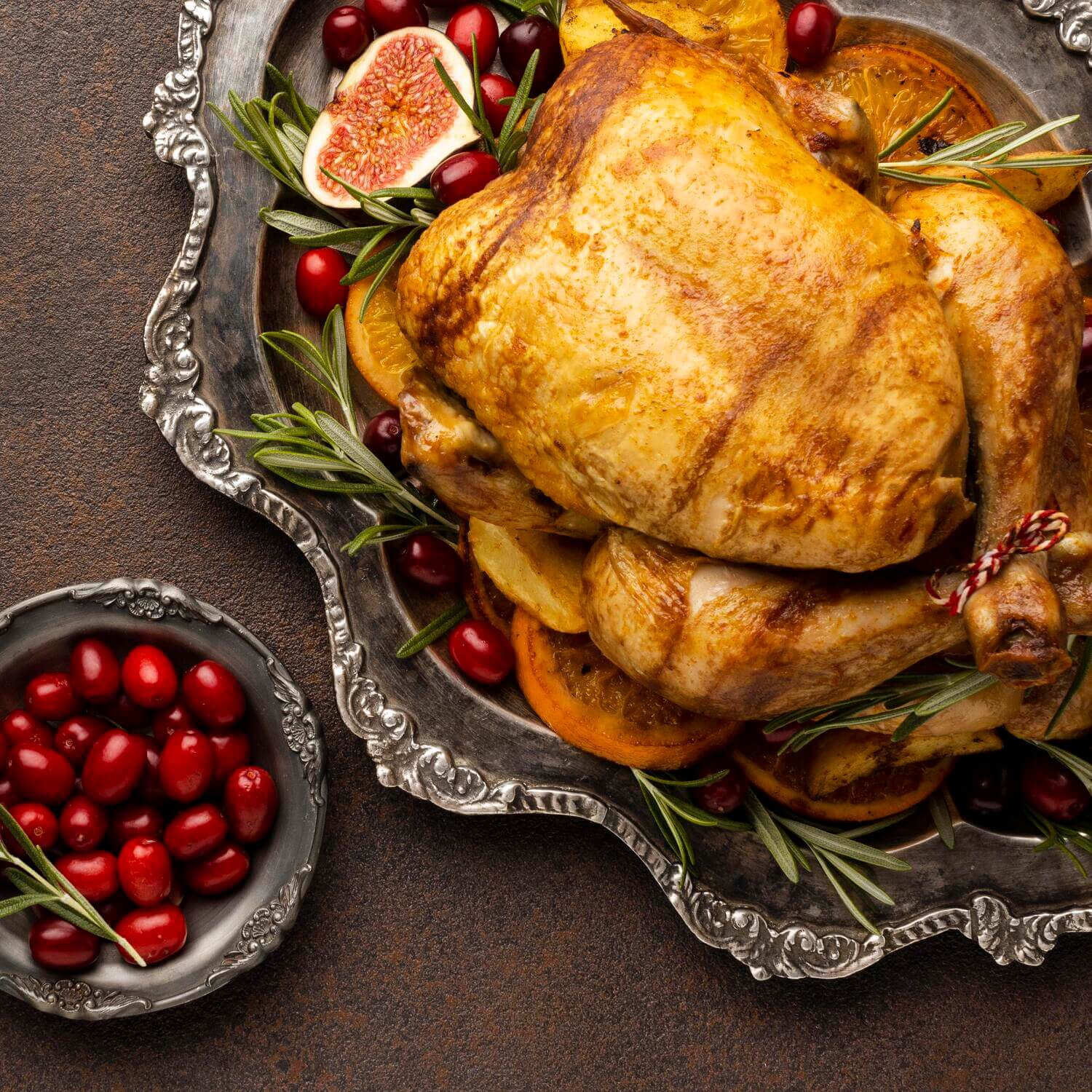
Guinea fowl with autumn fruits (figs, grapes, chestnuts)
A festive preparation, in which fruits caramelise during slow cooking, lending depth and roundness to the sauce.
How to prevent guinea fowl from drying out
Key techniques include light barding or stuffing, starting the cooking at high heat to brown the skin before lowering the temperature, favouring closed casserole cooking, protecting the breast with foil if necessary, and maintaining moisture by adding stock, wine or cider to the cooking vessel.
What to drink with guinea fowl?guiding principles
Guinea fowl is more aromatic than chicken yet remains a white meat. Wines of moderate structure are preferred, with good freshness and restrained tannins. The choice must also take into account the sauce and garnish, as a herb-roasted bird, a cider-braised version or an autumnal fruit preparation each call for different styles.
White wines with guinea fowl
White wines often offer the most refined pairings, especially with roasted guinea fowl or dishes featuring mushrooms, root vegetables or light sauces.
Chardonnay: Burgundian elegance
White Burgundies from the Côte Chalonnaise, Côte de Beaune or Mâconnais bring gentle texture, notes of white flowers, hazelnut and orchard fruit, supported by sufficient acidity.
Sauvignon Blanc: tension and herbal notes
- Sancerre, Pouilly-Fumé or Menetou-Salon work particularly well with herb-roasted guinea fowl or citrus-accented preparations, thanks to their freshness and aromatic precision.
Viognier and Rhône whites: aromatic sensuality
- Condrieu or selected Saint-Joseph and Crozes-Hermitage whites accompany cider-based or fruit-forward dishes with notes of apricot, white flowers and subtle bitterness.
Loire Chenin: gastronomic precision
- Dry Vouvray, Montlouis or Savennières bring structure and tension, making them ideal for creamy sauces and mushroom-based recipes.
Red wines with guinea fowl
Red wines can be excellent partners provided finesse is prioritised over power.
Pinot Noir: a natural match
From Burgundy, Alsace or Jura, Pinot Noir offers silky tannins and red fruit notes that complement the slightly gamey character of guinea fowl without overwhelming it.
Gamay & supple Rhône reds
- Lightly extracted Beaujolais or softly structured Côtes du Rhône pair well with simple roast preparations or mildly spiced dishes.
Guinea fowl and champagne: an expressive pairing
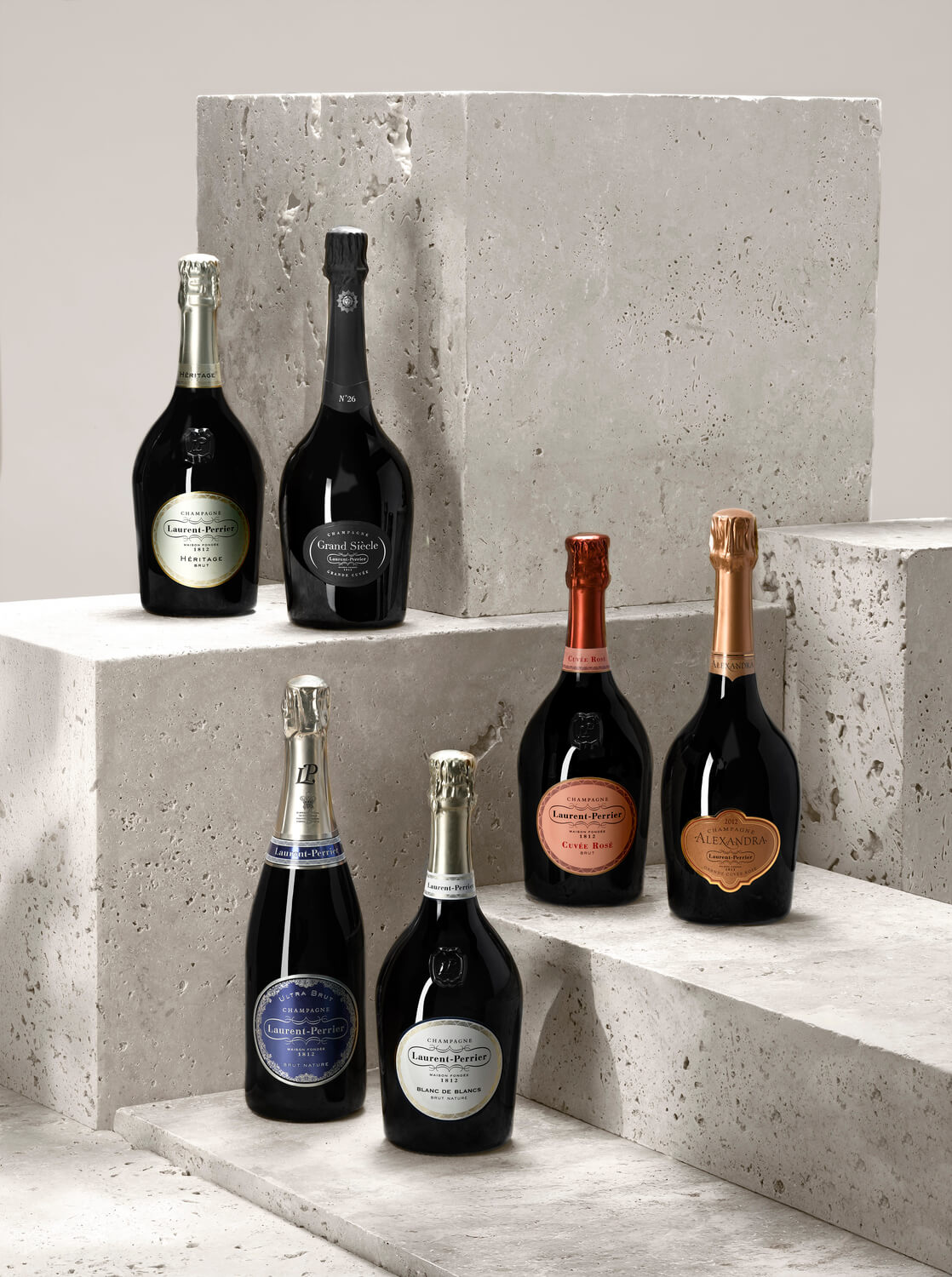
Champagne contributes effervescence to cleanse the palate, acidity to lighten sauces and aromatic complexity capable of engaging with the bird’s subtle game notes.
Vintage Blanc de Blancs: precision and finesse
A 100% Chardonnay Blanc de Blancs from top crus offers chalky minerality, citrus and brioche notes that resonate beautifully with the fine texture of guinea fowl.
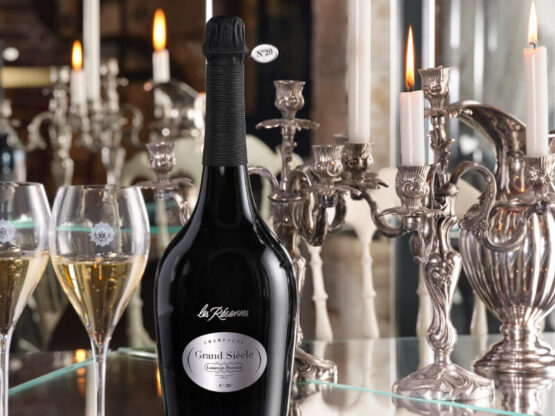
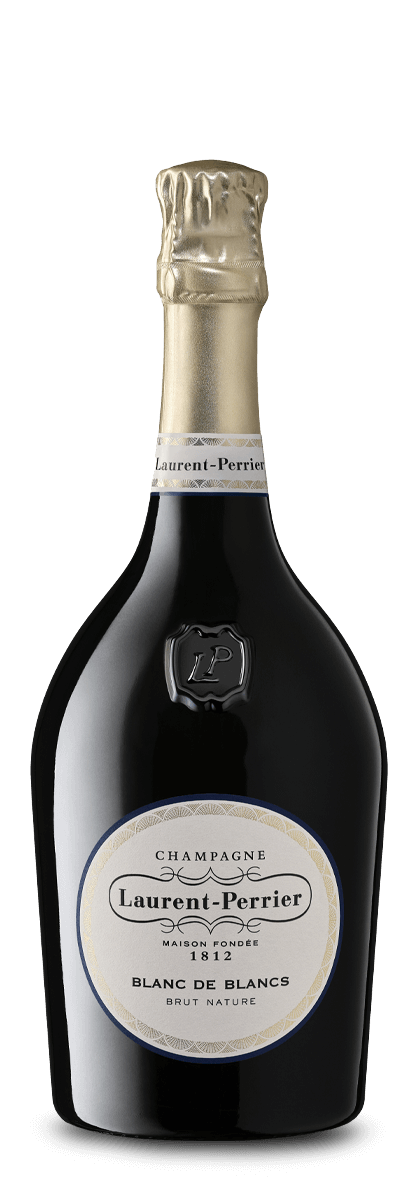
Laurent-Perrier Blanc de Blancs Brut Nature
Produced exclusively from Chardonnay, with no dosage, extended ageing and a crystalline, citrus-driven profile, it pairs ideally with simply roasted guinea fowl, vegetable garnishes or pastry-based preparations with restrained creaminess.
Extra-Brut or Brut Nature: purity & restraint
On herb-roasted guinea fowl with short jus, these styles provide verticality and a pure expression of terroir.
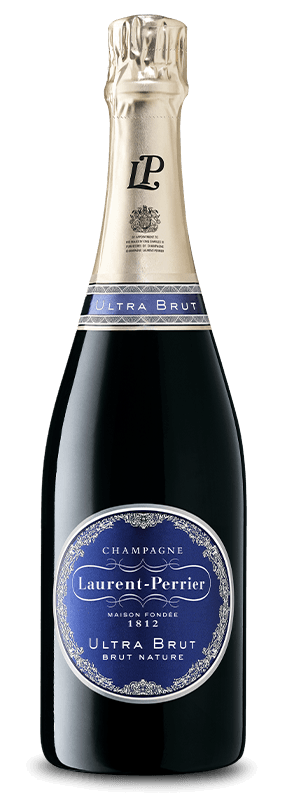
A pioneering zero-dosage champagne, offering precision, saline freshness and remarkable purity, ideal with lemon-and-herb preparations or lightly sauced dishes.
Rosé Champagne: generosity with fruit-based dishes
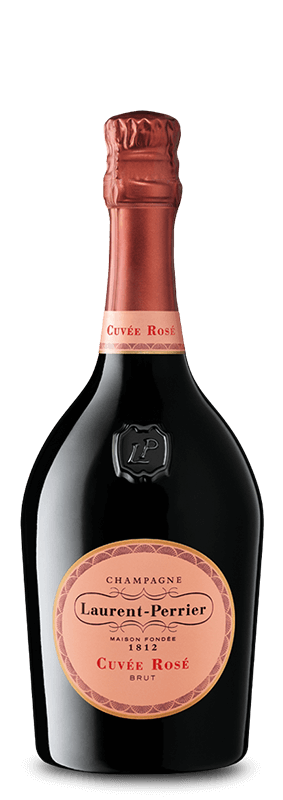
When guinea fowl is prepared with figs, grapes or lightly caramelised jus, rosé champagne becomes an outstanding partner.
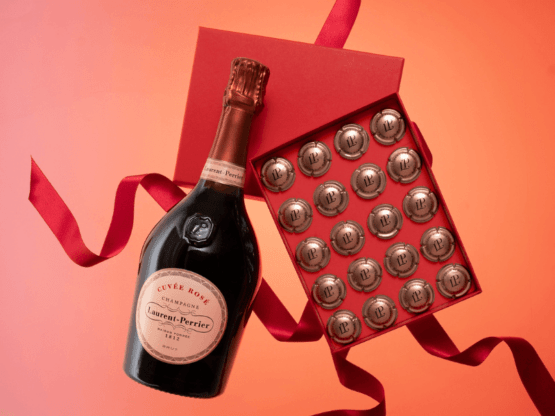
A 100% Pinot Noir rosé by maceration, combining intense red fruit aromas, structure and freshness, perfectly suited to fruit-forward or festive preparations.
Laurent-Perrier La Cuvée & Brut Millésimé: the art of balance
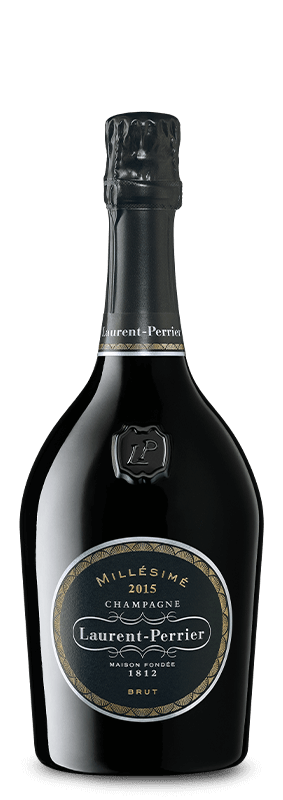
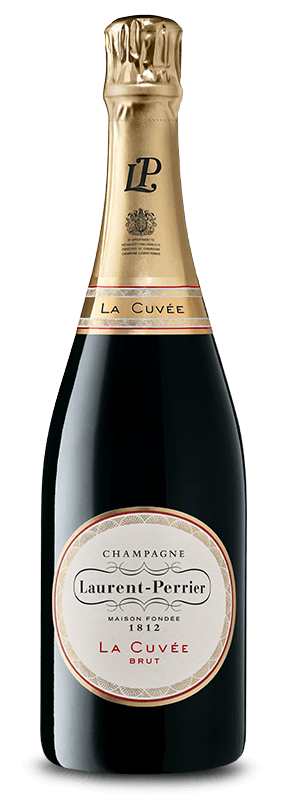
La Cuvée offers a universal harmony for roasted or lightly braised guinea fowl, while Laurent-Perrier Brut Millésimé 2015 or 2018, with extended ageing and greater depth, excels with richer, celebratory dishes featuring mushrooms, chestnuts or truffle.
Conclusion: What to drink with guinea fowl?
Guinea fowl, more expressive than chicken yet more delicate than true game, calls for wines of balance and precision. Structured white wines, refined red wines and, above all, characterful champagnes offer some of the most compelling pairings.
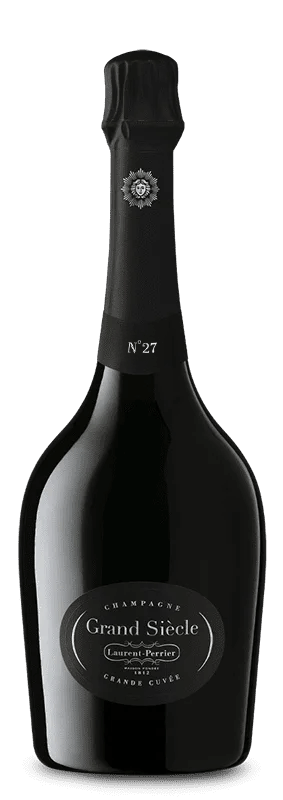
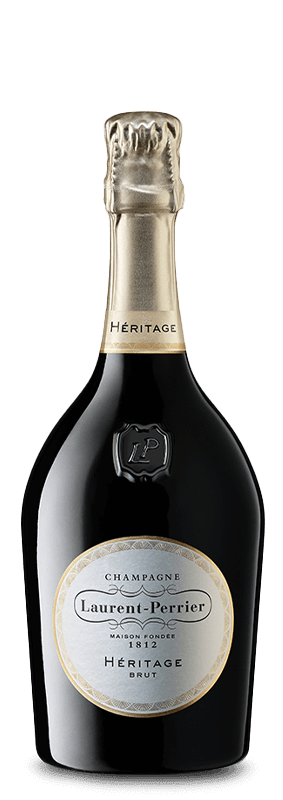
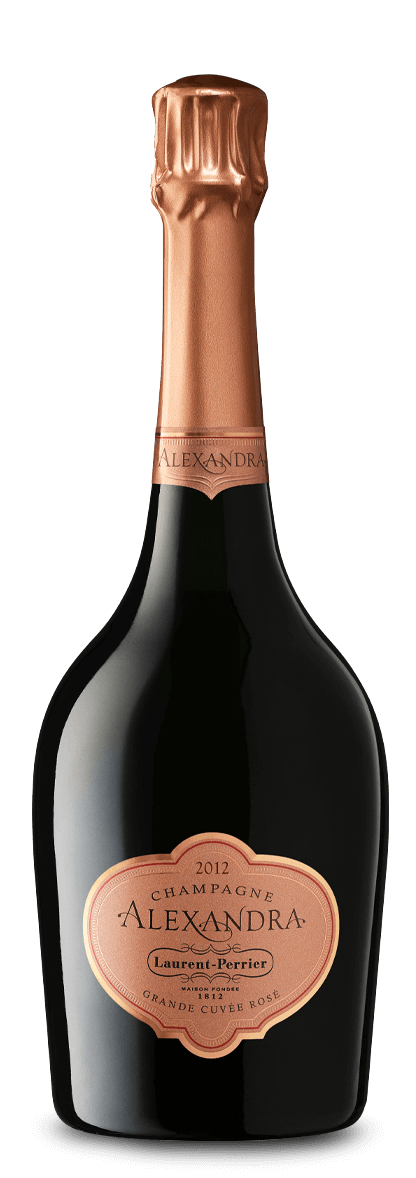
From the purity of Laurent-Perrier Blanc de Blancs Brut Nature and Ultra Brut, to the universal elegance of La Cuvée, the depth of Brut Millésimé and the gourmand richness of Cuvée Rosé, the Laurent-Perrier range naturally accompanies the many expressions of this great French bird.
Answering the question “What to drink with guinea fowl?” is therefore less about imposing a single rule than about offering a refined palette of pairings, where tradition and creativity meet in the glass.