Table of contents
- Foie Gras: An Exceptional Product at the Heart of Festive Traditions
- How Is Foie Gras Produced?
- Which Wines and Champagnes Pair Best with Foie Gras?
- Signature Foie Gras Recipes & Food and Wine Pairings
- Pairing Table: Foie Gras, Accompaniments, and Recommended Wines & Champagnes
- Laurent-Perrier and Foie Gras: The Elegance of Pairings
- Conclusion
Foie Gras: An Exceptional Product at the Heart of Festive Traditions
A symbol of refinement and French gastronomy, foie gras holds a place of honor on festive tables, especially at Christmas and New Year. Its history, however, goes back much further: the first traces of foie gras consumption date back to Antiquity. Egyptians, Greeks, and later Romans already appreciated fattened livers, obtained through the natural gorging of geese during migration.
In France, the tradition of foie gras truly flourished in the 17th century in Alsace and the South-West, two regions that still claim its gastronomic heritage today. In 2006, foie gras was even inscribed on France’s list of protected cultural and gastronomic heritage.
How Is Foie Gras Produced?
Foie gras comes exclusively from goose or duck. The process relies on a specific feeding method that allows the natural development of a generous liver, rich in aromas and textures. Once prepared, it can be enjoyed in different forms: raw, semi-cooked, or fully cooked, in terrine, seared as escalopes, or preserved in jars.
Types of Foie Gras:
- – Duck foie gras: the most common in France, appreciated for its rustic, robust, and slightly more pronounced flavor. It is mainly produced in the South-West.
- – Goose foie gras: rarer and more refined, prized for its finesse and silky texture. Traditionally produced in Alsace.
Methods of Preparation:
- – Raw foie gras: used for searing as escalopes or incorporated into fine preparations such as pâtés en croûte or stuffings.
- – Semi-cooked foie gras (mi-cuit): cooked at low temperature, it retains exceptional creaminess and delicate flavors. Often enjoyed in terrine or jars.
- – Cooked foie gras: sterilized, it develops more complex aromas and keeps for longer.
Which Wines and Champagnes Pair Best with Foie Gras?

Traditionally, foie gras is paired with sweet white wines such as Sauternes, Jurançon, or late-harvest Alsace wines. Yet today, these classic pairings have evolved towards more subtle choices:
Below is a summary of food & wine pairings, including emblematic cuvées from the House of Laurent-Perrier:
- – Champagnes, whose freshness balances the richness of foie gras and enhances its texture.
- – Dry white wines (Meursault, Puligny-Montrachet), which bring minerality and tension.
- – More rarely, silky red wines (Pinot Noir, Pomerol), offering surprising harmony with more elaborate recipes such as duck breast with foie gras or pâté en croûte.
Signature Foie Gras Recipes & Food and Wine Pairings
- – Seared foie gras escalopes: served on a bed of caramelized apples or roasted figs.
- – Semi-cooked foie gras terrine: accompanied by brioche bread or toasted country bread.
- – Foie gras pâté en croûte: combining meats, foie gras, and spices, ideal with delicate red wines.
- – Foie gras burger: a modern, gourmet pairing, elevated by a characterful champagne.
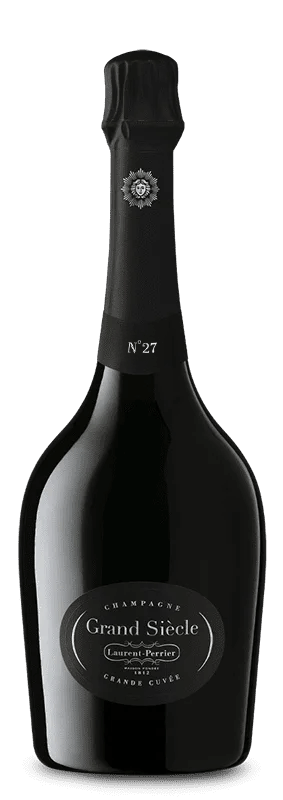
- – Duck breast with foie gras: a bold, elegant pairing, perfectly matched with Grand Siècle.
As for accompaniments, foie gras loves simplicity: brioche, gingerbread, fig or walnut bread, dried fruit chutneys, or onion confit.
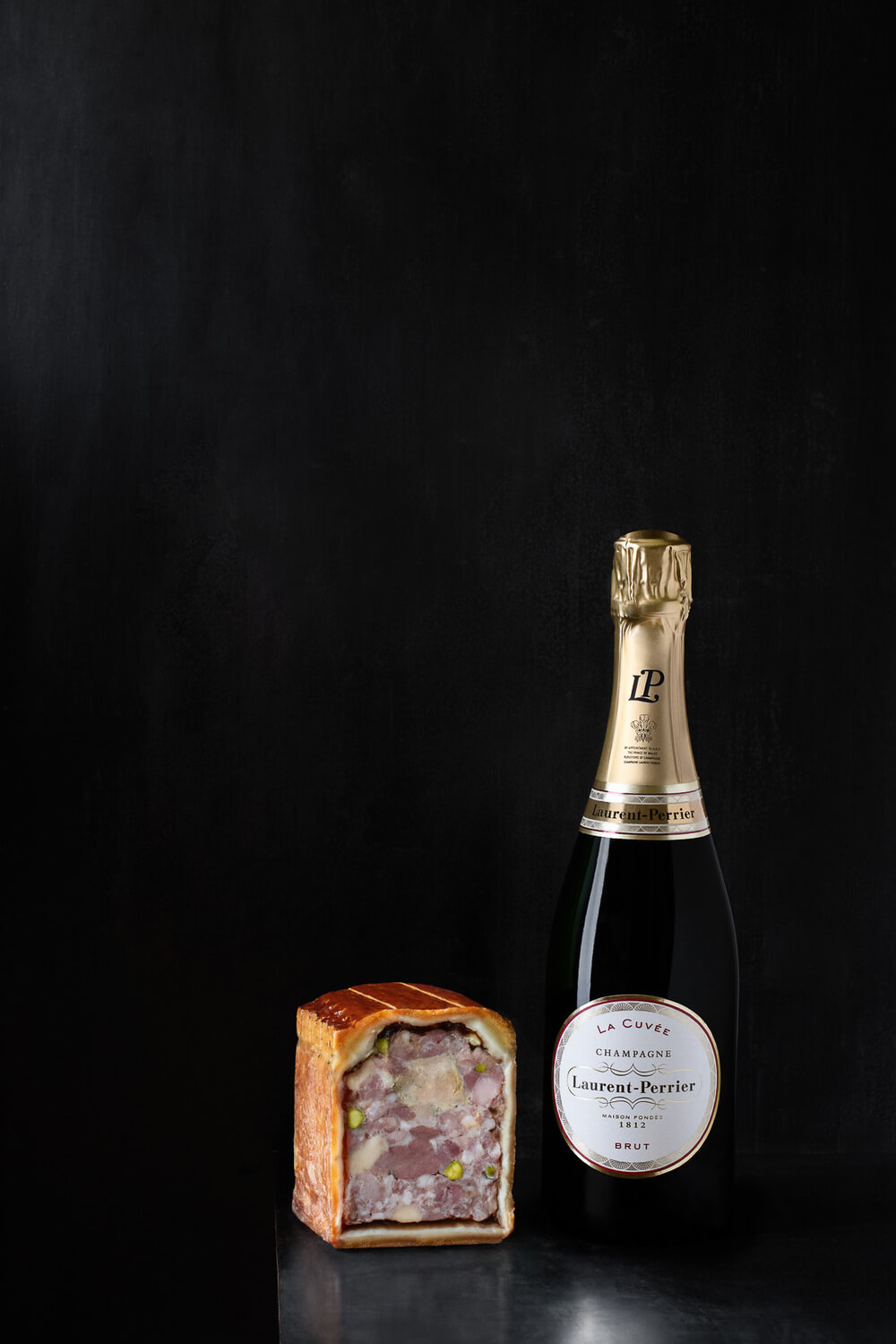
Pairing Table: Foie Gras, Accompaniments, and Recommended Wines & Champagnes
| Type of Foie Gras / Recipe | Accompaniment | Recommended Wines & Champagnes | Rationale |
|---|---|---|---|
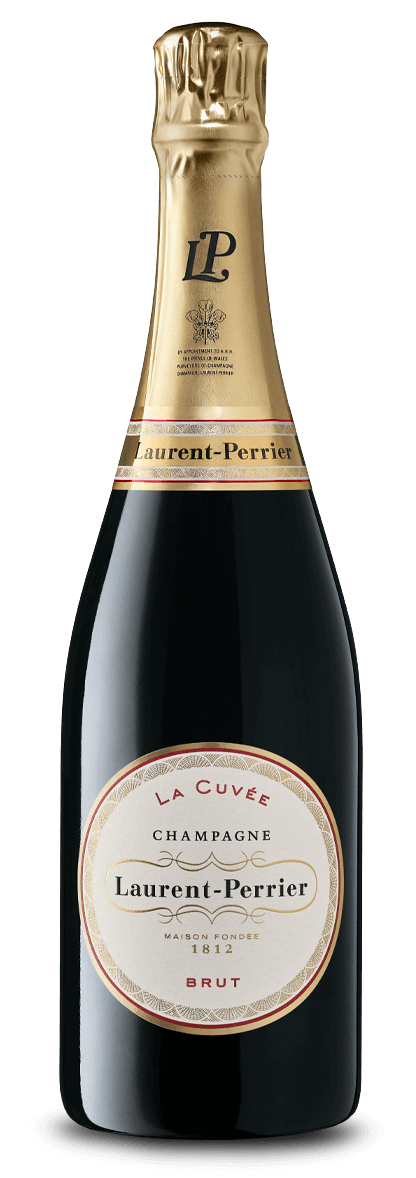
| Duck foie gras terrine (semi-cooked) | Brioche bread, fig chutney | – Laurent-Perrier La Cuvée – Sauternes – Jurançon moelleux | La Cuvée balances the richness of foie gras with its freshness and precision. |
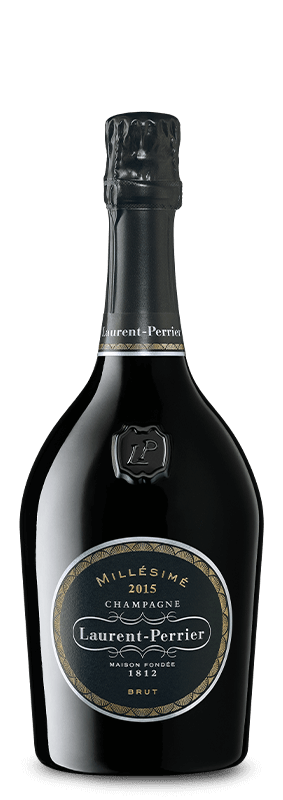
| Goose foie gras terrine (semi-cooked) | Toasted country bread, onion confit | – Laurent-Perrier Brut Millésimé 2015 – Alsace Riesling Vendanges Tardives | The finesse of Brut Millésimé 2015 pairs with the delicacy of goose foie gras. |
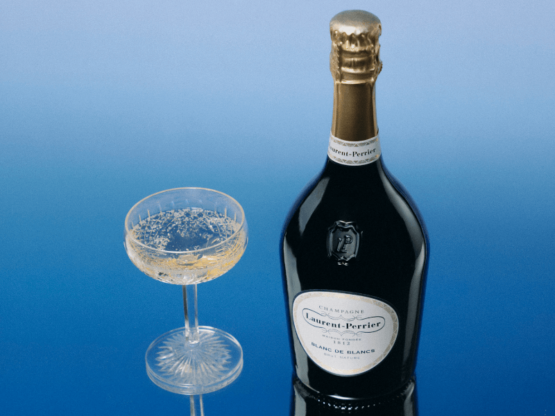
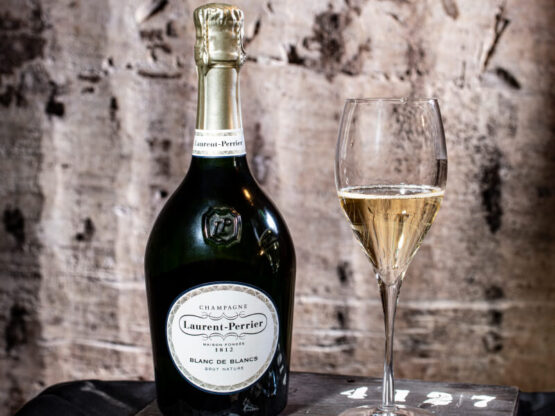
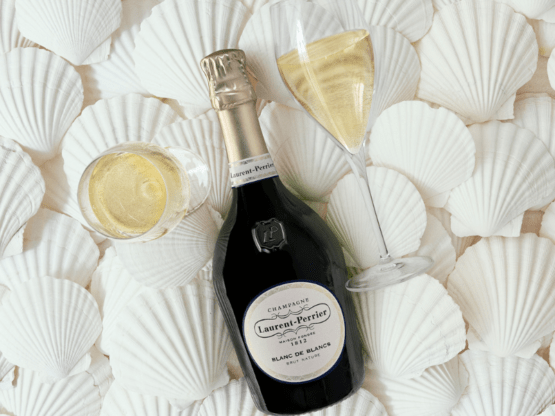
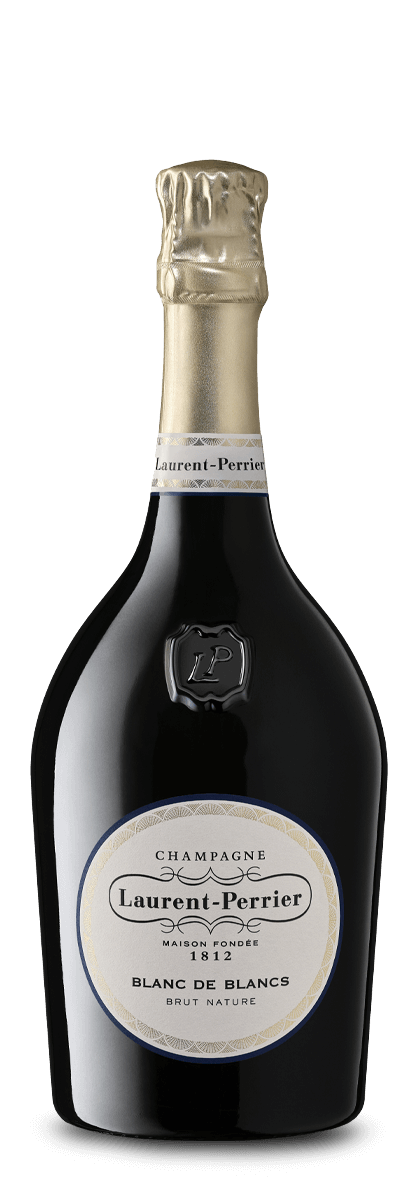
| Seared foie gras escalopes | Caramelized apples, balsamic glaze | – Laurent-Perrier Blanc de Blancs Brut Nature – Puligny-Montrachet 1er Cru | The minerality and purity of Blanc de Blancs Brut Nature balance the richness of seared foie gras. |
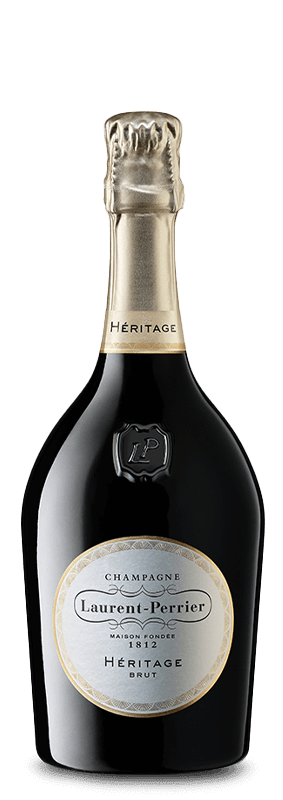
| Cooked foie gras terrine (jar) | Gingerbread, apricot chutney | – Laurent-Perrier Héritage – Vouvray moelleux | The depth and structure of Héritage complement the sweet-spicy notes. |
| Foie gras pâté en croûte | Pickles, mesclun salad | – Laurent-Perrier Grand Siècle Itération N°26 – Pomerol | The complexity and length of Grand Siècle elevate this refined dish. |
| Duck breast with foie gras | Celery purée, rich jus | – Laurent-Perrier Grand Siècle Itération N°24 (magnum) – Châteauneuf-du-Pape | The grandeur and power of Grand Siècle in magnum match the intensity of the dish. |
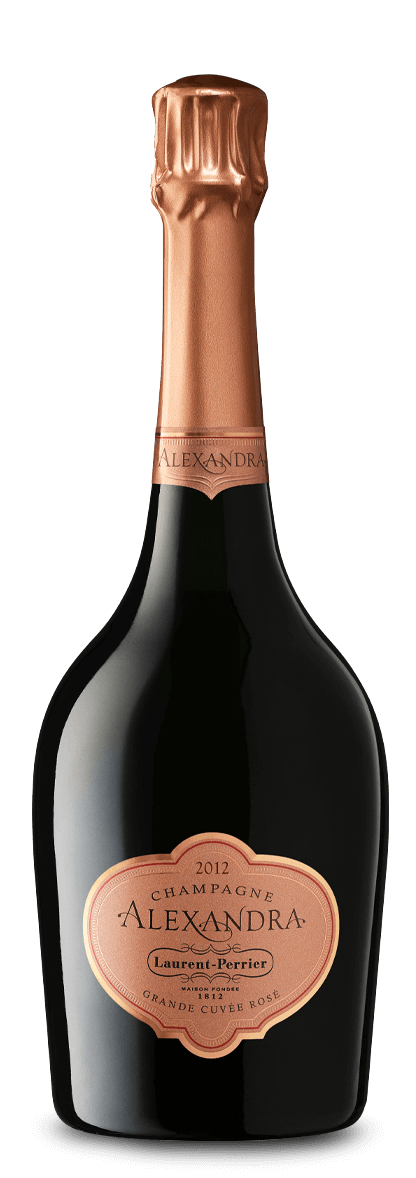
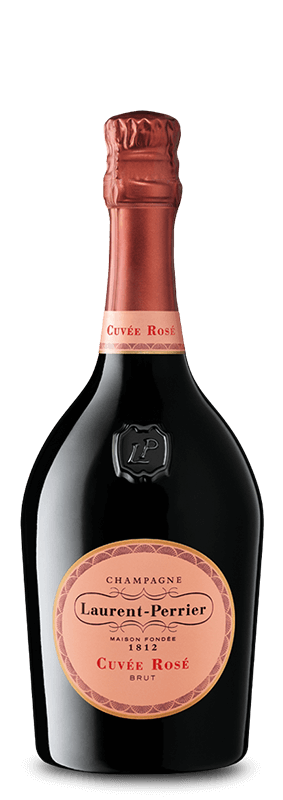
| Foie gras burger | Brioche bun, rocket, onion compote | – Laurent-Perrier Cuvée Rosé – Laurent-Perrier Alexandra Rosé 2012 | The fruit intensity of Cuvée Rosé modernizes the pairing, while Alexandra Rosé 2012 confers exceptional nobility. |
Laurent-Perrier and Foie Gras: The Elegance of Pairings
Laurent-Perrier champagnes naturally find their place alongside foie gras, thanks to three pillars of savoir-faire:
- – The art of blending reserve wines: lending finesse, elegance, and complexity to La Cuvée, Brut Millésimé 2015, Héritage, and Grand Siècle, perfect with the most refined foie gras.
- – Mastery of maceration: giving Cuvée Rosé and the exceptional Alexandra Rosé 2012 intensity and aromatic depth, ideal for bold pairings.
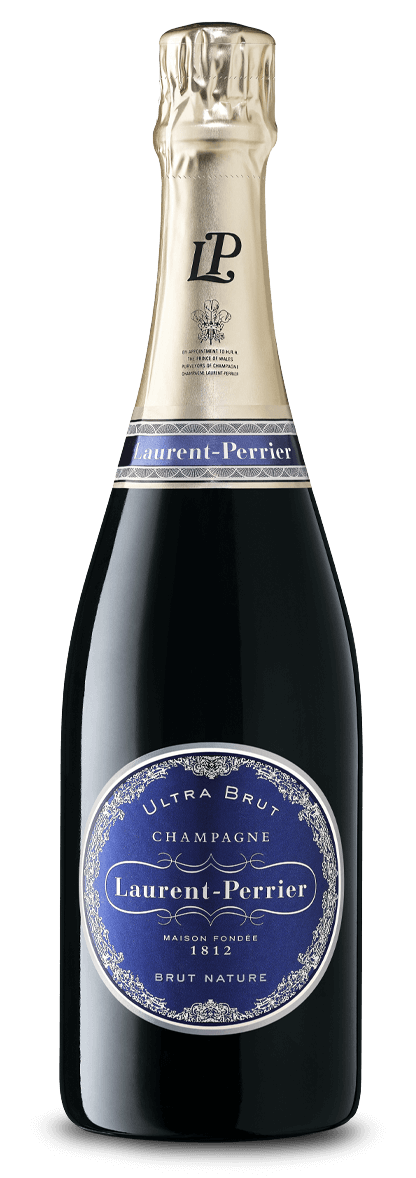
- – The savoir-faire of zero dosage: embodied by Ultra Brut and Blanc de Blancs Brut Nature, whose crystalline purity balances the creaminess of foie gras.
Celebrated by the world’s greatest wine critics, these cuvées embody the excellence and prestige of the House of Laurent-Perrier.
Conclusion
Which champagne best accompanies foie gras?
The one that reveals the perfect harmony, balancing richness with delicacy, and elevating the pleasure of tasting.
Through its collection, the House of Laurent-Perrier illustrates the art of pairing the nobility of foie gras with the timeless elegance of Champagne.