Contents
Sabering a champagne bottle is an emblematic, spectacular gesture, deeply rooted in the history of great celebrations. Inherited from a French Napoleonic tradition, this technique consists of opening a bottle with a single strike of a saber, in a moment of ceremony and prestige.
But to saber champagne is not just for show: it is a technical gesture that requires precision, mastery, and strict adherence to safety rules. The House Laurent-Perrier provides these tips to help you master this ritual.
A Historic and Prestigious Tradition
Sabering originated in the early 19th century, when cavalry officers celebrated their victories by opening bottles with a saber. Today, this rare experience is reserved for exceptional moments: weddings, anniversaries, or prestigious receptions. It is a symbol of grandeur, to be performed with elegance and caution.
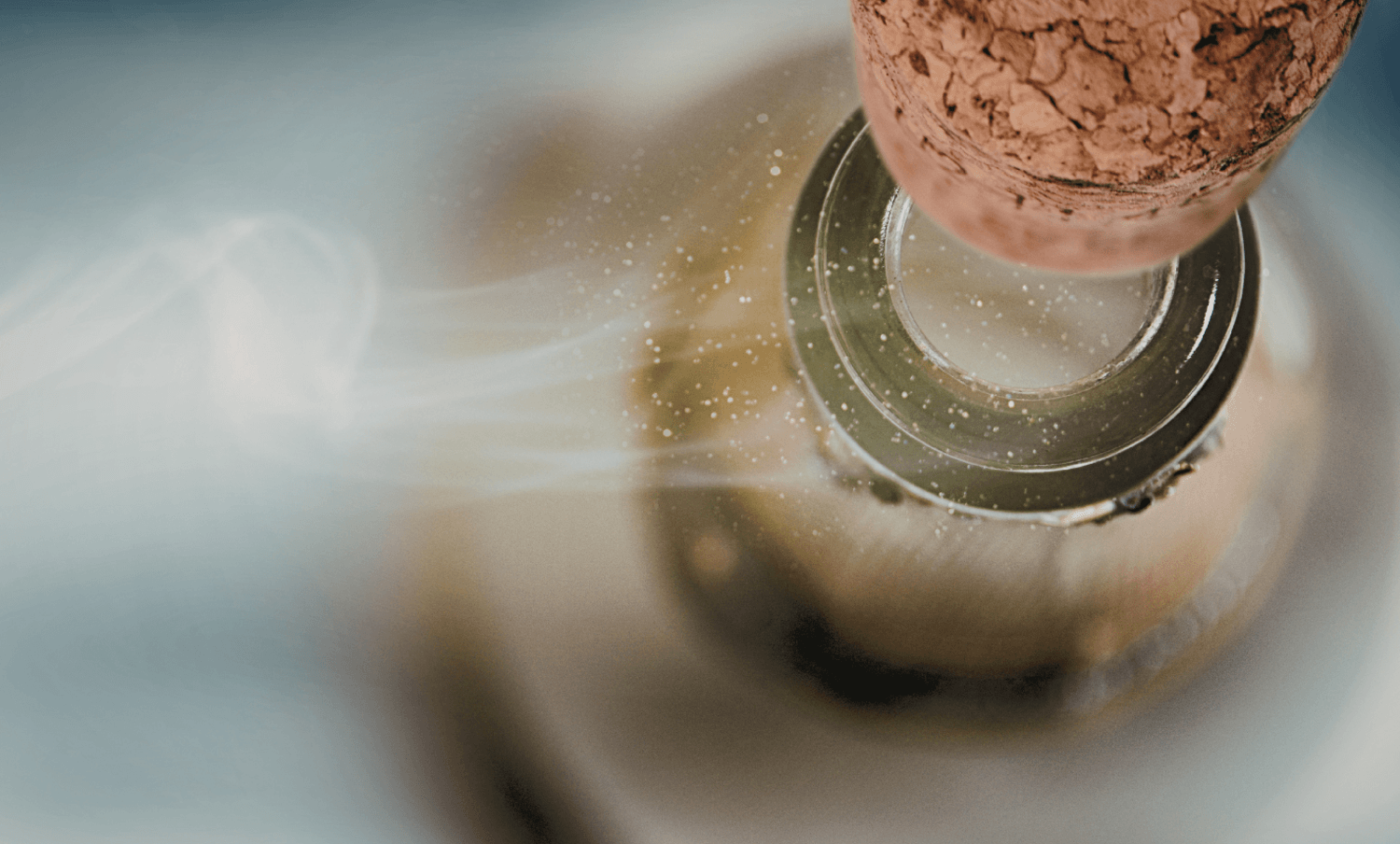
Essential Steps to Saber a Bottle of Champagne
1. Choose and Chill the Bottle
Not all bottles are suitable for this opening style. To succeed, favor:
- – Standard format: A 75 cl champagne bottle.
- – Ideal temperature (6–8°C): Cold reduces the pressure inside and weakens the glass at the breaking point.
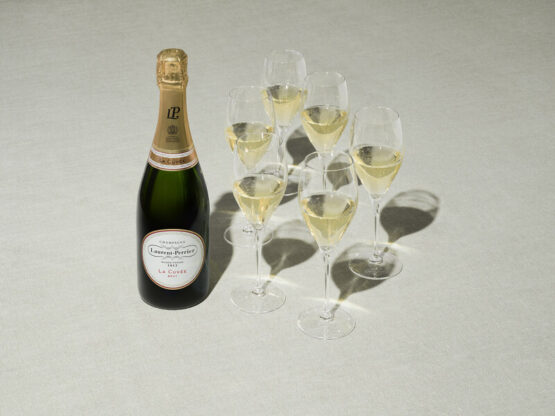
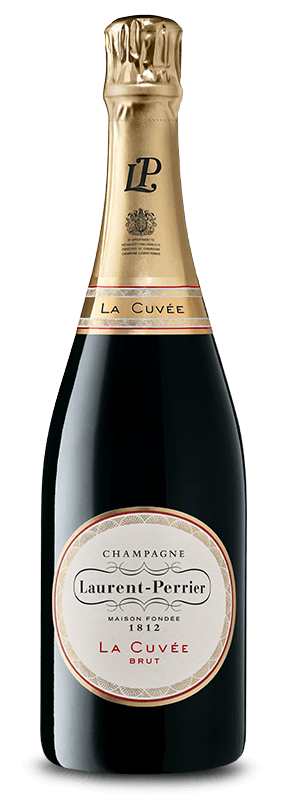
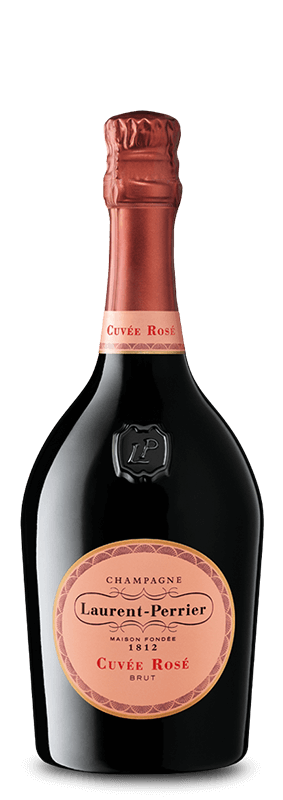
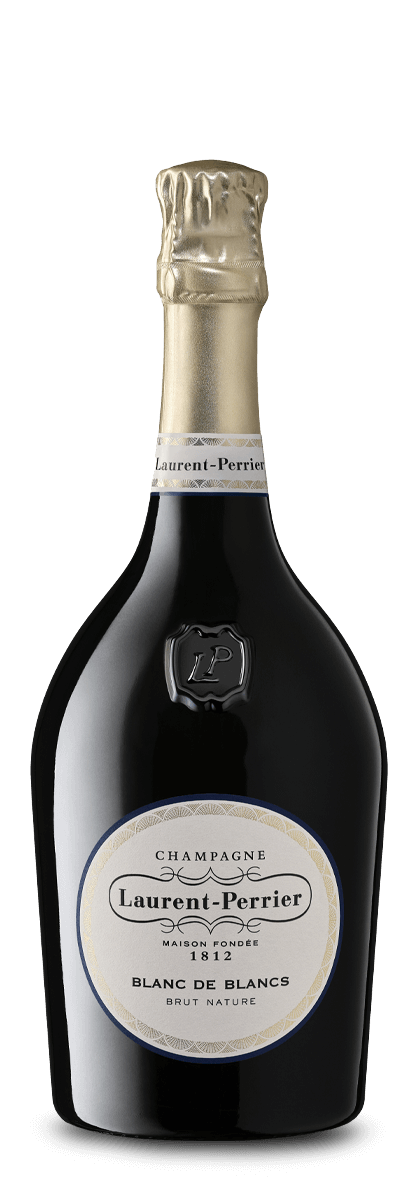
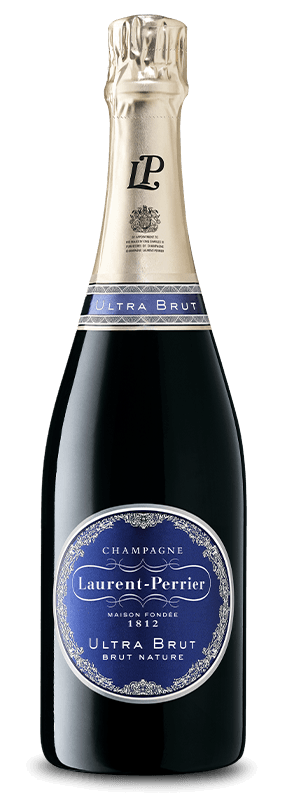
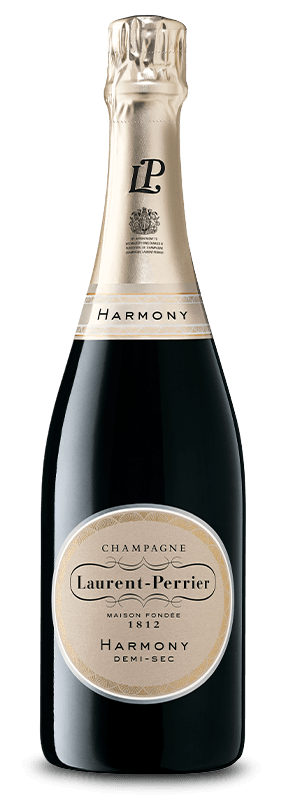
- – Choice of cuvée: For a festive experience, prefer Laurent-Perrier La Cuvée.
2. Prepare the Bottle
- – Remove the wrapping: Completely remove foil and wire cage. The neck must be fully bare for a clean break.
- – Identify the seam line: Locate one of the two vertical seams on the glass. This is the weak point where the glass is fused. The saber should glide along the side of the bottle along this line.
3. The Technical Gesture
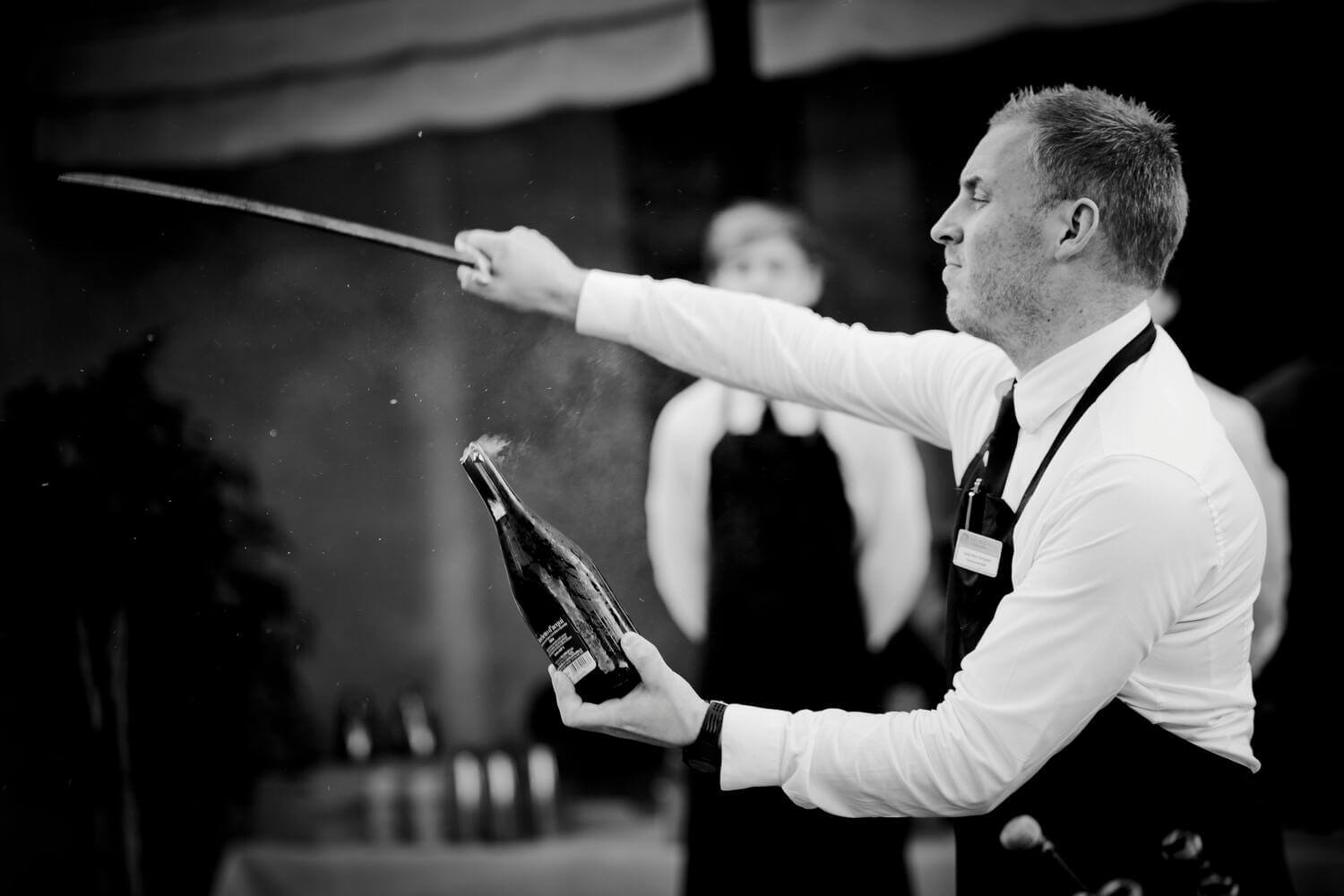
- – The tilt: Hold the bottle at a 45° angle, pointing away from people. Make sure you have several meters of clearance.
- – The movement: Do not strike violently. Glide the blade (the blunt edge of a heavy kitchen knife is sufficient) smoothly and firmly along the seam toward the neck.
- – The impact: A sharp impact at the junction where the seam meets the lip detaches the collar, which is propelled by the pressure inside along with the cork. You’ll see that a bottle of bubbly can be opened with just a firm, steady slide.
4. Immediate Service
Once the champagne bottle is sabred, let a few drops of sparkling wine pour to remove any micro shards of glass, check the cut, and serve immediately.
Essential Safety Rules
Sabering must always be controlled to avoid a mess or injury. Here’s what you should never do:
- – Saber a warm bottle: This increases the risk of the glass shattering.
- – Using a serrated blade: Always use a smooth edge.
- – Forget to check the wine: Make sure no shards of glass fell inside the bottle.
What is the difference Between “Sabre” and “Sable” champagne?
In French culture, words are as important as gestures. While these two expressions sound similar, they refer to different traditions.
Sabre the champagne: the opening
Definition: To open a bottle of sparkling wine by popping the neck with a single strike.
Using your weapon of choice, it focuses solely on the ritual of the opening.
Sabler the champagne: the tasting
Definition: Joyfully drinking the wine to celebrate an event.
The term may come from the crackling of the bubbles that recalls sand, or from the old custom of chilling bottles in buckets of wet sand.
Sabler = To toast and celebrate.
| Expression | Action | Meaning |
|---|---|---|
| Sabre | Open a bottle with a saber | Technical and ritual gesture |
| Sable | Drink to celebrate | Festive and convivial expression |
Conclusion: Celebrate with Mastery
Sabering is the spectacular gesture, while sabling evokes the pleasure of sharing a glass. Whether you learn this technique from videos or professional training, champagne remains a symbol of elegance. At Laurent-Perrier, each bottle of sparkling wine embodies unique know-how: whether opened with a saber or the delicacy of an expert hand.
FAQ –Frequently Asked Questions
Which object should be used for sabering?
A champagne saber is the classic weapon of choice, but a heavy kitchen knife or even a sturdy butter knife (using the back edge) works if you follow the right technique.
Why does the neck break so cleanly?
The blade creates a shock at the weak point of the glass (the seam), and the pressure inside the bottle (around 6 bars) instantly expels the glass lip.
Is it dangerous?
It is less common for daily service. If you’ve never tried it, make sure to practice with a less expensive sparkling wine first to gain confidence.