Table of Contents
A symbol of celebration and refinement, the champagne tower is one of the most spectacular rituals of grand receptions. Often associated with a wedding reception, a gala or a prestigious event, it offers an exceptional display where the wine flows in a cascading stream through a pyramid of coupes.
However, for this gesture to remain elegant, it must be carried out with precision. The House of Laurent-Perrier provides this guide to everything you need to successfully stage this moment.
What Is a Champagne Tower?
The concept consists of building a champagne pyramid by stacking coupe glasses, then pouring the champagne into the top glass so that it gently distributes into the glasses below.
A champagne tower isn’t just about aesthetics; it offers:
- – A spectacular display to enhance the dessert moment.
- – A symbol of celebration for the bride and groom and their guests.
- – An elegant tradition within the reception venue.

How to Make a Champagne Fountain: Setup Steps
To build a champagne tower that stands tall, follow each step with care.
1. Choose the Right Glassware
A champagne cascade must be created exclusively with coupe glasses. They are more stable than flutes, and their wide opening allows the bubbles to flow smoothly. For a prestigious presentation at a wedding reception, use identical crystal glasses rather than plastic glasses to maintain the elegance.
2. Choose a Sturdy and Secure Surface
Begin by installing your structure on a perfectly level and sturdy table. Your wedding caterer will often recommend placing it at the center of the room or on a dedicated buffet table, away from high-traffic areas. Make sure the bottom layer is perfectly aligned on this level surface.
3. Build a Champagne Pyramid
The number of tiers determines the spectacle. Usually, a square base is used for building your champagne structure:
- – Four tiers = 20 coupes
- – Five tiers = 35 coupes
- – Six tiers = 56 coupes
Place the glasses carefully, starting with the bottom base, then build upward tier by tier, checking stability at each level. Every glass should touch the ones surrounding it so that the champagne can flow from one glass to another without spilling.
Logistics: Number of Bottles and Choice of Cuvée
Calculating the Number of Champagne Bottles
It is crucial to anticipate the many glasses needed to avoid interrupting the cascade before all glasses are filled.
- – On average: 1 bottle (75 cl) contains approximately 25 ounces of champagne, which serves 5 to 6 coupes.
- – For a 35-coupe tower, plan for approximately 6 to 7 bottles.
Which Cuvée Should You Choose?
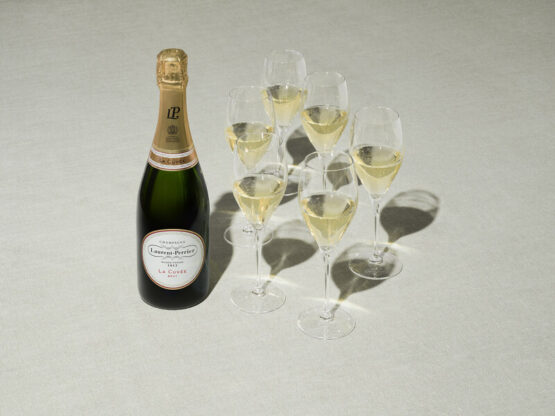
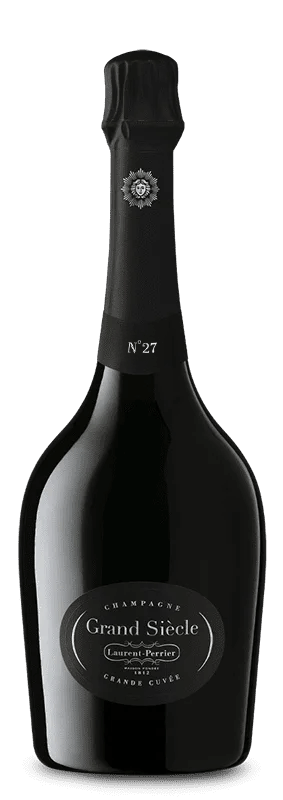
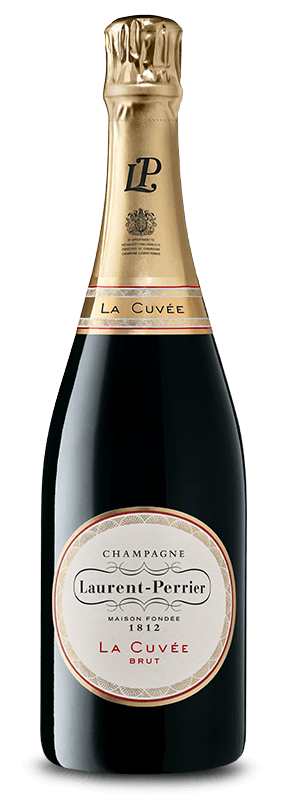
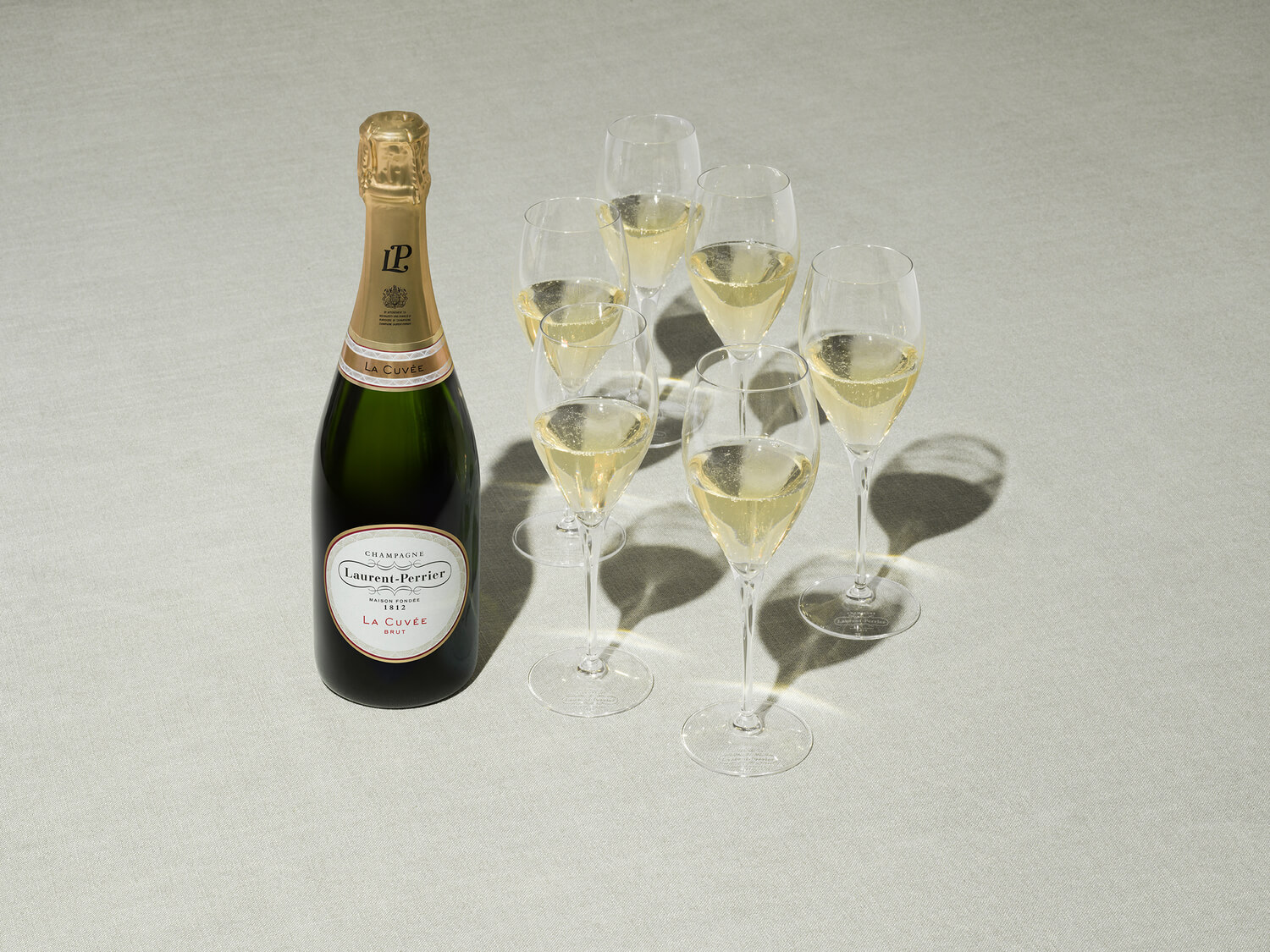
For this type of display, the wine must express freshness and brightness. Laurent-Perrier La Cuvée is ideal for filling the glasses at wedding receptions. Its balanced structure supports the aeration caused by the cascade. More complex cuvées such as Grand Siècle are best served in a more traditional manner.
The Service Ritual: The Art of Pouring
The Ideal Temperature
To avoid excessive foam, the wine should be between 6 and 8°C. Champagne that is too warm would spoil the visual effect by overflowing abruptly.
The Technical Gesture
The secret lies in complete control while pouring the champagne:
- 1. Pour the champagne gently into the top glass.
- 2. Allow the wine to cascade naturally until all glasses are filled to the lower tiers.
- 3. Maintain a slow and steady rhythm to limit the loss of carbon dioxide.
Mistakes to Avoid at Your Wedding Reception
- To ensure this moment remains unforgettable, avoid:
- – Using flutes (too unstable for a tower).
- – A fragile or shaky table (always use a sturdy table).
- – Pouring too quickly, which would create uncontrolled foam.

Conclusion: A Cascade of Light and Sharing
The champagne tower embodies the art of celebration. At Laurent-Perrier, we see this ritual as an invitation to elegance. When perfectly executed, this moment becomes a true symbol of the art of living, enhancing your event from the first to the last drop.
Frequently Asked Questions
How many bottles are needed for a tower serving 50 guests? Plan for approximately 10 bottles of champagne to ensure both the filling of the glasses and the first round of service.
Can you build a champagne tower yourself? It is possible with precision, but for large wedding receptions, it is often preferable to entrust the building of the champagne pyramid to service staff.
What size should the base be? A square base is the most common. For each level you go up, the next layer should be one number bigger in the sense of fitting into the gaps created by the lower layer.