Table of Contents
- The Art of Purity According to Champagne
- What Is a Blanc de Blancs Champagne?
- What Is a Brut Nature (Zero Dosage) Champagne?
- Blanc de Blancs Brut Nature: Purity in Harmony
- Food Pairings for Blanc de Blancs Champagne
- Specific Pairings for Blanc de Blancs Brut Nature
- Difference Between Blanc de Blancs and Blanc de Blancs Brut Nature
- Laurent-Perrier Blanc de Blancs Brut Nature: Purity as Heritage
- Conclusion
The Art of Purity According to Champagne
A Blanc de Blancs Champagne is a symbol of elegance and precision, embodying the very essence of the Champagne region’s savoir-faire. This style is defined by two elements: the purity of Chardonnay grapes, the only variety used, and the transparency of the Brut Nature style, meaning no liqueur d’expédition is added.
Every bottle tells a story of exceptional terroir, careful harvest, and meticulous vinification, creating a sparkling wine that delights wine lovers worldwide.
What Is a Blanc de Blancs Champagne?
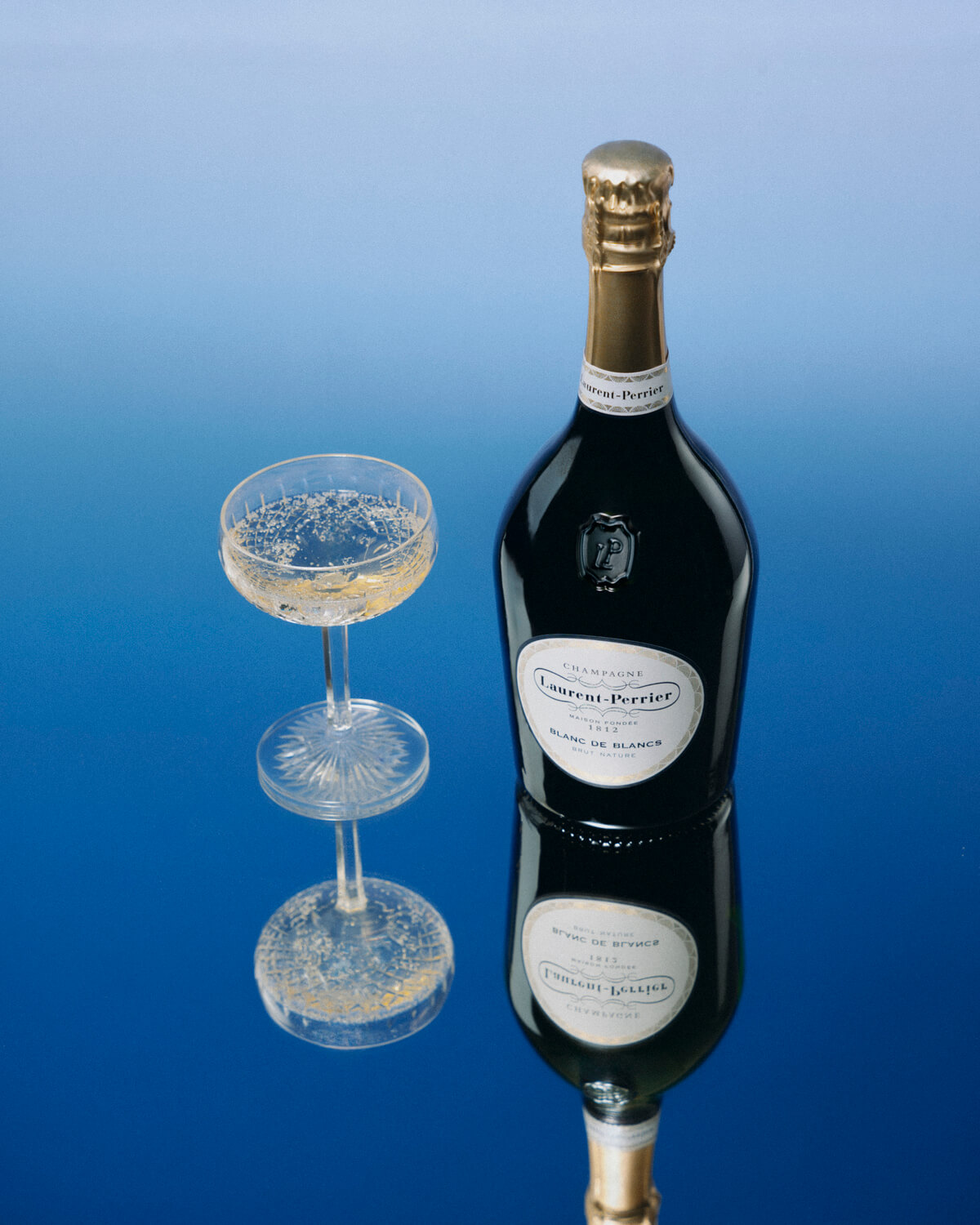
A Blanc de Blancs Champagne is crafted exclusively from white grapes, primarily Chardonnay, the king of the Côte des Blancs. This grape variety gives crystalline freshness, airy structure, and delicate minerality to the wine..
Exceptional Terroirs of Blanc de Blancs
The most renowned terroirs for Chardonnay are in the heart of the Côte des Blancs, south of Épernay. Grand Cru villages such as Le Mesnil-sur-Oger, Avize, Cramant, and Oger offer chalky soils that enhance finesse and natural tension. These calcareous soils promote deep roots, giving the Blanc de Blancs Champagne its characteristic verticality and mineral purity.
Organoleptic Profile
A Blanc de Blancs Champagne is distinguished by:
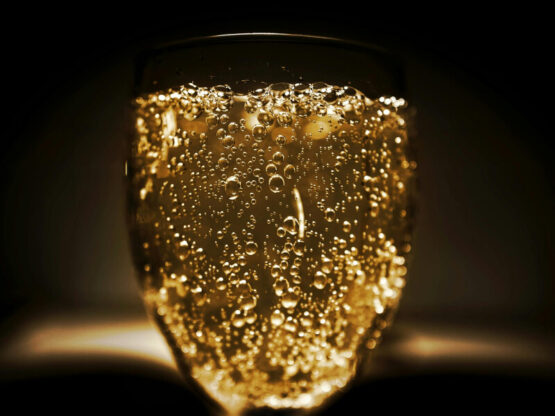
- – Eye: pale gold with green highlights.
- – Nose: floral notes (hawthorn, honeysuckle), citrus (lemon, grapefruit), and chalky or brioche nuances depending on the ageing.
- – Palate: tension, freshness, vibrancy, saline length, and remarkable aromatic precision.
Comparison with Other Champagne Styles
| Type of Champagne | Main Grapes | Style & Sensory Profile |
|---|---|---|
| Blanc de Blancs | 100% Chardonnay | Fresh, mineral, elegant, vertical |
| Blanc de Noirs | Pinot Noir / Meunier | Powerful, structured, full-bodied |
| Classic Blend | Chardonnay, Pinot Noir, Meunier | Balanced, harmonious, complex |
Blanc de Blancs shines for purity and lightness, while Blanc de Noirs emphasizes structure and roundness.
What Is a Brut Nature (Zero Dosage) Champagne?
A Brut Nature Champagne contains no liqueur d’expédition after disgorgement (sugar level < 3 g/L).
Production Requirements
- – Grapes must be ripe with perfect acid balance
– Extended ageing on lees softens the wine’s tension - – Careful timing of disgorgement ensures harmony without added sugar
Organoleptic Profile
- – Pure expression of terroir
- – Crisp, lively attack without sweetness
- – Dry, saline finish of remarkable precision
This style appeals to connoisseurs seeking authenticity and finesse in sparkling wines.
Blanc de Blancs Brut Nature: Purity in Harmony
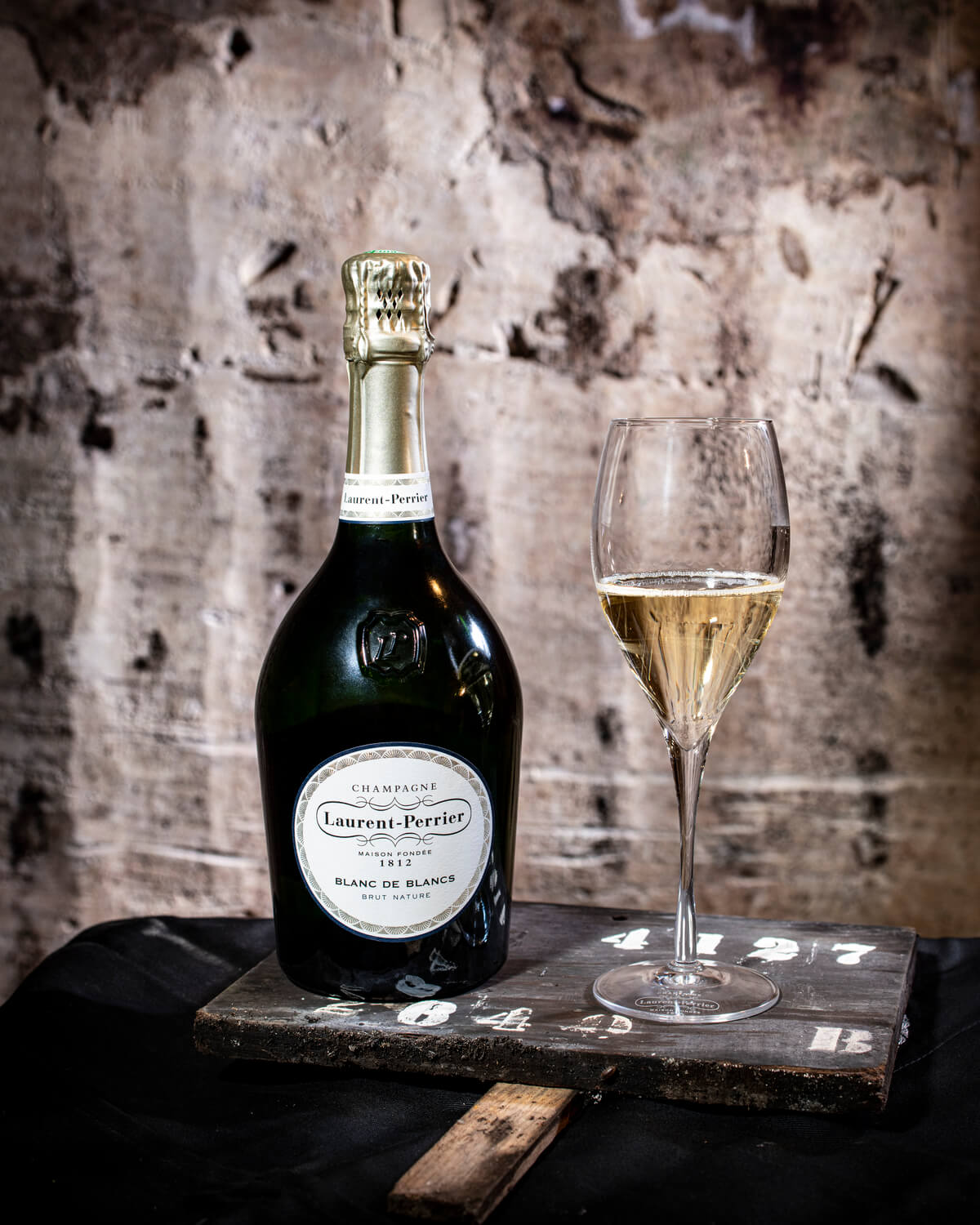
Uniting Blanc de Blancs with Brut Nature produces a Champagne of absolute purity. Chardonnay grapes and zero dosage reveal crystalline transparency, exposing every nuance of the terroir.
Sensory Characteristics
- – Nose: floral, citrus, with fresh almond and wet chalk
- – Palate: lively, incisive, finely chiseled with silky texture
- – Finish: saline, persistent, highlighting purity and precision
This demanding style embodies oenological mastery: allowing only the excellence of the fruit and the passage of time to speak.
Food Pairings for Blanc de Blancs Champagne
| Category | Ideal Pairings | To Avoid |
|---|---|---|
| Starters | Natural oysters, sea bass carpaccio, langoustine tartare | Terrines, charcuterie |
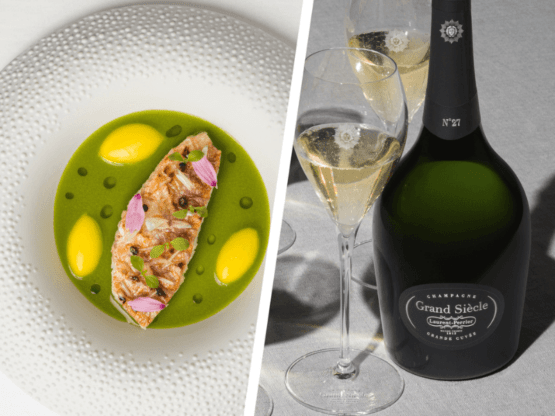
| Fish | Grilled John Dory, white tuna sashimi, fine shellfish | Sauced or spicy dishes |
| Meat | Veal fillet, poultry supreme, refined Japanese cuisine | Beef, lamb, rich brown sauces |
| Cheese | Ash-coated goat cheese, Parmesan, aged Gouda | Bleu d’Auvergne, Roquefort |
| Desserts | Lemon sorbet, yuzu granita | Chocolate or caramel desserts |
Specific Pairings for Blanc de Blancs Brut Nature
| Category | Ideal Pairings | To Avoid Absolutely |
|---|---|---|
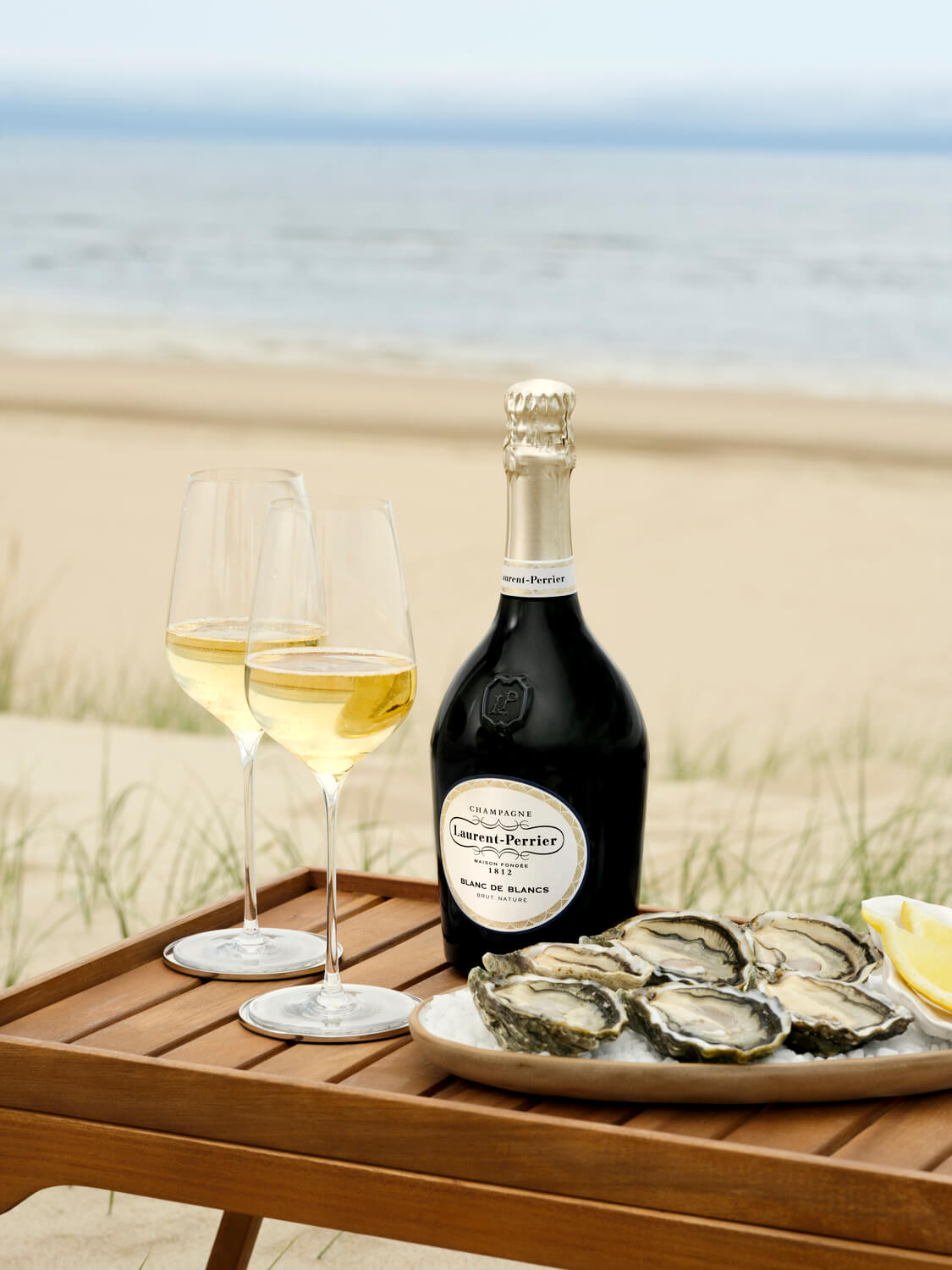
| Starters | Natural oysters, sea bass carpaccio, langoustine tartare | Terrines, charcuterie |
| Fish | Grilled John Dory, white tuna sashimi, fine shellfish | Sauced or spicy dishes |
| Meat | Veal fillet, poultry supreme, refined Japanese cuisine (yakitori, light tempura) | Beef, lamb, rich brown sauces |
| Cheese | Ash-coated goat cheese, Parmesan, aged Gouda | Bleu d’Auvergne, Roquefort |
| Desserts | Lemon sorbet, yuzu granita | Chocolate or caramel-based desserts |
Difference Between Blanc de Blancs and Blanc de Blancs Brut Nature
| Criterion | Blanc de Blancs | Blanc de Blancs Brut Nature |
|---|---|---|
| Dosage | Generally Brut (6–12 g/L) | None (< 3 g/L) |
| Style | Freshness and elegance | Purity and tension |
| Audience | Lovers of balanced finesse | Connoisseurs seeking authenticity |
| Expression | Harmony of fruit and structure | Direct expression of Chardonnay and terroir |
Laurent-Perrier Blanc de Blancs Brut Nature: Purity as Heritage
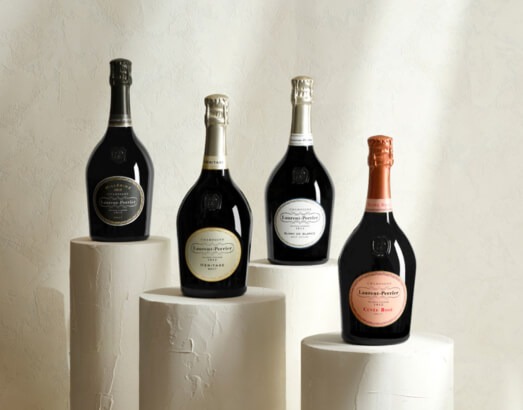
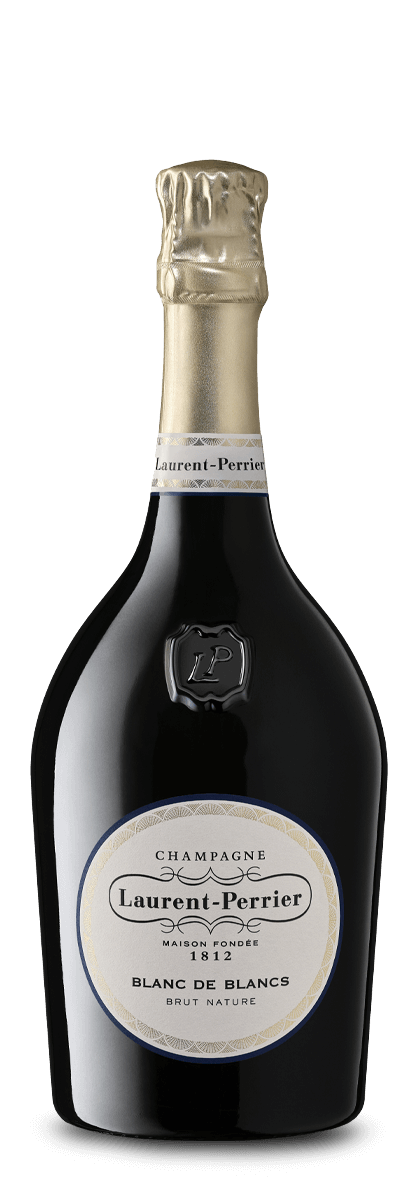
Launched in 2019, this Blanc de Blancs Champagne embodies Laurent-Perrier’s philosophy: freshness, finesse, and absolute purity.
- – Sourced from Chardonnay grapes of Grands Crus in Côte des Blancs and Premiers/Grands Crus in Montagne de Reims
- – Multi-vintage blend for complexity and balance
- – Aged on lees, offering: fine, persistent bubbles; aromas of white flowers, candied lemon, almond; taut, precise palate
It is a sparkling wine that celebrates the luminous signature of the Maison.
Conclusion
A Blanc de Blancs Brut Nature Champagne represents the purest expression of Chardonnay and Champagne terroir. Combining the crystalline finesse of Blanc de Blancs with the transparency of Brut Nature, it delivers minimalist, absolute elegance — a special Champagne for those who value purity, precision, and vintage authenticity.