table of Contents
- What should you drink with charcuterie?
- A Brief History: The Origins of Charcuterie
- What Is Meant by Charcuterie?
- Charcuterie vs. Cured Meats: A Useful Distinction
- A Panorama of Major Charcuterie Traditions
- What to Drink with Charcuterie: Key Principles
- Charcuterie and Champagne: A Contemporary and Coherent Pairing
- Pairing Table: Charcuterie, Wines & Champagnes
- Conclusion: What to Drink with Charcuterie
A generous platter shared at aperitif time, a refined picnic, or a classic bistro starter, charcuterie is one of the warmest and most convivial symbols of the French art of living. Hams, dry sausages, rillettes and terrines embody an age-old savoir-faire, patiently handed down through generations, combining terroir, precise craftsmanship and time.
Faced with this diversity of flavours – salty, smoky, spicy, sometimes subtly sweet – one essential question naturally arises.
What should you drink with charcuterie?
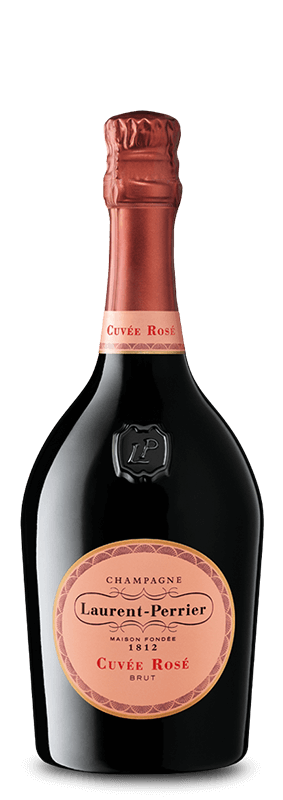
While red wine often comes to mind instinctively, the most accurate pairings are frequently found among white wines, structured rosés and, perhaps more surprisingly yet remarkably successfully, gastronomic champagnes. Rosé champagnes made by maceration, such as Laurent-Perrier Cuvée Rosé, or a well-balanced blended Brut like Laurent-Perrier La Cuvée, are particularly compelling choices.
A Brief History: The Origins of Charcuterie
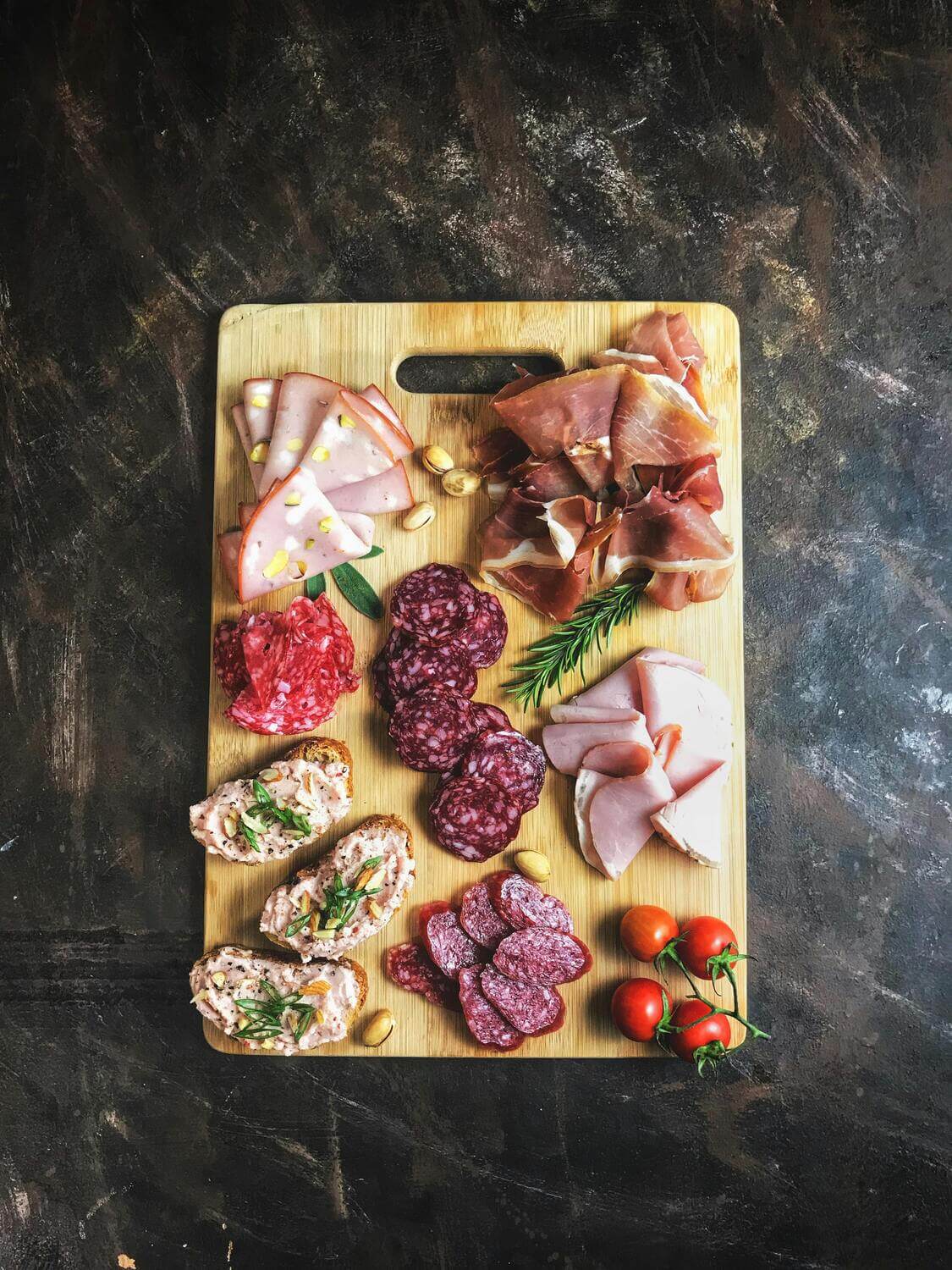
Charcuterie was born out of a vital necessity: preserving meat.
- From prehistoric times, humans sliced meat into thin strips to dry it in the sun; later, they minced it with fat to improve its keeping qualities.
- With the mastery of fire, smoking and cooking complemented drying and salting as preservation methods.
- In Antiquity, Egyptians, Greeks and Romans relied on salt, a rare and precious resource, to preserve meat and fish. Ancient texts already describe preparations resembling modern charcuterie. Homer, in The Odyssey, mentions a casing filled with blood and fat, roasted over the fire, a distant ancestor of black pudding.
During the Middle Ages, techniques became more refined. The slaughtering of the pig was a major event in rural life, and the animal was transformed from nose to tail to avoid waste.
From the fifteenth century onward, livestock was increasingly raised on the outskirts of cities and slaughtered in specialised workshops. Pork remained an exception: often raised close to homes, it was slaughtered locally and processed within the family, a tradition still alive in some villages of Southern Europe.
In the nineteenth century, industrialisation brought greater structure to meat processing:
- – improvements in salting, drying and smoking techniques,
- – the emergence of organised curing houses,
- – wider commercial distribution, while preserving strong regional identities.
Since then, charcuterie has continued to evolve, balancing artisanal traditions, modern sanitary standards and gastronomic innovation.
What Is Meant by Charcuterie?
- Charcuterie refers to a wide range of food specialities derived from the transformation of meat, most often pork, but also poultry (turkey, duck), game (wild boar, hare) or other species.
- It can be divided into three major families.
- – 1. Cured, raw and dried products
- Dry sausages, rosette, chorizo, coppa, lomo, dry-cured ham, pancetta, Bündnerfleisch.
- Preserved through salt and time, by drying, ageing and sometimes smoking.
- – 2. Cooked products
- Cooked ham, ham hocks, pâtés, terrines, rillettes, black and white puddings, andouilles and andouillettes.
- Produced through long cooking processes, in jelly, pastry crusts or fine emulsions.
- – 3. Products to be cooked
- Fresh sausages, chipolatas, merguez, Toulouse sausages.
- Intended for grilling, pan-frying or slow cooking.
Charcuterie vs. Cured Meats: A Useful Distinction
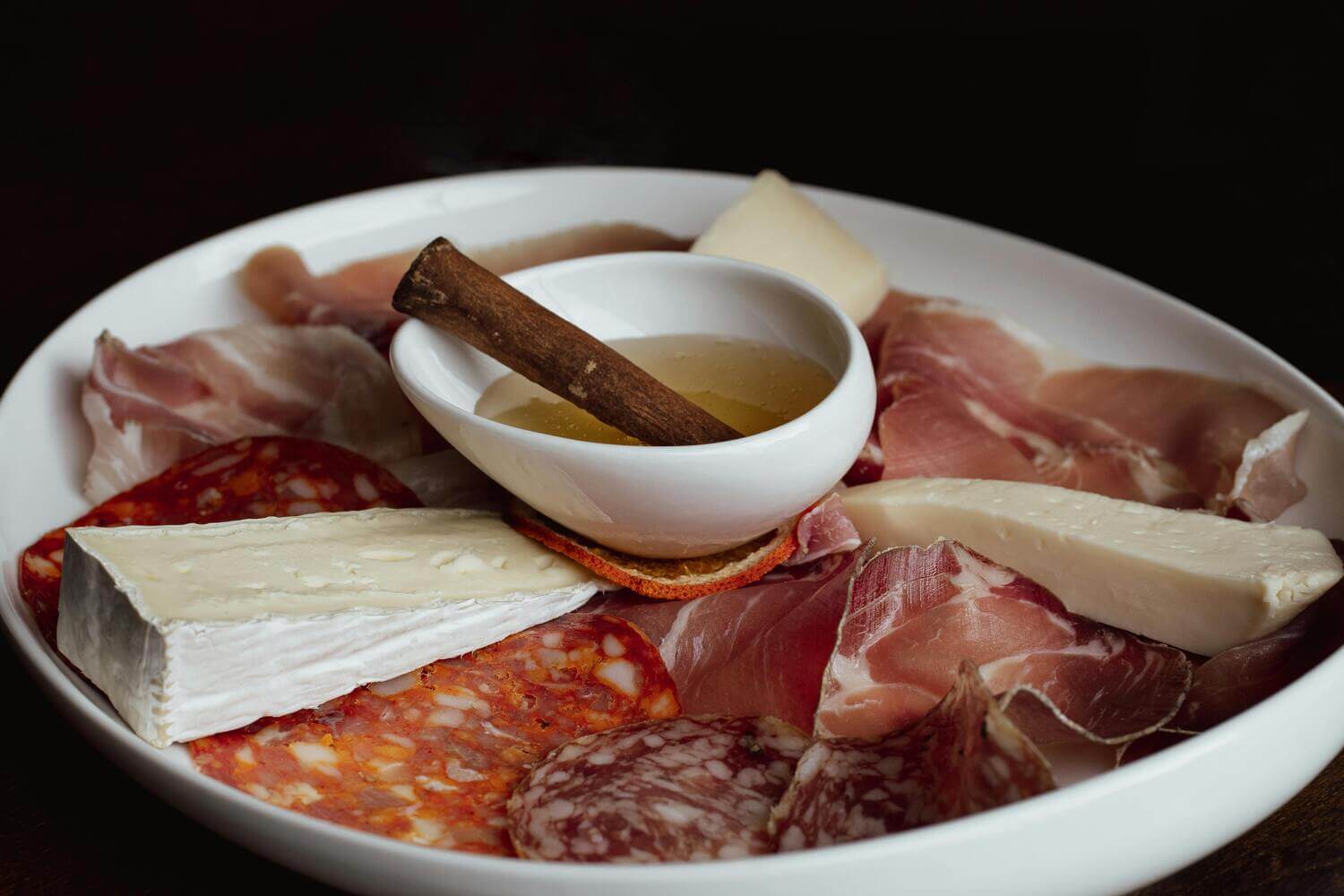
Charcuterie should not be confused with cured meats.
- – Curing refers primarily to a preservation method using salt, applied to whole cuts such as ham, beef or fish. By extension, “cured meats” describe products obtained through this process.
- – Charcuterie, on the other hand, involves meats that are chopped, seasoned and reconstituted, such as sausages, pâtés, black pudding or rillettes, even though certain cured meats like dry ham are commonly included in charcuterie platters.
Thus, a dry sausage is charcuterie, while a whole dry-cured ham is technically a cured meat, albeit an essential presence on charcuterie boards.
A Panorama of Major Charcuterie Traditions
French charcuterie
France offers a rich mosaic of regional charcuteries, some protected by IGP or AOP labels.
- South-West
- Bayonne ham
- Country pâtés and terrines
- Rillettes, confit and gizzards
- West and Centre
- Rillettes du Mans
- Andouilles
- Black and white puddings
- East and mountainous regions
- Montbéliard and Morteau sausages
- Smoked hams
- Lyon and Rhône Valley
- Rosette de Lyon
- Jésus de Lyon, saucisson brioché
- Alsace
- Knacks, smoked sausages
- Presskopf, pâtés en croûte
Italian charcuterie
Italian salumi include prosciutti, pancetta, salami and mortadella.
Among the most famous are:
- – Prosciutto di Parma, Prosciutto di San Daniele: delicately refined dry-cured hams.
- – Pancetta: salted and dried pork belly, sometimes rolled.
- – Coppa: salted and dried neck meat with marbled fat.
- – Bresaola: dried beef from Lombardy.
- – Mortadella: the speciality of Bologna, finely textured and often dotted with pistachios.
- – countless regional salami.
Spanish charcuterie
Spain is a kingdom of hams and sausages:
- – Jamón serrano and Jamón ibérico
- – Chorizo with smoked paprika
- – Lomo embuchado
- – Morcilla
- – Sobrasada
- – Salchichón and fuet.
Other European traditions
One might also mention:
- – Black Forest ham
- – Tyrolean speck
- – Swiss Bündnerfleisch
All these products enrich charcuterie platters and invite a wide range of food-and-wine pairings.
What to Drink with Charcuterie: Key Principles
Red wine and charcuterie: not always an obvious match
Salt and fat tend to harden tannins, making many red wines taste bitter or drying. Powerful, heavily oaked or tannic reds should therefore be avoided.
When red wine works
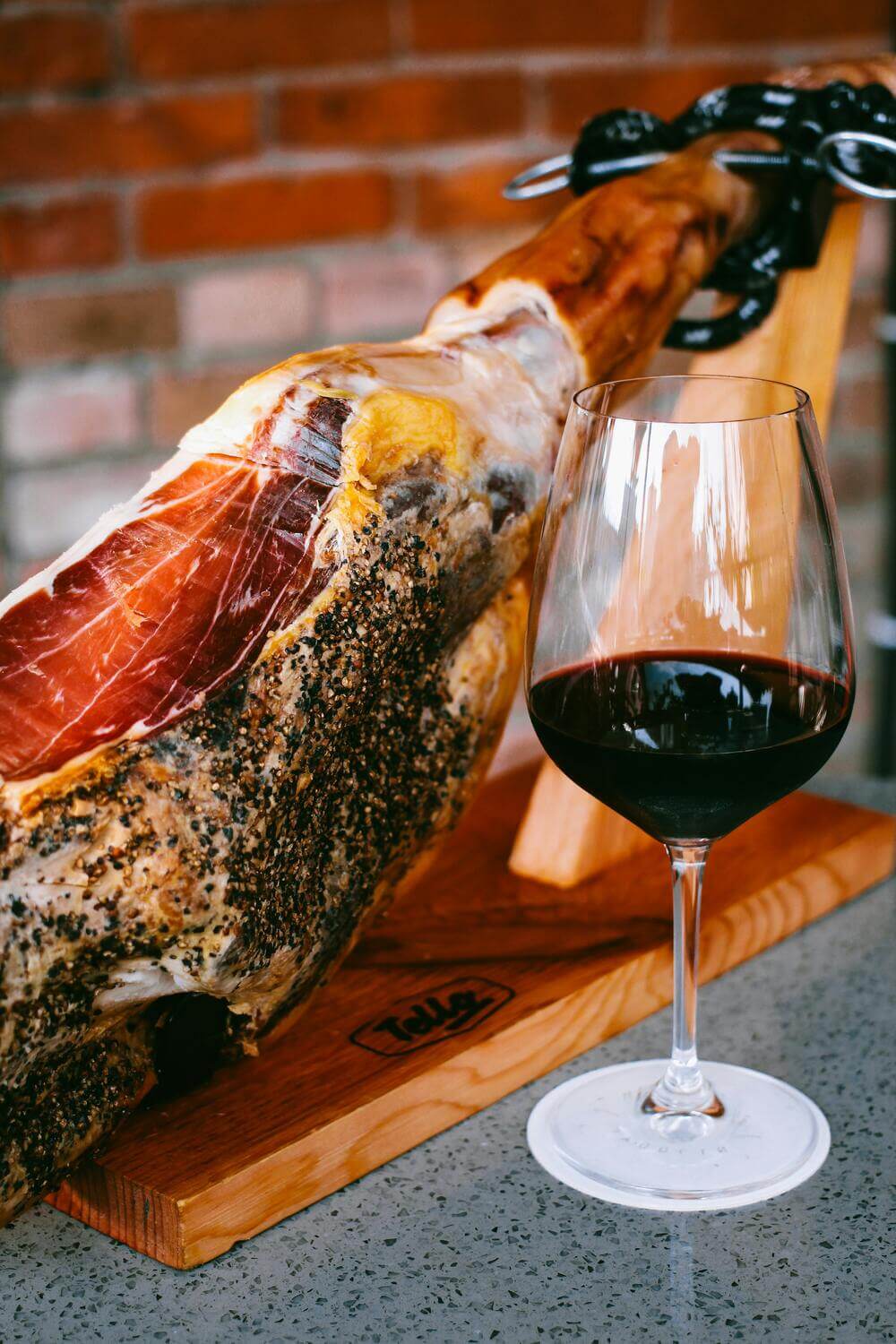
Opt for light, fruity, low-tannin wines.
Pinot Noir from Alsace or Beaujolais crus suit dry-cured charcuterie, while slightly more structured yet supple reds such as Saumur-Champigny or Chinon pair well with cooked preparations.
Dry white wine: often the ideal partner
Dry white wines bring freshness, cleanse the palate and highlight spices or smoky notes.
Minervois or Corbières blancs, Alsace Pinot Blanc, Loire whites such as Vouvray sec or Sancerre are excellent choices.
Rosé wines: freshness and generosity
Structured dry rosés from Tavel, Bandol, Corbières, the Rhône Valley or Provence are natural companions, especially in summer.
Regional pairings
Terroir-driven pairings work remarkably well, from Corsican charcuterie with Patrimonio wines to Italian salumi with Bardolino or Chiaretto, and Spanish specialities with light rosés or supple reds.
Charcuterie and Champagne: A Contemporary and Coherent Pairing
Pairing charcuterie with champagne is both modern and deeply logical.
- – The bubbles lighten the fat.
- – The acidity balances the salt.
- – The vinosity of certain cuvées matches the aromatic intensity of cured meats.
Why choose a rosé champagne made by maceration
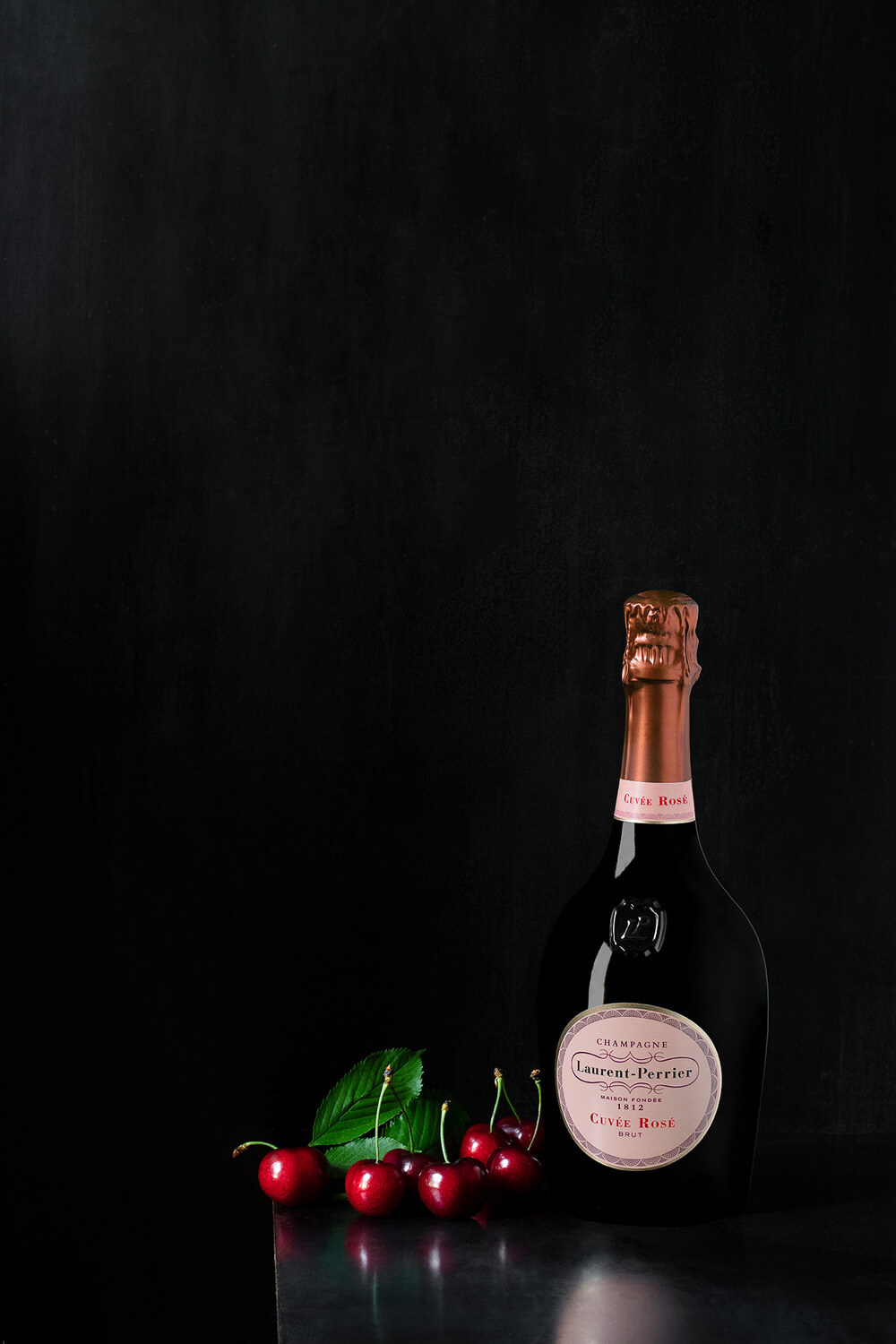
Rosé champagnes produced by maceration offer deeper colour, intense red-fruit aromas and subtle tannic structure.
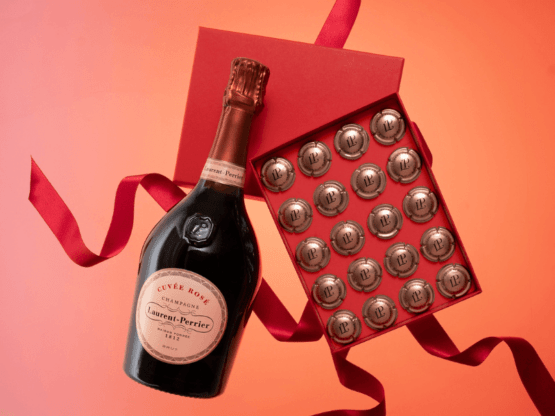
Laurent-Perrier Cuvée Rosé perfectly illustrates this style.
Made exclusively from Pinot Noir, it delivers freshness, aromatic depth and finesse, making it a benchmark gastronomic rosé champagne since 1968.
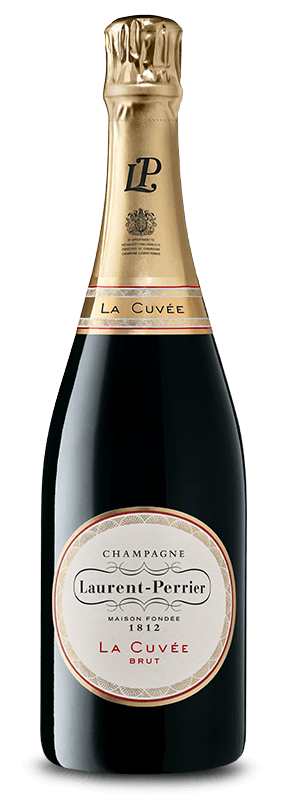
A versatile Brut: Laurent-Perrier La Cuvée
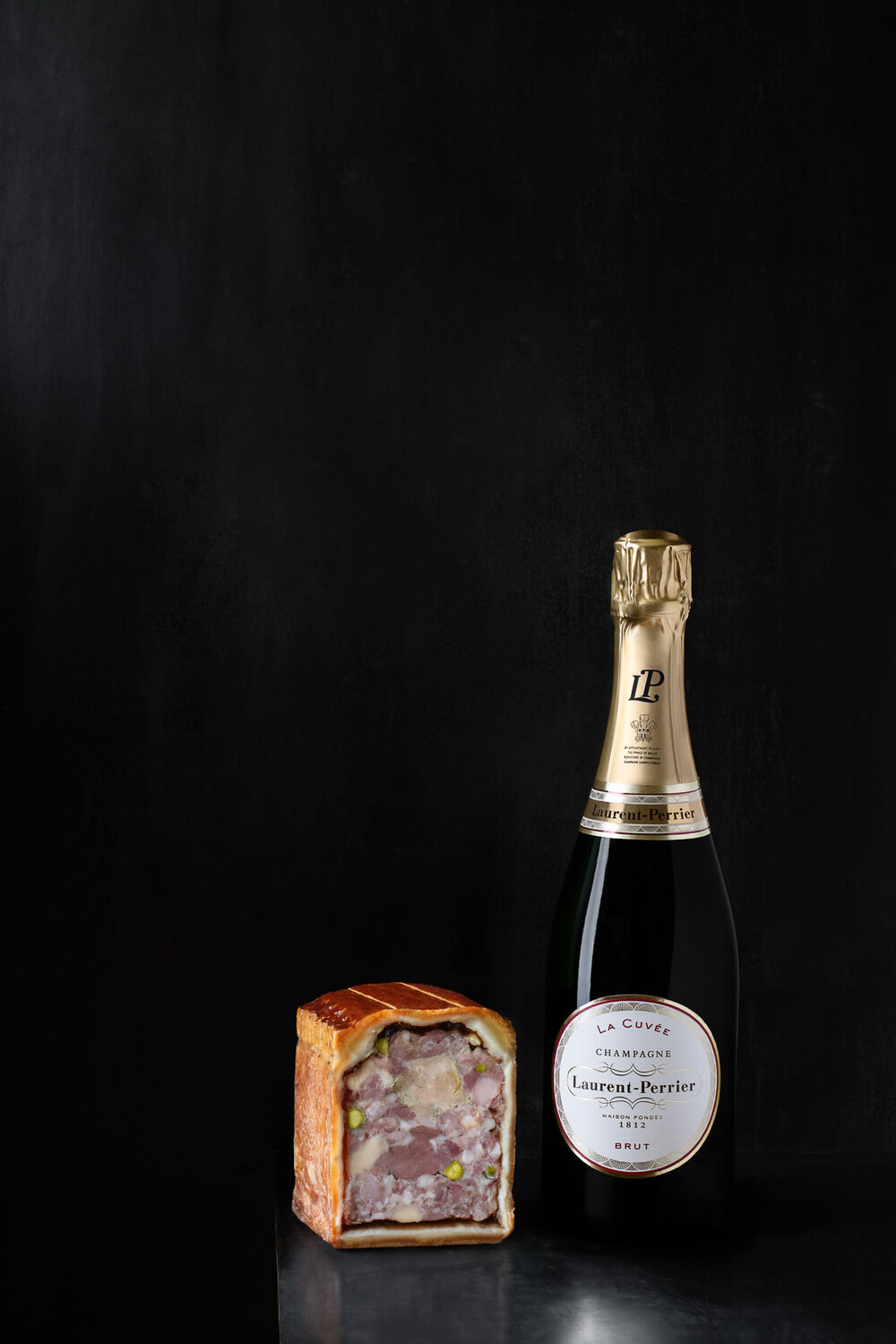
For those who prefer a white champagne, a well-balanced non-vintage Brut dominated by Chardonnay is a reliable choice.
- – Laurent-Perrier La Cuvée is crafted from the purest juice,
- – with a blend dominated by Chardonnay,
- – reserve wines add complexity and consistency,
- – and the champagne combines freshness, elegance and structure.
On a charcuterie platter:
- – freshness cuts through the fat,
- – the bubbles cleanse the palate,
- – and its balance makes it highly versatile.
Pairing Table: Charcuterie, Wines & Champagnes
Wines and champagnes according to the major charcuterie families
| Type of charcuterie | Examples | Ideal wine style | Examples of appellations | Champagne style | Recommended Laurent-Perrier cuvées |
|---|---|---|---|---|---|
| Raw and dry charcuterie | Dry sausage, rosette, fuet, Bündnerfleisch | Dry white, structured rosé, very light red | White: Minervois, Corbières, Alsace Pinot Blanc; Rosé: Tavel, Bandol; Red: Beaujolais-Villages, Brouilly | Balanced Brut or rosé by maceration | La Cuvée; Cuvée Rosé |
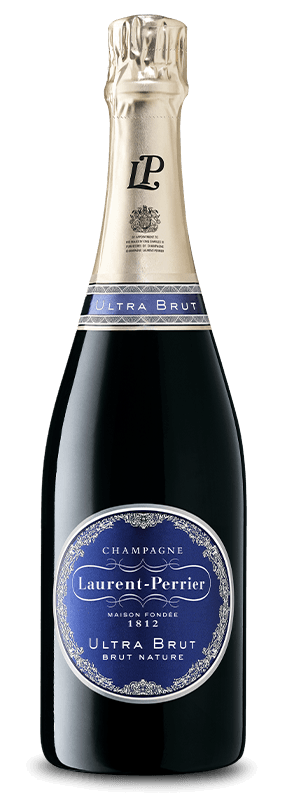
| Dry-cured hams | Bayonne, Parma, jamón ibérico | Powerful rosés, structured whites | Rosés: Bandol, Minervois; Whites: Collioure, Patrimonio blanc | Rosé by maceration | Cuvée Rosé; Ultra Brut on very fine ham |
| Cooked charcuterie | Cooked ham, sausages | Fresh reds, structured rosés | Red: Saumur-Champigny, Chinon; Rosé: Tavel, Bandol | Balanced Brut | La Cuvée |
| Rillettes, pâtés, terrines | Rillettes du Mans, pâté en croûte | Lively whites, supple reds | White: Vouvray sec, Sancerre; Red: Saumur-Champigny | Brut with structure | La Cuvée; Cuvée Rosé |
| Andouilles, andouillettes, black pudding, tripe | Andouille de Vire, andouillette de Troyes, black pudding, tripe | Aromatic dry whites, light reds | White: Mâcon, Sancerre; Red: Beaujolais-Villages | Structured Brut or rosé according to the dish | Cuvée Rosé; La Cuvée |
| Corsican charcuterie | Coppa, lonzu, figatellu | Corsican reds and rosés | Red: Patrimonio; Rosé: Corbières, Bandol | Rosé by maceration | Cuvée Rosé |
| Italian charcuterie | Prosciutto, pancetta, salami | Light reds, delicate rosés | Red: Bardolino; Rosé: Chiaretto | Brut or rosé by maceration | La Cuvée; Cuvée Rosé |
| Spanish charcuterie | Jamón, chorizo, lomo | Aromatic rosés, supple reds | Rosé: light regional rosés; Red: light Beaujolais or Tempranillo | Rosé by maceration | Cuvée Rosé; Ultra Brut |
Conclusion: What to Drink with Charcuterie
Asking “What to drink with charcuterie?” goes far beyond the automatic choice of red wine.
Dry whites, structured rosés, light reds and, above all, gastronomic champagnes offer remarkably precise and elegant pairings.
With Laurent-Perrier Cuvée Rosé, a 100% Pinot Noir rosé of maceration with intense red-fruit character, and Laurent-Perrier La Cuvée, a refined and balanced Brut dominated by Chardonnay, the House of Laurent-Perrier provides two exemplary interpretations capable of elevating any charcuterie platter.
These pairings transform a moment of convivial sharing into a true tasting experience, where wine and champagne enhance the expression of terroirs and craftsmanship.