Contents
- Dessert: The Sweet Note of Happiness
- A Brief History
- Dessert Today: A Thousand Forms, A Thousand Sweetnesses
- Champagne: Freshness, Vibrancy, and Balance
- Which Dessert Champagnes to Choose?
- Rosé Champagnes: Freshness and Fruity Indulgence
- Demi-Sec Champagnes: Richness and Balanced Sweetness
- Iconic desserts and Laurent-Perrier Champagnes
- Conclusion: sweetness and light
Dessert: The Sweet Note of Happiness
Dessert holds a special place in French gastronomy. After a meal, it concludes the tasting on a sweet and comforting note, like a promise of pleasure. If one seeks a sweet touch at the end of a dinner, it is no doubt because sugar, a source of energy and sensory pleasure, acts as a natural reward, a signal of satisfaction and harmony.
A Brief History
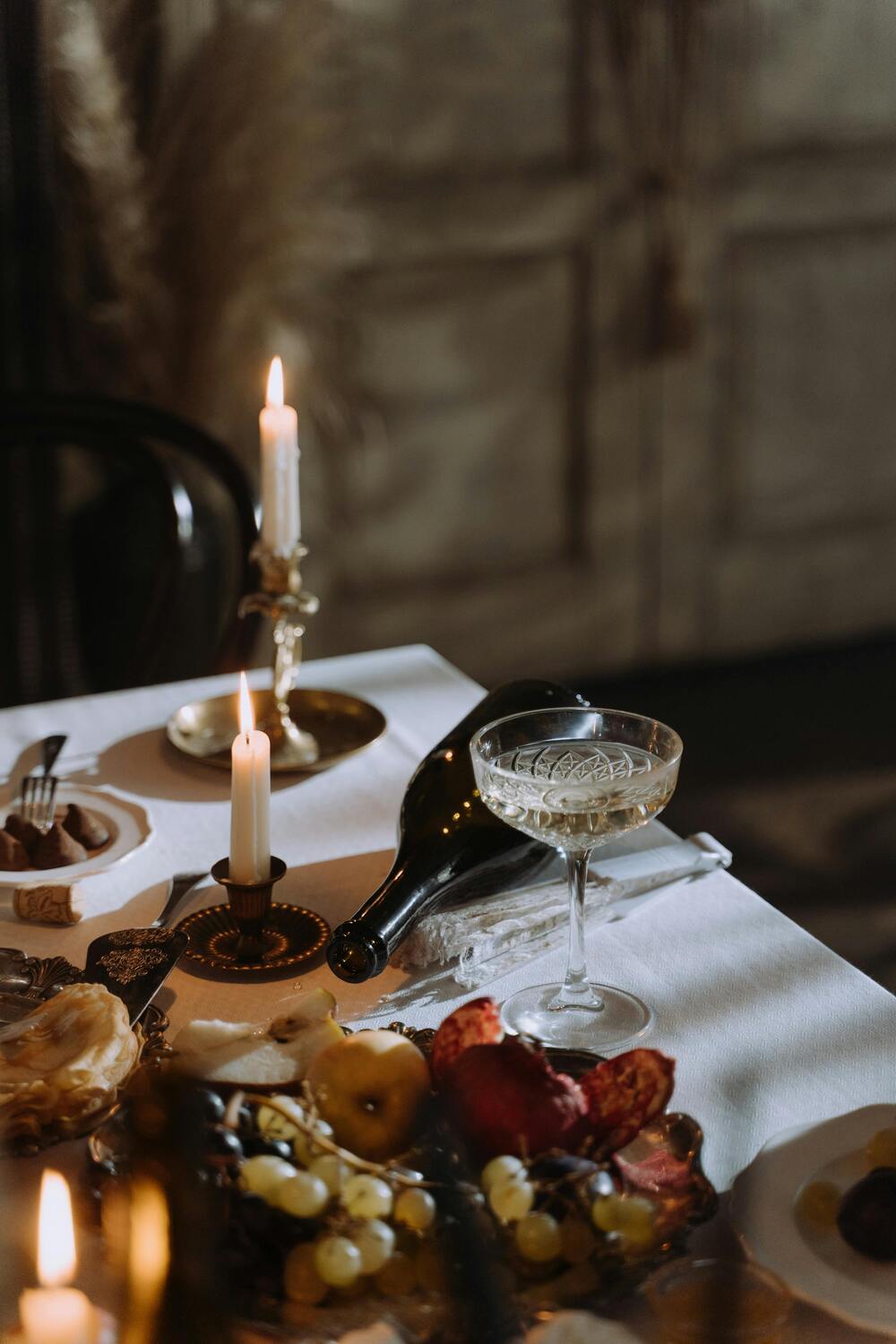
The word “dessert” comes from the verb desservir, because in the past it referred to the moment when one “cleared” the table to serve the last sweets.
In the Middle Ages, banquets consisted of several courses. Dessert was only one among others: it could include sweet dishes such as candied fruits or honey cakes, but also savory dishes. It did not close the meal; afterwards came the issue de table (intended to aid digestion) and then the boutehors, accompanied by hypocras or eaux-de-vie.
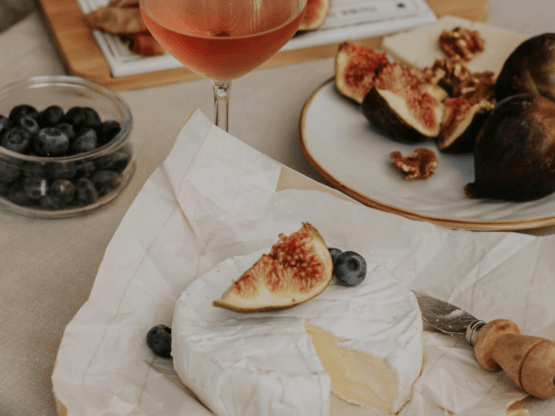
The very first desserts were based on simple ingredients: honey, dried fruits, almonds, dates, and figs.
Among the most emblematic sweet traditions of France is the Thirteen Desserts of Christmas, cherished by the Provençals. At the end of the “big supper,” families gather around this symbolic table composed of dried fruits, nougats, dates, brioches, calissons, and candied fruits, in tribute to sharing and conviviality. An ancient custom that illustrates the primary function of dessert: to gather, to sweeten, and to celebrate.
Dessert Today: A Thousand Forms, A Thousand Sweetnesses
From fresh fruit enjoyed in simplicity to sumptuous birthday cakes, as well as entremets, ice creams, mousses, and fine pastries, dessert comes in countless forms.
Depending on its composition, it calls for a beverage that respects its balance and highlights its flavors. Sweet dishes traditionally pair with sweet wines, liqueurs, or certain dessert Champagnes with more generous dosage. The secret to a successful pairing lies in the correct match between the sugar in the dessert and the roundness of the wine: a wine that is too dry, such as a Champagne Brut, could create a disharmony with the final sweetness.
Champagne: Freshness, Vibrancy, and Balance
Champagne is a unique wine, born in the northernmost region of France. This cool climate naturally gives the wine high acidity, a guarantee of tension, freshness, and longevity.
This acidity, balanced by the dosage liqueur — added after disgorgement — determines the style of the Champagne: Brut, Extra-Brut, Sec, Demi-Sec, according to the amount of sugar added.
It is this delicate art of balance that allows Champagne to accompany not only savory dishes but also, under certain conditions, desserts.
Which Dessert Champagnes to Choose?
Sugar dosage: the key to a perfect pairing
The sugar dosage of a Champagne, that is, the liqueur added after disgorgement, plays a determining role in pairing with desserts. The higher the sugar content, the more it can harmonize with rich and sweet pastries without seeming acidic or unbalanced.
- – Brut or Extra-Brut (0‑12 g/L): ideal for very light or mildly sweet desserts, such as fresh fruit or sorbets, as it provides freshness and liveliness without overpowering the palate.
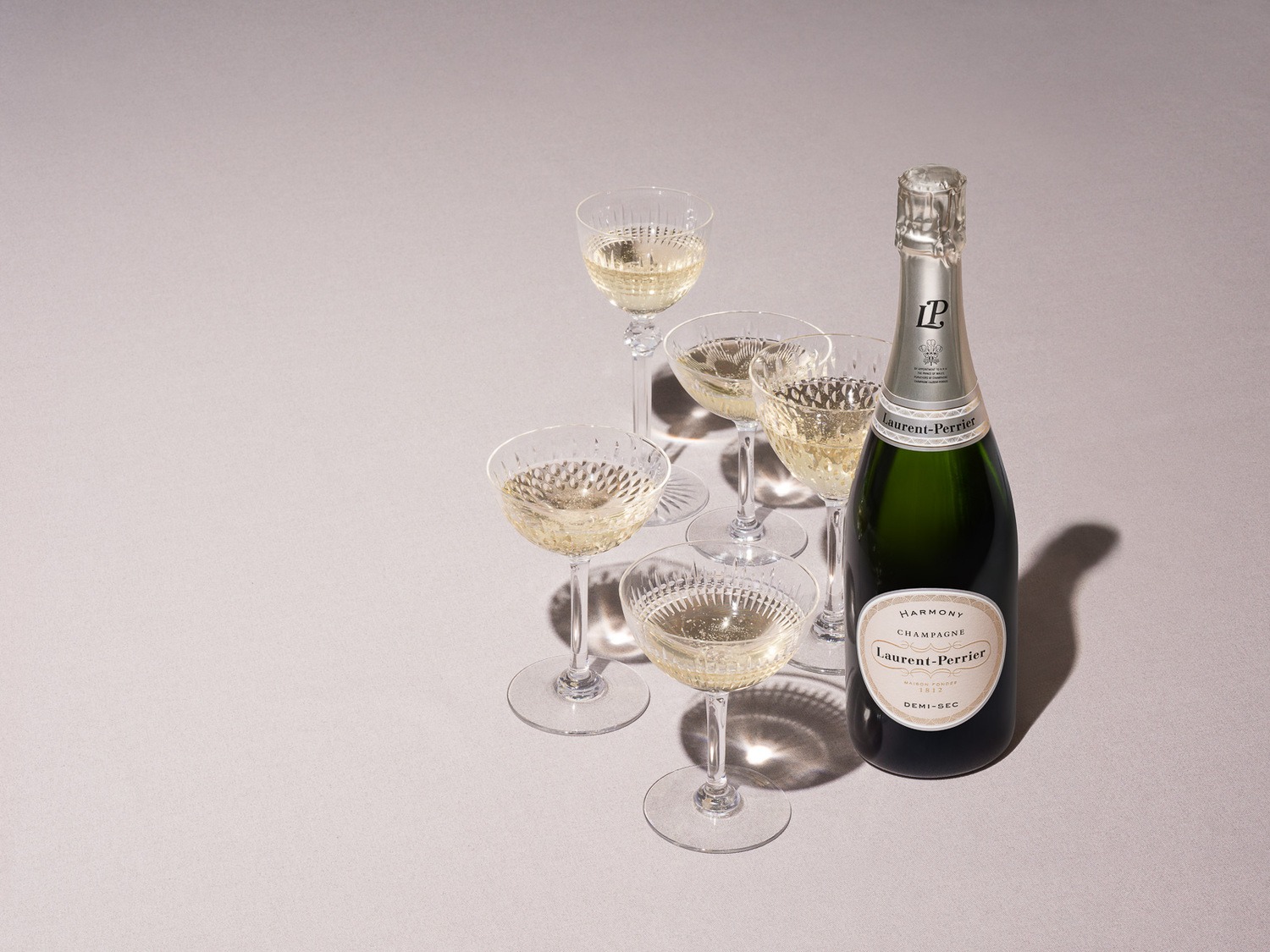
- – Demi-Sec (32‑50 g/L): the higher dosage creates roundness that perfectly accompanies tarts, entremets, ice creams, and cakes, offering a balance between sweetness and freshness.
- – Doux (>50 g/L): reserved for very sweet desserts, such as petits fours, chocolate pastries, or candied fruits, so that the Champagne does not taste too dry against the richness of sugar.
- – Rosé: perfect for red fruit desserts.
Thus, knowing the sugar dosage allows one to choose a Champagne capable of respecting the dessert’s balance, revealing its aromas without overwhelming its delicacy.
The golden rule: sweetness and harmony
The sugar contained in a dessert accentuates the acidity of a wine. That is why only certain styles of champagne perfectly pair with sweet treats.
Rosé Champagnes: Freshness and Fruity Indulgence
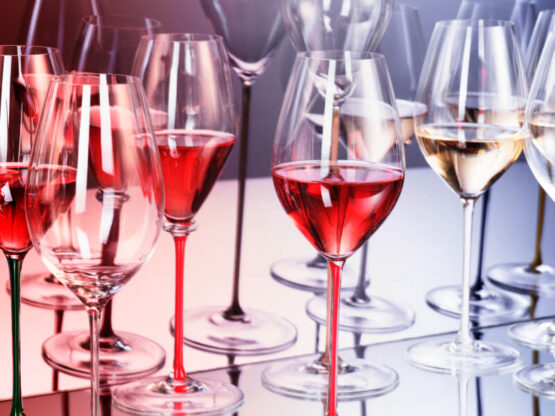
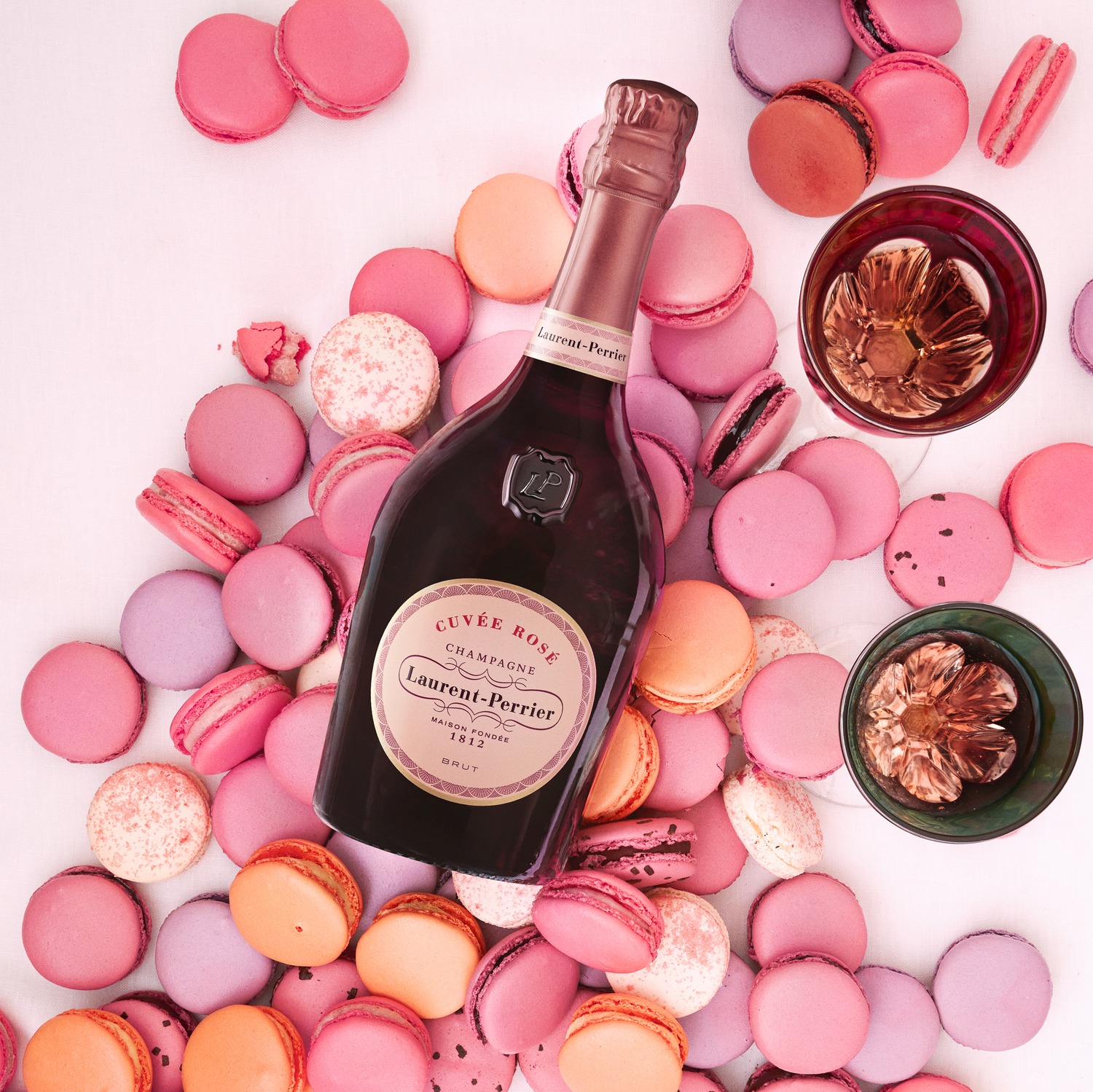
Rosé Champagne ideally accompanies red fruit desserts: strawberry tarts, raspberry sabayon, charlotte, pavlova, crumble, or raspberry macarons.
Its aroma of strawberry, cherry, redcurrant, or raspberry creates a perfect resonance with these sweet and tangy desserts.
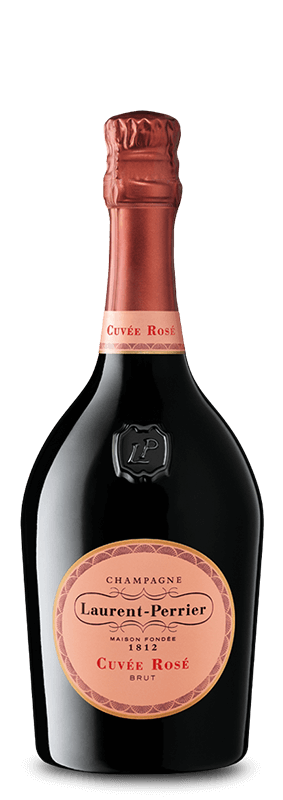
Laurent-Perrier Cuvée Rosé, made according to the rare maceration method, stands out for its intensity of fresh red fruit aromas and its beautiful persistence. It enhances light desserts without weighing down the tasting.
Demi-Sec Champagnes: Richness and Balanced Sweetness
To accompany pastry desserts, ice creams, entremets, or cakes, Demi-Sec Champagnes are the most suitable. Their dosage, between 32 and 50 grams of sugar per liter, gives them roundness and indulgence, perfectly in harmony with the sweetness of the desserts.
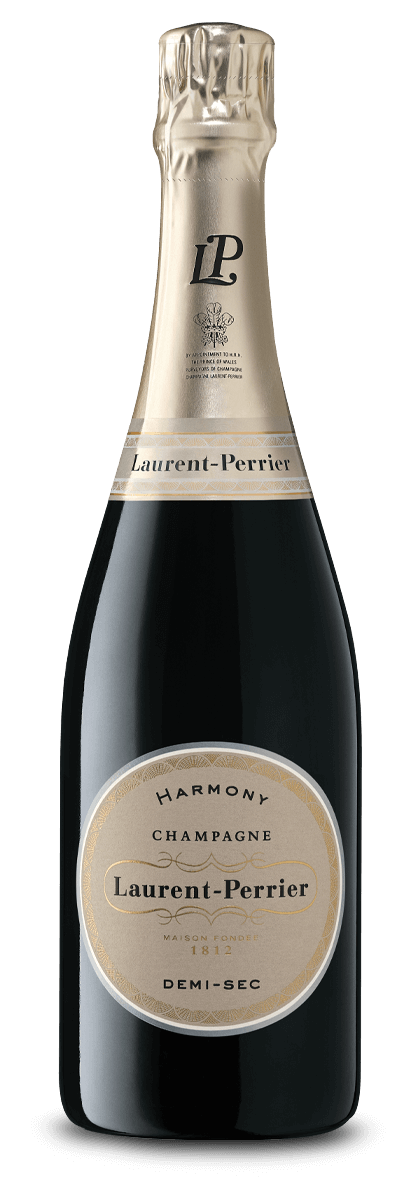
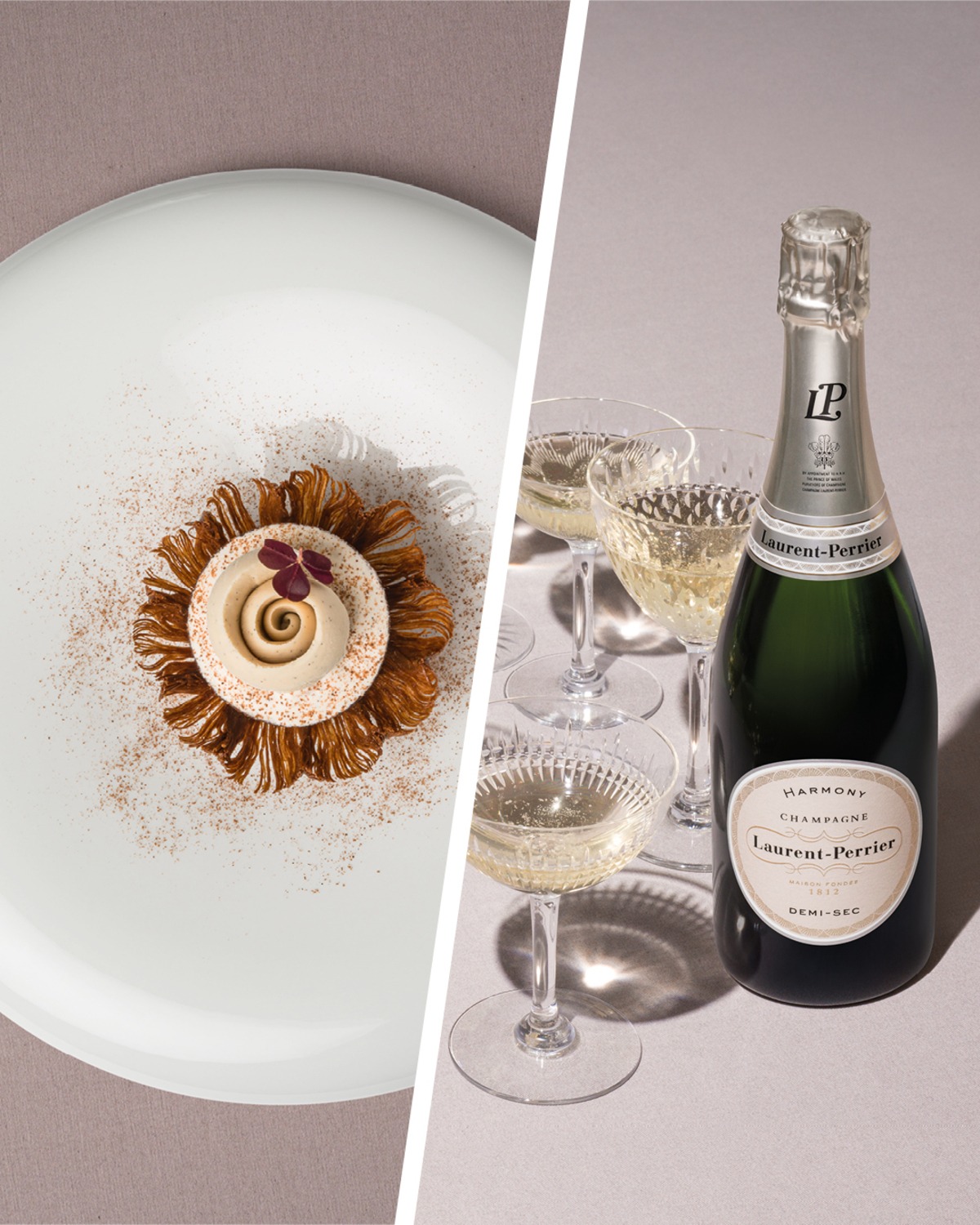
Laurent-Perrier Harmony perfectly illustrates this style: a blend of 45% Chardonnay, 40% Pinot Noir, and 15% Meunier, dosed at 40 grams of sugar per liter. Its velvety texture and controlled freshness make it an ideal companion for yellow fruit tarts, praline entremets, vanilla ice creams, or caramelized desserts.
Iconic desserts and Laurent-Perrier Champagnes
In France, many gourmands gather around iconic desserts, but which Champagne should be chosen to enhance each of these sweet pleasures?
Strawberry tart
Nothing celebrates spring or a light meal better than a strawberry tart. The freshness and acidity of the strawberries call for a lively and fruity Champagne that enhances the fruit without overpowering it.
Recommended Cuvée : Laurent-Perrier Cuvée Rosé, maceration method revealing the full aromatic intensity of red fruits.
Crème brûlée
Crème brûlée captivates with its balance of sweetness and the crunch of the fine caramelization. It requires a Champagne capable of supporting the sugar while maintaining freshness and finesse.
Recommended Cuvée : Laurent-Perrier Harmony (Demi-Sec), honey and almond notes extending the dessert’s roundness.
Chocolate fondant or chocolate mousse
Dark chocolate, with its bitterness and intensity, requires a sweet and round Champagne to balance the contrast and reveal the dessert’s depth.
Recommended Cuvée : Laurent-Perrier Harmony (Demi-Sec), ideal roundness and aromatic complexity for intense chocolates.
Red fruit charlotte
Light and airy, a red fruit charlotte requires a Champagne that highlights the freshness and liveliness of the fruits without weighing down the tasting.
Recommended Cuvée : Laurent-Perrier Cuvée Rosé, for its perfect balance of fruitiness and elegance.
Crumbles and yellow fruit tarts (apricot, peach, mirabelle)
The crispness of a crumble and the sweetness of yellow fruits call for a Demi-Sec Champagne capable of providing roundness and harmony.
Recommended Cuvée : Laurent-Perrier Harmony, for its controlled sugar and indulgent notes.
Ice creams and sorbets
Frozen desserts or sorbets require a Champagne that maintains freshness and liveliness, able to highlight the lightness of the dessert without overwhelming its flavors.
Recommended Cuvée : Laurent-Perrier Harmony (Demi-Sec) for vanilla ice creams or fruit sorbets, and Cuvée Rosé for red fruit sorbets.
Conclusion: sweetness and light
Dessert is far more than a gourmand conclusion: it is an invitation to sweetness, a last emotion before the end of the meal.
The pairing of Champagne and dessert, in its roundest and most refined expressions, enhances this harmony.
- – Rosé Champagne: freshness and red fruits.
– Demi-Sec Champagne, such as Laurent-Perrier Harmony: richness and complexity of pastries and entremets.
Each flute becomes a promise of pleasure, a link between the wine’s finesse and the dessert’s generosity. And when the last bubble rises in the glass, it reminds us that sweetness, like Champagne, is a matter of balance and emotion.